

Top Hard-Seal Ball Valve Company Picks for Reliable Industrial Performance
2026-09-01
Reliable industrial performance rarely comes from a catalog spec sheet—it comes from hard-seal ball valves that stay tight after thousands of cycles, dirty media, and pressure spikes. That's why we've filtered the market down to a few company picks worth your attention, including ZMV, a name that keeps showing up where leakage simply isn't an option.
Why Hard-Seal Ball Valves Dominate in High-Temperature and Abrasive Environments
Soft-seated ball valves fall apart quickly when the temperature climbs past a few hundred degrees. The polymer or elastomer rings lose their shape, harden, or simply burn away, leaving a leak path that no amount of torque can fix. Hard-seal ball valves sidestep this entirely by using a metal-to-metal contact between the ball and the seat. The sealing surfaces are typically coated with chromium carbide, tungsten carbide, or stellite—materials that keep their hardness and dimensional stability even when the process fluid runs at 600°C or higher. That means the valve doesn't rely on a deformable insert to make a seal; it relies on precision lapping and a controlled interference fit that stays tight as the metal expands.
Abrasive slurries, catalyst fines, and fly ash chew through soft seats in weeks. Hard-seal designs don't just survive this punishment—they use the abrasive media to their advantage. The continuous scouring action of particles actually polishes the metal seating faces, improving the seal over time instead of degrading it. The ball and seat are often made from the same base material with similar thermal expansion coefficients, so high-temperature cycling doesn't cause the seat to relax or the ball to jam. In a coal gasification unit or a mining tailings line, where both heat and grit are constant, a hard-seal ball valve holds its bubble-tight shutoff for years while a soft-seat equivalent would need replacement every few months.
Maintenance crews quickly learn that hard-seal valves cost less over the long run. There's no soft seat to replace on a schedule, no worries about chemical incompatibility with the seat material, and no derating of the pressure-temperature envelope because of a plastic part. When the valve does eventually need attention, the metal seats can be relapped or recoated in place without pulling the entire valve from the line. This practicality, combined with the simple fact that these valves don't fail catastrophically when the temperature spikes or the abrasive load increases, is why engineers specify them as the default choice for high-temperature, high-wear services.
Material Pairings That Make or Break Long-Term Valve Reliability
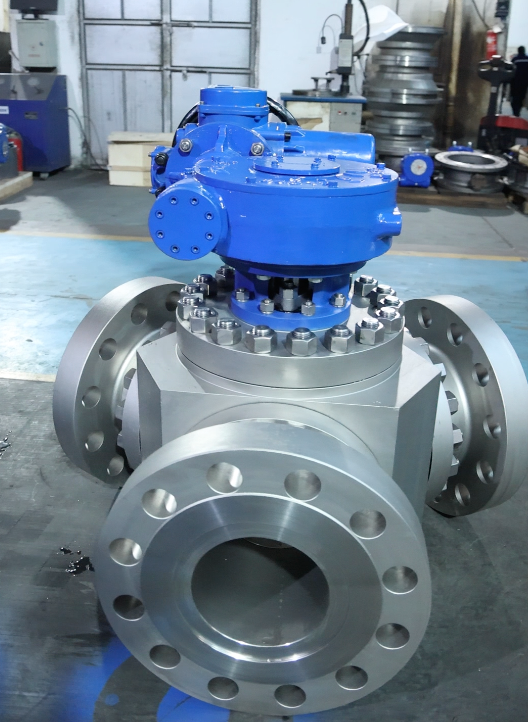
A valve's internals rarely fail because one material gives out on its own. More often, the trouble starts at the interface between two parts—the disc against the seat, the stem inside the packing, the ball against its seals. Take a standard stainless steel trim paired with a soft PTFE seat. It sounds safe, but under high cycling, the PTFE cold-flows into clearance gaps while the metal edge microscopically erodes it. Within months you get a steady drip that no amount of torque stops. Swap that PTFE for a filled grade like glass-reinforced or a polymer blend, and the wear pattern shifts entirely.
Another overlooked pairing is the stem and its bushing. A 316 stem running in a 304 bushing can gall under even moderate side load, especially if the media is dry gas. The two alloys share similar hardness, so microscopic welds form and tear, leaving deep scoring that tears up the packing on every stroke. A simple switch to a nitronic 60 stem or a bronze bushing breaks that tendency completely—and costs almost nothing at the OEM level.
Then there's the classic hard-facing mismatch. Stellite seats against a hardened stainless ball sound bulletproof, but if the base metals underneath have different thermal expansion rates, the stellite overlay can spall off after repeated temperature swings. The fix is rarely thicker coating; it's choosing a substrate like 17-4 PH that grows and shrinks at a rate closer to the cobalt alloy. Long-term reliability doesn't come from picking one fancy material—it comes from knowing how two surfaces will misbehave together over a decade of real-world cycles.
Seal Design Choices for Leak-Free Performance Under Extreme Pressure
Designing seals that hold up under extreme pressure starts with geometry, not just material selection. A common mistake is relying on a standard O-ring groove without accounting for extrusion gaps. At high pressure, the elastomer can be forced into the clearance between mating surfaces, leading to nibbling and eventual failure. Machining backup rings from a harder polymer or metal—or choosing a seal profile with an integrated anti-extrusion lip—keeps the seal where it belongs. The groove itself matters too: deeper, narrower channels with rounded corners reduce stress concentrations and allow the seal to flex without pinching.
Material choice is the next lever. Nitrile and PTFE blends may work at moderate pressures, but for sustained extreme conditions, look to hydrogenated nitrile (HNBR), perfluoroelastomers (FFKM), or polyurethane with high durometer ratings. Compression set resistance becomes critical because even a temporary loss of resilience opens a leak path. Pair the material with a surface finish on the mating hardware—too rough and you get abrasion, too smooth and you lose the micro-grooves that hold a lubricating film. A deliberate crosshatch pattern or a targeted Ra value between 0.2 and 0.4 micrometers often delivers the best balance.
Finally, don't ignore thermal effects from pressure cycling. Extreme pressure rarely arrives without temperature spikes, and the combination can cause seals to expand, shrink, or take a permanent deformation. Preloading the seal slightly beyond the nominal squeeze compensates for cold-start leaks, but over-squeezing accelerates wear and generates heat. A better approach is to design for controlled leakage—using a labyrinth or pressure-balanced arrangement that reduces the pressure differential across the primary seal. It sounds counterintuitive, but allowing a tiny, managed weep often extends seal life far beyond trying to lock everything tight.
How Top Manufacturers Stress-Test Hard-Seal Ball Valves Before Delivery
A quality hard-seal ball valve doesn't leave the factory on faith. Before delivery, top manufacturers put every unit through a battery of stress tests that simulate years of service in days. The first hurdle is hydrostatic shell testing: the body and bonnet are filled with water and pressurized to at least 1.5 times the rated cold working pressure. Any weep or permanent deformation sends the valve straight to the scrap bin. Manufacturers also test the seat seal separately, often with nitrogen at low pressure, because metal-to-metal seats can pass a high-pressure liquid test yet still leak gas at low differential pressure. This dual-stage approach catches defects that a single test would miss.
Thermal shock and cycling come next. Hard-seat ball valves often handle slurries, high-temperature steam, or cryogenic fluids. So the best test benches alternate hot and cold media through the valve while the ball is stroked under full pressure differential. A valve might see 200°C steam on one side and ambient water on the other, then be rotated 500 times with abrasive slurry in the line. Torque is monitored on every stroke. If the breakaway torque spikes or the seat leaks after cycling, the valve is rejected, regardless of how it performed on the first test.
Finally, there's the leak test that separates serious manufacturers from the rest: fugitive emissions testing with helium. The packed stem and body joints are enclosed in a vacuum chamber. Helium is introduced inside the valve at rated pressure. A mass spectrometer sniffs for helium escaping at parts per million. Passing this test means the valve won't leak hazardous gas into the atmosphere once installed. Only after these tests—and a full dimensional re-check—does the valve get its test certificate and a spot on the delivery truck.
Real Industrial Applications That Demand Hard-Seal Ball Valve Reliability
In high-pressure chemical processing, a single valve failure can halt an entire batch. Hard-seal ball valves earn their place on reactor feed lines and transfer systems where aggressive media, thermal cycling, and frequent actuation leave no room for soft-seat deformation. Their metal-to-metal sealing faces shrug off polymer buildup and abrasive slurries that would chew through PTFE or elastomer seats within weeks.
Refineries and gas processing plants rely on these valves for isolation duty under fire-safe conditions. During emergency shutdowns, temperatures can spike beyond what soft seals tolerate. The hard-seal design keeps its integrity long enough for operators to bring the process under control, preventing hydrocarbon release into flare headers or drainage systems.
Even in less glamorous settings like mining slurry transport or boiler blowdown service, the same principle applies. Solids-laden water under high velocity erodes elastomers quickly. A hard-seal ball valve accepts that punishment and keeps sealing, reducing unplanned downtime that planners rarely schedule for.
A Practical Guide to Shortlisting Hard-Seal Ball Valve Companies That Deliver
Shortlisting hard-seal ball valve suppliers starts with a clear-eyed look at your operating conditions, not a generic checklist. A valve that survives abrasive slurries in a mining circuit will behave differently under high-temperature steam or polymerizing media. Write down your pressure range, temperature swings, media composition, and expected cycle frequency. Then ask each candidate for application references that match those parameters. The fastest way to narrow a long list is to eliminate companies that treat hard-seal ball valves as a one-size-fits-all product line.
Next, probe how a manufacturer handles the sealing interface. Hard-seal designs live and die by the mating surfaces: tungsten carbide, chrome carbide, Stellite, or ceramic coatings must be compatible with both the ball and the seat. Request hardness values, coating thickness, and bonding method. Better yet, ask for a wear-curve comparison under similar media velocity. If a supplier cannot explain why its coating choice resists galling and erosion over 10,000 cycles, move on. The goal is not to find the cheapest valve, but the one that will still hold a bubble-tight shutoff when maintenance windows are already stretched thin.
Finally, look at delivery discipline as a form of engineering rigor. A company that ships a well-machined valve but cannot provide traceable material certificates, coating inspection reports, or torque data is a project risk. Ask about their lead times for both standard and modified trim, and test their responsiveness with a real technical question. The companies worth shortlisting treat late deliveries and missing documentation as seriously as a failed hydrotest—because in a hard-seal application, both can shut down a process line.
FAQ
The metal-to-metal seating holds up under temperatures that would deform or melt PTFE or elastomer seals, so you get a tight shutoff without the seat losing its shape after a few thermal cycles.
Refineries, chemical plants, and power stations come to mind because they run at higher temps and pressures, and they can't afford seat failure from abrasive media like catalyst fines or boiler blowdown.
Look beyond the glossy brochure. Ask about their pressure testing per API 598 or ISO 5208, whether they trace material heat numbers, and if they have in-house cryogenic or high-temp test loops. A plant tour often reveals more than a certificate.
In many cases, yes. If you're replacing soft seats every 18 months on a steam or slurry line, the longer service life and reduced downtime can offset the higher purchase price within the first couple of years.
Tungsten carbide or chrome carbide coatings on the ball and seat are common. For severe erosion, solid tungsten carbide internals or a Stellite overlay can help. Match the trim to particle size and velocity rather than just going with the cheapest hard coating.
It depends on the design. Some metal-seated valves meet Class V or even Class VI leakage rates if the seat is precision-lapped and the closure force is right. For critical gas isolation, ask for a factory leakage test at your operating pressure, not just a catalog claim.
Vague answers about seat replacement procedure, no published torque values, or missing material certs are warning signs. Also be wary if a vendor quotes lead times that are dramatically shorter than everyone else; that often means they skip testing or cut corners on coatings.
Very important for hydrocarbon lines. Look for API 607 or ISO 10497 fire-safe testing, but also check whether the valve was tested with the same seat and body material you're buying. A fire-safe badge means little if the actual trim differs from the tested configuration.
Conclusion
Hard-seal ball valves earn their place in high-temperature and abrasive service because nothing else survives the punishment. Soft-seated valves quickly deform, swell, or erode when faced with steam, catalyst fines, or mineral slurries. A properly specified hard-seal design uses a metal seat and ball with carefully chosen materials—tungsten carbide, chrome carbide, Stellite, or nitrided stainless—so the mating surfaces resist galling, scoring, and washout. The real differentiator is the seal geometry. Precision lapping creates a near-perfect metal-to-metal contact, while a spring-loaded or pressure-assisted seat maintains consistent contact force as temperatures swing from ambient to over 500°C. That combination prevents leaks even under extreme differential pressure and thermal cycling.
Top manufacturers back their designs with brutal testing instead of relying on catalog promises. They run cryogenic and high-temperature cycling tests, helium leak tests at full rated pressure, and abrasive slurry endurance trials that simulate years of wear in weeks. Real-world installations—delayed coking units, catalyst transfer systems, mining tailings lines, and high-pressure steam isolation—prove that hard-seal ball valves keep working when softer alternatives fail. When you shortlist suppliers, look for published test reports, full material traceability, and site references from your industry. Avoid companies that only talk about generic "quality." The best picks will show you the exact carbide grade, the lapping tolerance, and the cycle count from their destructive testing. That transparency separates reliable long-term partners from one-off vendors.
Contact Us
Contact Person: Lucas Lin
Email: [email protected]
Tel/WhatsApp: +8613968913000 / +8613868610141
Website: https://www.zhengmaogroup.com