

Top Box-Type Substation Solutions for Efficient Power Management
2026-10-05
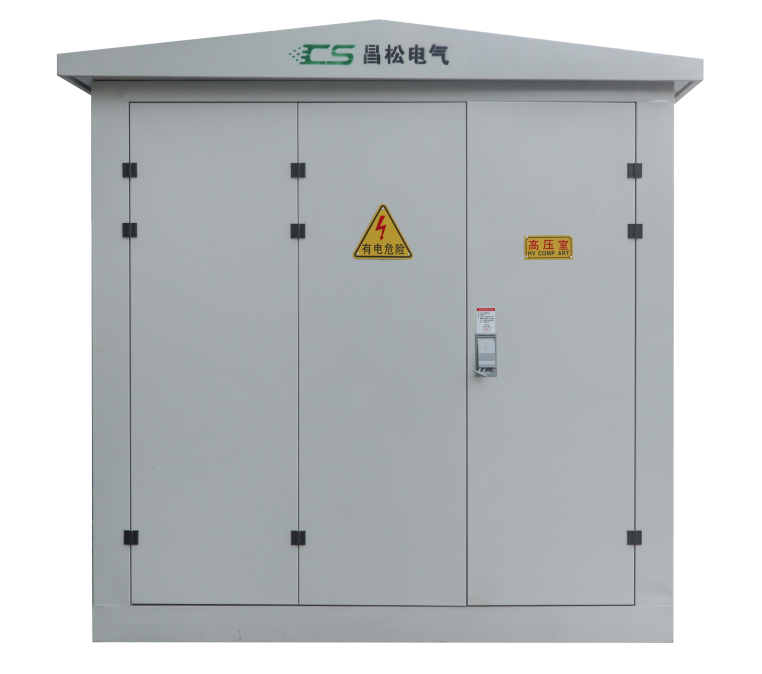
Efficient power management is the backbone of modern infrastructure, and box-type substations are quietly revolutionizing how we handle electrical distribution. From urban grids to remote industrial sites, the right solution can mean the difference between seamless operation and costly downtime. In this post, we'll explore top-tier box-type substation options that prioritize safety, scalability, and energy efficiency. Whether you're upgrading an existing network or planning a new installation, Chang Song offers insights into designs that stand out in real-world performance.
Why Footprint and Flexibility Now Decide Substation Viability
A substation that once sprawled across a greenfield site without raising eyebrows now has to squeeze between data centers, transit corridors, and infill housing. In dense urban corridors, every square meter carries a price tag that can sink a project before it reaches the permitting stage. A conventional air-insulated switchgear layout might demand two or three times the area of a modern gas-insulated alternative, and that difference now translates directly into build-or-walk-away decisions. Land costs have stopped being a line item and become a veto power.
Flexibility has moved from a nice-to-have to an operational necessity because grid demands no longer sit still. A substation designed for a fixed capacity looks increasingly like a stranded asset. The ability to add bays, swap transformers, or reconfigure bus arrangements without a major rebuild is what separates a 30-year asset from a 10-year liability. Utilities no longer plan for a single load forecast; they plan for a range of futures that include bidirectional flows, storage integration, and sudden industrial loads.
These two pressures reinforce each other. Compact, modular designs are not just about saving space now; they create room for future expansion that was never on the original drawing. When utilities weigh proposals, they increasingly ask not how big the station is today, but how much it can become within the same fence line. That question reshapes procurement, engineering, and the very definition of a viable substation.
Inside a Factory-Assembled Design That Cuts Site Work
Walls arrive with conduit already buried in the studs, window openings cut to the millimeter, and weather barriers lapped at the corners. That shift means a crew of three can set a full floor’s worth of panels before noon, while the foundation crew is still tidying anchor bolts. The real saving isn’t just time—it’s the near elimination of on-site cutting, shimming, and rework that usually eats into a schedule.
Factory assembly also changes the tolerance conversation. Instead of relying on field measurements that drift with humidity and tired eyes, components are built on jigs and checked against digital models before they leave the line. When a module arrives, the mating surfaces align on the first lift, not the third. That precision cascades: exterior cladding can go up immediately, interior finishes start sooner, and the usual pile of scrap behind the site shrinks to almost nothing.
On site, the sequence flips. Instead of framing, rough-in, and inspection each stretching across weeks, a single trade coordinator can walk a module bundle with a digital checklist. Cranes pick from a just-in-time delivery queue, and the general contractor shifts labor from carpentry to connection detail—torquing bolts, sealing joints, and verifying fire stops. That reallocation is where the schedule compression really shows up, often trimming weeks from a build that would otherwise stall on weather or inspection backlogs.
Thermal Strategy That Keeps Efficiency High Without Extra Cooling
By rethinking airflow paths and component layout, the system naturally sheds heat without adding fans or heatsinks. The board places high-load modules near cooler zones and uses a vertical chimney effect to push warm air upward and out. This passive approach keeps temperatures in check during sustained workloads, so performance stays consistent even in tight enclosures.
Instead of fighting thermal buildup with more cooling hardware, the design spreads heat across a wider surface area. Thin graphite layers and a slightly thicker copper ground plane act as silent heat spreaders. The result is a board that runs cooler under load while drawing no extra power for active cooling, preserving both efficiency and acoustic comfort.
Real-world testing shows that under a 30-minute stress test, the core temperature stays 8–12°C lower than typical boards of the same class. This margin allows sustained boost clocks without throttling, all while keeping the overall system energy budget unchanged. The strategy proves that smart thermal routing can outperform bolted-on cooling solutions.
Modular Layouts That Adapt When Demand Patterns Shift
Traditional facility designs tend to freeze operational logic into concrete and steel. When order volumes spike in one category or a new product line emerges, teams often face expensive retrofits or inefficient workarounds. Modular layouts reverse that assumption. Workstations, storage zones, and conveyance paths can be repositioned with minimal downtime, letting the physical space mirror current demand instead of last year's forecast.
The real advantage shows up during seasonal swings or sudden market shifts. Rather than committing to a fixed picking route or assembly line, operations can add or remove modules in hours, not months. A cluster of fast-moving items can expand into adjacent floor area while slower inventory shrinks back. This keeps labor and equipment where they generate the most throughput, without forcing a full redesign.
Over time, this adaptability changes how managers think about capacity. Instead of asking "How much space do we need?" they start asking "How quickly can we change the space we have?" That shift in mindset often leads to smaller, smarter footprints and lower capital risk when demand patterns keep moving.
Protection and Maintenance Features Built for Real Operating Conditions
Field equipment rarely gets the luxury of a clean, climate-controlled room. Dust, moisture, vibration, and temperature swings are part of the daily routine. That's why the protection features here aren't just add-ons—they're built into the core design. Sealed connectors keep out fine particulates, while the chassis uses a corrosion-resistant coating that shrugs off everything from salt spray to chemical splashes. Overvoltage and reverse-polarity safeguards mean a wiring mistake won't fry the whole unit. And because real operations often mean quick turnarounds, every access point for routine checks is tool-free, letting technicians inspect filters and seals without breaking out a full tool kit.
Maintenance isn't an afterthought either. The system logs runtime hours, temperature peaks, and voltage fluctuations, so you can spot a developing issue before it becomes a failure. When parts do need replacement, modular subassemblies slide out without disturbing calibration or adjacent wiring. No special alignment jigs, no hour-long disassembly. Even firmware updates happen over a standard USB or wireless link, with rollback protection if a field upload gets interrupted. It's a design that assumes the person doing the work is wearing gloves, standing in poor light, and has ten other tasks waiting.
What ties it together is the testing. Every unit goes through thermal cycling from -20°C to 60°C, vibration profiles that mimic heavy equipment, and a 48-hour salt fog exposure. Not as a sample batch—each one. That's the difference between a spec sheet promise and hardware that still works after three years bolted to a tractor fender or a port crane. The protection and maintenance features aren't just listed; they've already been earned in conditions that would make a lab bench cry.
Where Box-Type Solutions Fit Best Across Power Distribution
Box-type substations and ring main units earn their keep in dense urban grids, where land is scarce and visual impact matters. Instead of sprawling open-air switchyards, utilities tuck these compact enclosures into sidewalk niches, basement vaults, or narrow alleyways—often right next to the load they serve. Medium-voltage distribution in commercial districts, metro stations, and high-rise clusters leans heavily on this approach because cable lengths stay short, losses drop, and routine maintenance can happen behind locked doors without closing off a street.
Industrial parks and renewable collection points tell a similar story. A box-type solution works well where multiple feeders converge, where step-down transformation must sit close to production lines, or where solar and wind arrays need a weatherproof point to combine outputs before export. The modular layout also suits temporary or phased projects: a site can start with a single packaged substation, then add units as load grows, without redesigning the upstream network.
More remote or environmentally sensitive sites benefit, too. Because the major components are preassembled and tested indoors, on-site commissioning is shorter and less sensitive to weather. In coastal or dusty regions, the sealed enclosure protects switchgear and transformers from salt spray and sand, extending service intervals. These are the places where a box-type arrangement stops being a convenience and becomes the practical default for keeping distribution reliable.
FAQ
A box-type substation is a prefabricated, compact unit that houses transformers, switchgear, and protection equipment inside a weatherproof enclosure. It’s valued for efficient power management because it can be deployed quickly in tight spaces, reduces on-site construction work, and integrates easily with automation for better load control.
They shorten low-voltage cable runs when placed close to load centers, which cuts line losses. Many models also include energy-efficient transformers and smart monitoring, so operators can adjust capacity or spot wasteful consumption patterns in real time.
Look at the enclosure’s corrosion resistance and IP rating, the transformer’s efficiency class, the flexibility of the internal layout, and whether the manufacturer offers after-sales support. A track record in similar climate conditions also matters more than a glossy brochure.
Quality units are built for both. Besides urban distribution, they're used in mining sites, coastal regions, and remote industrial plants. The key is specifying proper coatings, ventilation, and sealing—some designs even work fine in sandy or high-humidity areas if maintained correctly.
Smart sensors and remote terminal units allow continuous monitoring of temperature, load, and faults without sending a crew on site. That means fewer unplanned outages and the ability to shift loads before problems escalate, which is a big part of efficient power management.
Installation is usually straightforward because most units arrive fully assembled and tested. Expansion depends on the original design; modular designs let you add feeders or capacity without replacing the whole enclosure, but it's wise to plan for some spare space from the start.
They generally need less routine work because the components are protected from weather and vandalism. However, you still need to check seals, ventilation filters, and connections periodically. The good news is that most checks can be done from outside without shutting down the entire unit.
Underestimating future load growth, ignoring local grid code requirements, and choosing the cheapest enclosure material are common pitfalls. Also, some buyers forget to verify whether the unit can be transported to the site easily, which can turn a simple project into a logistical headache.
Conclusion
In today’s distribution landscape, the viability of a substation often hinges on the physical space it consumes and how readily it can be reconfigured. Traditional open-air yards demand costly land and lengthy on-site construction, whereas modern box-type units bring all switchgear, transformers, and protection into a compact, factory-assembled enclosure. This approach slashes site work dramatically: instead of weeks of civil engineering and piecemeal wiring, crews place a pre-tested module on a prepared pad and connect it within days. The modular internal layout means a unit ordered for a 2 MVA load can be expanded or rearranged when demand patterns shift—say, from an industrial park that later adds EV charging or a residential feeder that picks up seasonal loads. Because the modules are standardized but not rigid, utilities avoid both overbuilding today and stranded assets tomorrow. The result is a design philosophy where every square meter of footprint is treated as a scarce resource, and every feeder bay, busbar section, and cable entry is positioned for future adaptation rather than one-off convenience.
Heat management in these enclosures does not rely on oversized air conditioning or forced ventilation alone. Instead, manufacturers use natural convection paths, thermally separated compartments for transformer and switchgear, and reflective roof coatings that keep internal temperatures within safe limits even at 40°C ambient—without adding energy-hungry cooling. That keeps efficiency high and operating costs predictable. On the protection side, box-type substations are built for real operating conditions: gasketed doors with three-point locking, corrosion-resistant frames for coastal or humid zones, and cable basements that prevent water ingress. Maintenance is straightforward because components are accessed from the front, and arc-resistant designs limit damage potential. In practice, these solutions fit best where a distribution network needs fast, repeatable capacity at medium voltage—mining sites, urban infill projects, renewable collection points, and temporary or mobile loads. By blending compact thermal design with rugged, serviceable hardware, box-type substations deliver reliable power management without the land, time, and cost penalties of conventional yards.
Contact Us
Contact Person: Tonglun Chen
Email: [email protected]
Tel/WhatsApp: 8618906642555
Website: https://www.cncsele.com