

Top 10 Pilates Beds for a Stronger Core and Better Posture at Home
2026-11-16
Finding the right Pilates bed can quietly transform how you train at home—but with so many options promising stronger cores and better posture, it’s easy to feel lost. In this list, I’ve cut through the noise to bring you ten standouts that actually deliver, including a few integrated picks from Yingruis that blend sturdy build quality with space-saving design. Whether you’re chasing better spinal alignment or just want a reliable setup that won’t wobble mid-teaser, these choices cover real needs—and one of them might surprise you.
What Actually Changes When You Use a Pilates Bed at Home
The first thing that shifts is how your ribs and pelvis talk to each other. On a mat, you can fake a neutral spine; on a Pilates bed, the moving carriage and spring tension force your deep core to hold position while your limbs slide. Within a week of consistent home sessions, you stop bracing and start breathing into the sides of your back, which changes the way you stand, reach, and even sit at a desk.
Something less expected is the quiet mental reset. Because the bed gives constant feedback, you cannot scroll your phone or zone out mid-rep. Your attention narrows to the rhythm of the springs, the sound of the carriage, and the exact moment your shoulder blades leave the platform. After a session, the room feels calmer, and tasks that usually feel scattered become easier to sequence.
Over time, your definition of a workout changes, too. You stop chasing burn and start noticing alignment, control, and the tiny adjustments that make a movement feel effortless. Home use removes the mirror and the instructor's timer, so you learn to trust sensation over appearance, and that carries into every other physical thing you do, from carrying groceries to picking up a toddler.
How to Spot a Reformer That Won't Wobble or Creak
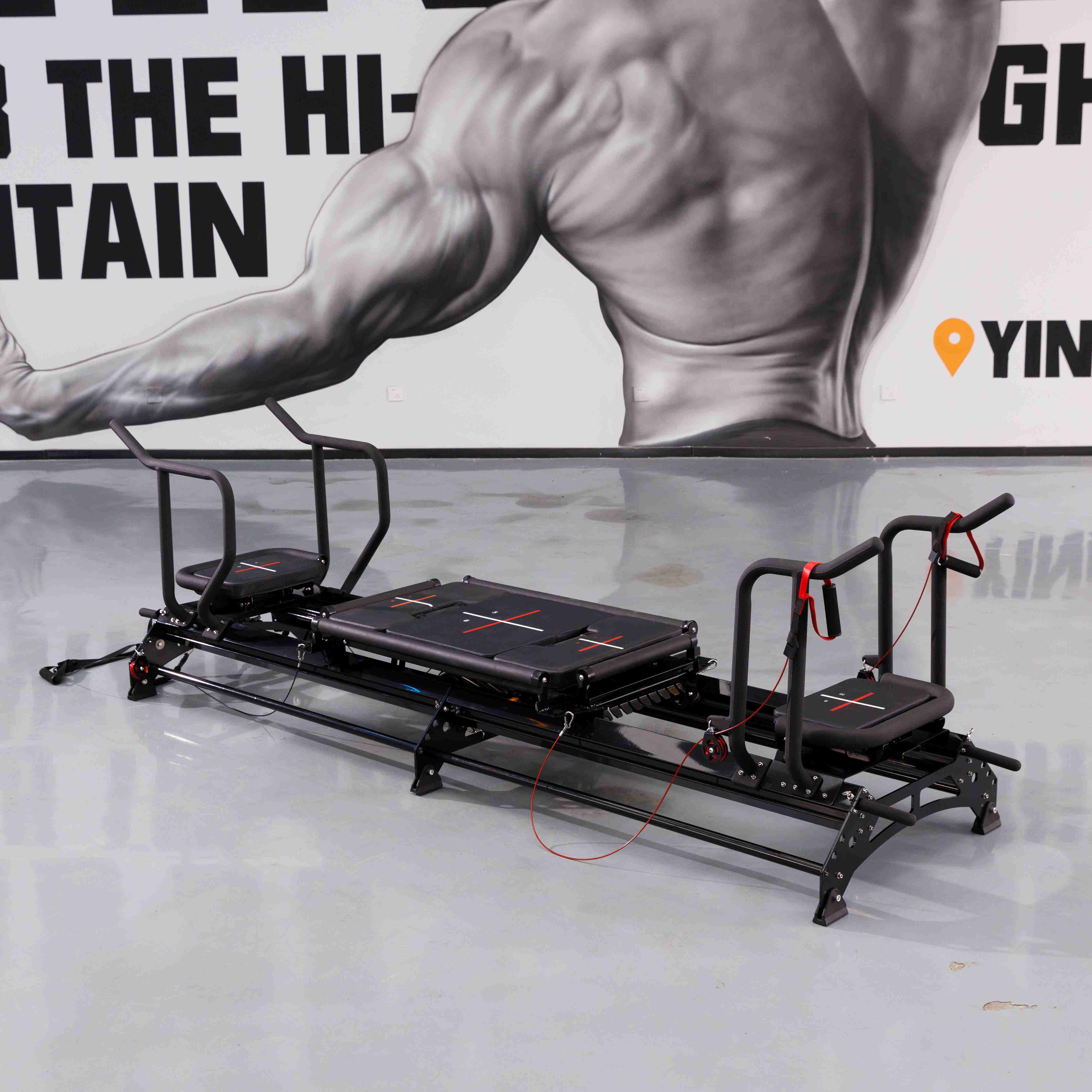
Grab the footbar and give it a firm side-to-side shove. A well-built reformer should feel like a solid piece of furniture, not a folding chair with loose bolts. If the frame twists even slightly or you hear a dry creak from the joints, walk away. Next, kneel beside the carriage and press down on one corner, then the other. Any rocking or clicking under your palm means the carriage isn’t seated evenly on the rails, which will only get worse with use.
Most creaks on a reformer come from two places: the spring clips and the wheel assemblies. Inspect the ends of each spring where they hook onto the frame and carriage. Look for rubber O-rings or nylon washers—if they’re missing or worn flat, you’ll get metal-on-metal squeak every time you push out. Spin each wheel by hand with the carriage lifted slightly. A gritty or rumbling feel, even if quiet now, means the bearings are cheap or contaminated. Smooth, almost silent rotation is what you want.
For the final check, slide the carriage to one end and look underneath at the rails. Deep scratches or uneven shiny patches indicate the rollers are misaligned or too hard for the track material. Good reformers use sealed bearings or high-density polymer wheels that leave almost no marks. Then test the glide: push the carriage away with no springs attached, then with light spring tension. You should hear only a soft, steady shushing sound. Any rhythmic knock, scrape, or chirp is a sign that wobble and creak are already living in the machine.
The Core Moves That Feel Different on a Quality Machine
You know the moves—squats, presses, rows. On a budget machine, they're fine. But on a quality machine, your hands, feet, and spine all get a different conversation. The first time you press on a precision-built chest machine, the path feels less like a groove and more like an intention. There's no stick, no wobble, just a weighted glide that lets you actually feel the muscle fibers lengthen and shorten.
Leg presses are the most obvious tell. On a cheap sled, the track chatters and the pad digs into your lower back at the bottom. On a quality machine, the carriage floats on sealed bearings, and the back pad stays put. Suddenly, your quads are doing all the work, and your lower back isn't bracing against a design flaw. The same goes for rows—a well-machined cable system keeps tension constant instead of letting it disappear at the start of each pull.
What changes is your ability to focus. You stop compensating for friction or imbalance and start listening to what the muscle is actually saying. A quality machine doesn't make the move easier; it makes it honest. You'll feel the weak points you've been hiding, and you'll also feel the strength you didn't know was there. That's the core difference—not just smoother steel, but a clearer signal.
Fitting a Pilates Bed into a Small Living Space Without Regret
Before you buy, measure the spot where you think the Pilates bed might live, then subtract six inches from every side. That leftover gap is not wasted space—it is your room to breathe, to reach for a stray water bottle, to change the sheets without bruising a knuckle. Many people fall for the compact footprint listed online, only to discover that real rooms have baseboards, radiators, and door swing arcs that eat into the usable floor. A Pilates bed tucked too tightly becomes a piece of furniture you resent, not a tool you reach for.
Look for models with vertical storage or wheels, but do not trust wheels alone. A folded reformer leaning against a wall still has depth, and it can slide if bumped. Better to dedicate a narrow strip of wall behind a door or along a hallway where the bed can stand upright without being the first thing you trip over at night. Some people hang a simple hook or use a tension strap to keep it from tipping forward—two dollars of hardware can save months of frustration.
Finally, accept that the bed will be visible. Trying to hide it behind a curtain or under a sofa only makes the room feel smaller. Instead, choose a finish or color that blends with your existing furniture, and place it where you would naturally pause during the day. If you see it as part of the room rather than an intruder, rolling it out for ten minutes of stretching after work stops feeling like a chore and starts feeling like the reason you kept the floor clear.
Matching Spring Resistance to Your Body Instead of Guessing
Spring resistance isn't a number you pick from a chart. Your limb length, joint history, and even daily fatigue shift how a given band feels from one session to the next. Start by attaching the spring and moving through the full range you actually intend to train—if you can't pause for two seconds at the hardest point without losing form, drop down. If you can do fifteen reps and still chat easily, move up.
A better gauge is end-range control. Most spring systems ramp up sharply near lockout, so matching resistance means testing the weakest portion of the move, not the start. For a chest press, note whether your elbows drift inward during the last three inches. That drift tells you more than any rep count. Adjust until the final inch feels tense but not forced.
Finally, let your body's feedback reset each warm-up. Two light sets with a slower tempo will reveal more than yesterday's logbook. If the spring feels heavier than expected, respect that—recovery, sleep, and stress all shape the load your tissues can handle. Choosing by feel, not by guessing, is what keeps the resistance honest.
Keeping the Rails and Carriage Smooth After Months of Use
Months of use can leave a surprising amount of dust and microplastic buildup on the rails, and you'll feel it as a slight roughness when moving the carriage by hand. Cleaning is straightforward but easy to rush: soak a corner of a microfiber cloth with isopropyl alcohol, wipe each rail from end to end, and then push the carriage slowly across the full travel a few times to reveal any sticky areas.
Once the factory grease is gone, the rails need a thin, consistent film of lubricant to stay smooth. I prefer a light synthetic oil or a dedicated linear rail grease applied sparingly; too much just attracts more dust. After applying, move the carriage back and forth to work the lubricant into the bearings, then wipe away any excess from the rail surface.
Over time, the V-wheels or bearings can develop flat spots, and the eccentric nuts may loosen enough to introduce side-to-side play. Give the carriage a gentle wiggle and tighten the adjusters until it moves with a slight drag but no wobble. Also check the belt for even tension, because a stretched belt can make the carriage feel rough even when the rails are perfectly clean.
FAQ
Frame stability matters more than fancy add-ons. Look for a solid steel or hardwood base, adjustable resistance that doesn't rely on cheap elastic, and a carriage that glides without jerking. Padding thickness and strap quality also affect comfort during roll-ups and leg work.
It can add load and instability that a mat can't, but it doesn't make mat work obsolete. The moving carriage forces your deep abdominals to fire constantly to control the slide, which builds a different kind of strength than static holds. Most people see the best results when they mix both.
Yes, but only if you focus on the right exercises. The adjustable straps and pulleys let you train shoulder retraction and thoracic extension under tension, which helps counteract the forward hunch. The leg and core work also stabilizes your pelvis so you don't compensate by arching your lower back.
A tower adds vertical space for exercises like push-throughs and arm springs, which are great for shoulder mobility and posture. If you're tight on ceiling height or budget, skip it. But if you want a home setup that mimics studio equipment, the tower is worth the extra cost and footprint.
Generally yes, because the carriage gives you support while you move through a controlled range. That said, you should avoid heavy spring tension at first and stick to exercises that keep your spine in neutral. If you have a disc problem or sciatica, get clearance from a physical therapist before starting.
Most home models are about 7 to 9 feet long and 2 to 3 feet wide. You need at least a foot of clearance on each side for arm movements, plus enough room to get on and off safely. A spare bedroom or a corner of a living room works fine, but a hallway is usually too narrow.
If you practice three times a week for 30 minutes, most people feel more body awareness within two weeks and see visible changes in their midsection and standing alignment by week six. Consistency beats intensity here, so shorter regular sessions work better than occasional long ones.
Conclusion
Using a pilates bed at home changes your practice because consistent short sessions on a stable reformer build core engagement and posture awareness that sporadic studio visits rarely match. A quality machine stays silent and steady through leg presses and teasers - if you hear creaks or feel the carriage shift, that's a red flag. The top picks in this roundup were chosen for their solid frames, smooth rails, and adjustable spring systems. When you match spring resistance to your current strength rather than guessing, moves like the hundred or short spine actually let you feel the deep abdominal connection instead of fighting the equipment.
Space is another factor these beds handle well. Several models fold or stand vertically, so they tuck into a corner or under a high bed without turning your living room into a gym. After months of home use, the best reformers keep their carriage glide if you wipe down the rails and check the wheels occasionally - no special maintenance skills needed. Whether you are working with a compact apartment or a spare bedroom, the real difference comes from having a machine that feels tailored to your body and stays reliable. That consistency is what builds a stronger core and better posture over time.
Contact Us
Contact Person: Owen Wu
Email: [email protected]
Tel/WhatsApp: 86-15376736259
Website: https://www.yingruisfit.com/