

Top 10 Heterocyclic Intermediates Revolutionizing Pharmaceutical Chemistry
2026-07-27
Heterocyclic intermediates are silently reshaping the landscape of modern drug discovery, yet their critical role often goes unnoticed. From blockbuster antivirals to next-gen cancer therapies, these molecular scaffolds form the backbone of over 85% of FDA-approved small-molecule drugs. But which specific intermediates are driving this revolution, and how are they enabling breakthroughs once deemed impossible? In this article, we unveil the top 10 heterocyclic building blocks that every medicinal chemist should have on their radar—and reveal how DSL Chemicals is empowering R&D teams with reliable access to these game-changing compounds. Prepare to rethink what's possible in your pipeline.
Why Heterocyclic Intermediates Are the Backbone of Modern Drug Design
Walk through any medicinal chemistry lab and you'll quickly notice a recurring motif: the vast majority of drug candidates under development contain at least one heterocyclic ring. These aren't just decorative structures. Heterocyclic intermediates—those nitrogen, oxygen, or sulfur-containing rings that chemists laboriously assemble—serve as the molecular scaffolds upon which biological activity hinges. They provide the precise geometry, hydrogen-bonding capability, and electronic distribution needed to interact with protein pockets, enzymes, and receptors. Without them, the subtle language of molecular recognition would be reduced to a whisper, and our ability to fine-tune pharmacokinetics or minimize off-target effects would be severely crippled.
What makes these intermediates truly indispensable is their synthetic utility. A well-chosen heterocyclic core can be decorated with functional groups in countless permutations, allowing medicinal chemists to rapidly explore structure–activity relationships. The same pyridine or pyrimidine intermediate might anchor a kinase inhibitor one day and a GPCR modulator the next, simply by swapping out substituents. This modular nature accelerates lead optimization and reduces the time required to move from a hit to a clinical candidate. Nearly every blockbuster drug of the past few decades—from proton-pump inhibitors to antivirals—has relied on the strategic installation of a heterocyclic intermediate early in its synthetic route.
Beyond their functional roles, heterocyclic intermediates have quietly shaped the direction of modern organic synthesis itself. The demand for efficient, scalable routes to these rings has driven innovations in cross-coupling, C–H activation, and photoredox catalysis. Methods once considered exotic are now routine because the pharmaceutical industry needed a better way to build pyrazoles or triazoles on a kilogram scale. In this sense, drug design doesn’t just benefit from heterocyclic chemistry—it fuels its evolution, creating a feedback loop where new therapeutic targets inspire novel synthetic strategies, and those strategies in turn unlock previously undruggable space.
Pyridine and Pyrimidine: The Unsung Heroes of Blockbuster Medicines
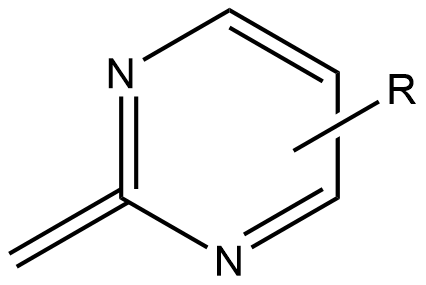
Walk into any pharmacy, and you’ll find shelves stocked with pills whose names end in –pine, –zole, or –mab. What most people don’t realize is that many of these bestsellers owe their existence to two humble ring structures that rarely get the spotlight: pyridine and pyrimidine. They’re the scaffolds holding together molecules that fight cancer, calm overactive stomachs, and keep blood vessels open. Without them, blockbusters like Gleevec, Nexium, and Plavix simply wouldn’t work as they do.
Take a closer look, and you’ll see that pyridine’s six-membered ring with one nitrogen atom acts like a molecular chameleon. In esomeprazole, the active ingredient in Nexium, it’s the piece that plugs into the stomach’s proton pump, shutting down acid production with surgical precision. Meanwhile, its cousin pyrimidine, with two nitrogens in the ring, forms the core of countless anticancer agents. Imatinib, the revolutionary drug for chronic myeloid leukemia, uses a pyrimidine-based hinge to latch onto a mutant kinase and stop the uncontrolled growth signal. The beauty of these rings lies in their ability to slip into biological pockets and form hydrogen bonds, often creating interactions that more complex synthetic frameworks can only dream of.
Yet for all their chemical elegance, pyridine and pyrimidine rarely make headlines. They’re the quiet functional groups that medicinal chemists tweak and tune while chasing the next breakthrough. A methyl here, a fluorine there—and suddenly a molecule becomes a billion-dollar therapy. The next time you see a glossy magazine ad for a new medication, remember that behind the brand name there’s probably a small, nitrogen-studded ring working tirelessly, unsung and essential.
Breakthroughs in Green Synthesis of Heterocyclic Scaffolds
The relentless push toward sustainable chemistry has unlocked remarkable methods for assembling heterocyclic scaffolds—those ring systems that sit at the heart of countless pharmaceuticals and agrochemicals. One standout shift is the move away from harsh solvents and high temperatures. Chemists are now tapping into microwave-assisted reactions that slash reaction times from hours to minutes while often improving yields. Pair that with solvent-free grinding techniques (mechanochemistry), and you have a recipe that not only cuts waste but also sidesteps the need for toxic organic liquids entirely.
Biocatalysis has also carved out a formidable niche in this space. Enzymes, once thought too fragile for synthetic heavy lifting, are now customized to build complex heterocycles with pinpoint selectivity. Whole-cell transformations and isolated oxidoreductases are stitching together rings under mild, aqueous conditions that would make traditional catalytic methods blush. The result? Fewer side products, less energy guzzling, and a cleaner path to molecules that previously demanded multi-step protection-deprotection acrobatics.
Flow chemistry adds another dimension, particularly for hazardous intermediates. By running reactions in continuous streams rather than batch flasks, chemists safely generate and immediately consume unstable diazo compounds or azides—key building blocks for many nitrogen-rich heterocycles. This not only tames safety risks but also brings scalability within reach, closing the gap between a lab curiosity and an industrial reality without sacrificing the green credentials we’re all chasing.
From Lab to Pharmacy: How Indole Derivatives Are Shaping Cancer Therapies
Indole-based compounds have quietly become a cornerstone in the search for more effective cancer treatments. These molecules, originally found in natural sources like cruciferous vegetables and certain plants, turned heads when researchers noticed their ability to interfere with tumor cell division without the harsh side effects seen in older chemotherapy drugs. What started as isolated observations in academic labs is now driving a pipeline of targeted therapies that home in on specific cancer pathways, from kinase inhibition to the destabilization of microtubules. The leap from benchtop curiosity to clinical asset didn't happen overnight, but the structural versatility of the indole scaffold made it a favorite for medicinal chemists looking to tweak properties like selectivity and solubility.
One of the breakthroughs came with the realization that indole derivatives could be designed to fit snugly into ATP-binding pockets of overactive kinases, effectively shutting down the signals that fuel uncontrolled growth in cancers such as non-small cell lung cancer and chronic myeloid leukemia. Another path led to agents that bind tubulin, preventing the formation of mitotic spindles and trapping cancer cells in a state of arrested division. Both strategies benefit from the indole core's ability to form precise hydrogen bonds and hydrophobic contacts, which has allowed for the development of drugs that are not only potent but also orally bioavailable—a major advantage for patient compliance. Semisynthetic modifications of natural indoles, along with fully synthetic analogs, have given rise to a diverse library of candidates, some already in late-stage trials and others making their way through regulatory review.
In practice, the translation from lab to pharmacy has been anything but linear. Early compounds often stumbled on issues of stability and toxicity, but iterative chemical optimization—often guided by computational modeling and structural biology—has steadily turned these hurdles into launchpads for innovation. The result is a growing list of indole-derived drugs that oncologists now rely on, including well-known names like sunitinib and vinca alkaloids, alongside a wave of next-generation candidates that are tackling resistant tumors and rare cancers. As the understanding of cancer biology deepens, indole chemistry continues to adapt, making the journey from laboratory discovery to bedside therapy a genuinely evolving story rather than a single triumphant moment.
The Rise of Chiral Heterocycles in Next-Gen Antivirals
The pursuit of next-generation antivirals has quietly shifted toward a class of molecules that was once considered too finicky for drug development: chiral heterocycles. These ring-shaped structures, peppered with nitrogen, oxygen, or sulfur atoms, and twisted into specific three-dimensional orientations, are no longer just academic curiosities. They've become the backbone of candidates that can outsmart rapidly mutating viruses by fitting into enzymatic pockets with lock-and-key precision that flat, achiral molecules simply can't match.
What's driving this resurgence isn't just improved synthetic methods, though those have certainly helped. It's the growing realization that chirality offers a functional advantage—imagine a viral protease that can only be blocked by a left-handed helix while the right-handed version slips right past. Recent breakthroughs in asymmetric catalysis now allow medicinal chemists to build these complex architectures with high enantiomeric excess, sidestepping the costly separation steps that once doomed such programs. The result is a pipeline where single-enantiomer heterocycles are showing potency against everything from influenza to SARS-CoV-2, often with fewer off-target effects.
Perhaps the most telling sign of this shift is the way antiviral screening libraries are being redesigned. Gone are the days of relying on flat, sp2-rich compound collections. Fragment-based approaches and DNA-encoded libraries are increasingly populated with sp3-rich, chiral heterocyclic scaffolds, reflecting a deeper understanding that viral targets demand shape complementarity. This isn't a fleeting trend—it's a structural revolution quietly rewriting the rules of antiviral drug discovery, one asymmetric carbon at a time.
Beyond Small Molecules: Heterocyclic Linkers in Antibody-Drug Conjugates
Antibody-drug conjugates have traditionally relied on small molecule linkers to tether potent cytotoxins to monoclonal antibodies. While these simple structures offer synthetic convenience, they often fall short in achieving optimal plasma stability and controlled payload release. The growing recognition of heterocyclic linkers marks a shift toward more sophisticated designs that better balance stability and lability in the tumor microenvironment.
Heterocyclic scaffolds introduce conformational rigidity and tunable electronic properties that can fine-tune linker cleavage kinetics. For instance, triazole units formed via click chemistry not only provide robust bioconjugation handles but also modulate the susceptibility of neighboring bonds to enzymatic or chemical hydrolysis. Pyridine and pyrimidine rings have been employed to engineer pH-sensitive triggers that remain largely inert in circulation but rapidly degrade in the acidic endosomes of cancer cells. This precision minimizes off-target toxicity, a critical advancement over first-generation linkers.
Emerging heterocyclic architectures are enabling dual-stimuli responsiveness and self-immolative cascades that amplify drug release. Spirocyclic and bicyclic systems, once relegated to medicinal chemistry probes, are now being integrated into linker design to create conjugates with extended circulatory half-lives and enhanced therapeutic indices. As the toolbox of heterocyclic chemistry expands, the next wave of ADCs will likely exploit these motifs to tackle resistant malignancies with greater efficacy and safety.
FAQ
Heterocyclic rings form the core of many bioactive molecules because they can fine-tune properties like solubility, metabolic stability, and target binding. Their structural diversity allows medicinal chemists to explore vast chemical space, leading to more selective and potent drug candidates.
Certainly. Pyridine, pyrimidine, and piperidine building blocks are ubiquitous in kinase inhibitors. Indole and azaindole intermediates are key in oncology and CNS drugs. Thiazole and oxadiazole derivatives are gaining traction in anti-infective and anti-inflammatory agents. Each brings distinct electronic and steric features that drive innovation.
Cross-coupling reactions, C–H activation, and late-stage functionalization have made it easier to derivatize heterocyclic cores without de novo synthesis. This means complex libraries can be generated rapidly, accelerating hit-to-lead optimization and enabling access to previously challenging substitution patterns.
Pyridine is a fundamental building block in numerous FDA-approved drugs, from kinase inhibitors like imatinib to antivirals. Its electron-deficient nature improves pharmacokinetics and can engage in key hydrogen-bonding interactions. Substituted pyridines often stabilize the drug's conformation and enhance selectivity.
Yes, many heterocyclic intermediates involve exothermic reactions, hazardous reagents, or harsh conditions that are difficult to control at scale. Purification can also be tricky due to polar byproducts. Process chemists often redesign synthetic routes to avoid column chromatography and improve overall yield and safety.
The indole nucleus is found in a wide range of natural products and synthetic drugs. Its planar, electron-rich character allows it to participate in π-stacking, hydrogen bonding, and hydrophobic interactions with diverse biological targets. This versatility makes it a go-to scaffold for designing high-affinity ligands across multiple therapeutic areas.
Conclusion
Heterocyclic intermediates have become the indispensable scaffolding of modern pharmaceutical chemistry, underpinning the architecture of countless life-saving drugs. Their remarkable versatility stems from the ability to fine-tune electronic and steric properties, enabling precise interactions with biological targets. Pyridine and pyrimidine rings, for instance, quietly anchor many blockbuster medicines, from cholesterol-lowering agents to antiviral therapies, thanks to their metabolic stability and hydrogen-bonding capacity. The recent green synthesis revolution has further unlocked sustainable routes to these critical scaffolds, replacing harsh reagents with catalytic, atom-economical processes that reduce waste and cost. This convergence of structural elegance and synthetic innovation has cemented heterocycles at the heart of drug discovery.
Beyond their traditional roles, heterocyclic intermediates are driving breakthroughs in personalized and targeted treatments. Indole derivatives, long recognized for their biological relevance, now form the core of cutting-edge kinase inhibitors that are redefining cancer therapy with improved selectivity and reduced side effects. In the antiviral arena, chiral heterocycles have emerged as key players, offering the three-dimensional precision needed to disrupt viral replication with minimal off-target effects. Even in the realm of bioconjugates, heterocyclic linkers are enabling the next generation of antibody-drug conjugates, ensuring stable payload attachment and controlled release inside tumor cells. From classic blockbusters to next-gen biologics, these top ten heterocyclic intermediates are not just revolutionizing chemistry—they are shaping the future of medicine.
Contact Us
Contact Person: Wei Zhang
Email: [email protected]
Tel/WhatsApp: 862163529955
Website: https://www.dslchem.com