

Swiss Type Lathe Manufacturer Choices: Key Factors for Precision Machining Success
2026-08-15
When choosing a Swiss type lathe manufacturer, many shops focus purely on machine specs while overlooking how the builder handles application support, tooling strategy, and long-term reliability. In precision machining, success often hinges on these less obvious factors. For teams chasing micron-level consistency, WINNRUI CNC is among the brands reshaping expectations—from rigid construction and thermal stability to fast changeover capability. This post breaks down the key factors you should weigh before your next investment, so you can avoid costly missteps.
Why Spindle Runout Tolerances Matter More Than Spec Sheets Suggest
A spindle's runout spec is often read as a hard limit, but the real problem starts well before that number is reached. Even a few microns of eccentricity at the tool interface can translate into uneven chip loads, rapid flank wear on one cutting edge, and a surface finish that looks acceptable at first glance but fails under magnification. What spec sheets don't tell you is that runout isn't static—it shifts with bearing temperature, drawbar force, and toolholder seating, so the value measured on a bench rarely matches what happens at 12,000 rpm under load.
The gap between catalog tolerance and in-cut behavior shows up most clearly in micro-tooling and long-reach applications. A 0.5 mm end mill running with 3 microns of runout experiences a far higher percentage of diameter offset than a 12 mm tool with the same error. That imbalance doesn't just break small tools; it excites harmonic vibrations that travel back into the spindle bearings, accelerating wear patterns that no static inspection will catch early enough.
Field data from rebuild shops often reveals spindles that still measure within original runout specs yet exhibit chatter, poor bore roundness, or inconsistent tool life. The reason is that runout tolerance is only a snapshot of a dynamic system. Taper contact percentage, clamping pressure, thermal growth, and even the direction of runout relative to cutting forces matter as much as the absolute reading. If you're only checking the number on a spec sheet, you're ignoring the failure modes that actually drive downtime.
Thermal Drift Can Quietly Ruin Long Production Runs
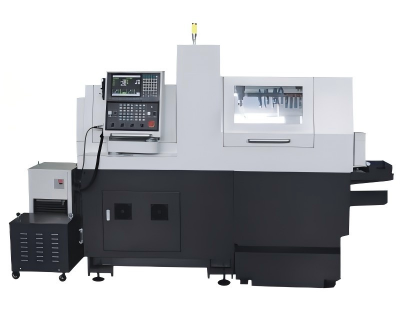
A half-degree shift in a machining center might not trigger any alarms, but over an eight-hour run it can push a tight tolerance from a comfortable middle to the edge of the spec. Operators rarely notice it happening because the change creeps in as bearings warm, coolant reaches its steady state, and the spindle housing expands at a different rate than the cast iron base. By the time the first out-of-tolerance part shows up on the CMM, the machine has already produced a dozen more just like it.
Long runs are particularly vulnerable because the thermal environment never really settles. Ambient temperature swings from morning to afternoon, hydraulic fluid heats up under sustained load, and even the workpiece itself can swell if it arrives hot from a previous operation. Each of these adds a small, slow-moving bias that shifts the process mean away from where it was when the job was first dialed in. The result is not a sudden crash but a quiet drift that turns good parts into scrap without any loud failure.
The best defense is to stop trusting the initial offset as a fixed number. On jobs that run for hours, check a reference feature at regular intervals and watch the trend instead of reacting to individual measurements. Even a simple warm-up cycle followed by a compensation update at the two-hour mark can keep a process from wandering outside the tolerance band. Ignoring thermal drift might not cost you a tool, but it will eventually cost you a batch.
Tooling Changeovers Should Not Slow Down Your Machining Rhythm
A tooling changeover often gets treated like a necessary interruption—stop the spindle, swap the holder, re-touch off, and hope the next part comes out right. But that pause adds up fast. Every minute spent fumbling with collets, hunting for wrenches, or re-zeroing an offset is a minute your machine isn't making chips. The real problem isn't the change itself; it's the lack of a repeatable routine that turns a fifteen-minute job into a forty-five-second one.
Good shops don't just wing it when a tool wears out or a job switches over. They stage inserts, preset tool lengths offline, and use quick-change systems that click into place without guesswork. A torque wrench lives next to the machine, not across the room. Tool data gets loaded from a chip or a barcode, not typed in by hand. The goal is to make the changeover boring—same motion every time, no surprises, no last-minute search for that one Allen key.
When changeovers become predictable, your machining rhythm stays intact. The operator doesn't lose their mental flow, the program doesn't sit idle while someone sorts through a drawer of mismatched screws, and the next part starts with the same confidence as the last. It's not about buying the most expensive tooling; it's about building a setup where every second of downtime has a purpose and a clear end. That's how you keep the spindle turning instead of waiting.
Automation Features Worth Paying For and Those You Can Skip
Most automation tools tempt you with a long list of capabilities, but only a few genuinely change how work gets done. Conditional branching that adapts based on real data, not just simple yes/no rules, is one I would happily pay extra for. Native integrations that handle rate limits and retries gracefully are another. Nothing kills trust in an automation faster than a silent failure at 2 a.m. Error logging with clear context, plus a way to pause or rerun individual steps, saves hours of guesswork later.
On the flip side, skip the vanity metrics dashboards that show dozens of runs without actionable detail. Prebuilt templates for every imaginable use case sound helpful, but they often force your process into someone else’s assumptions and create more cleanup than starting from a blank canvas. Be wary of “AI-powered” buttons that just call a generic model without letting you control the prompt or output schema. Unless the feature gives you fine-grained control, it is usually cheaper to build that piece yourself.
What Service Response Time Actually Looks Like After Installation
Once the installation crew packs up and drives away, the real test of service response time begins. Many providers promise instant support during the sales pitch, but the reality often feels different. A simple request like adjusting a setting or inspecting a minor leak can take days to schedule, not hours. Homeowners quickly learn that “24/7 support” sometimes means leaving a voicemail and hoping for a callback before the weekend ends. The gap between marketing promises and actual dispatch times becomes painfully clear when a small issue starts affecting daily comfort.
In practice, response time varies wildly depending on the provider’s local staffing and seasonal demand. During peak summer or winter months, even routine checkups can be pushed back two or three weeks. Some companies triage by urgency, so a non-emergency repair might sit in the queue while emergency calls take priority. That’s understandable, but it leaves customers wondering if their concerns matter. A transparent provider will tell you upfront: typical response for non-critical issues is 48 to 72 hours, while critical failures get same-day or next-day visits. If no one gives you those numbers before you sign, assume the worst.
The real metric to watch is not the initial installation speed, but how quickly a technician actually shows up after you report a problem. Ask for written examples of recent service logs — not just a generic “average response time” on a brochure. Some installers subcontract their post-installation support, which adds another layer of delay and miscommunication. A reliable company will have local technicians on payroll, a dispatch system that updates you by text, and a policy that first-time fixes happen within one visit. If those details are vague, your post-installation experience will likely be a string of frustrating phone calls and rescheduled appointments.
Matching Guide Bushing and Chip Control to Your Material Mix
Guide bushing clearance has to move with the material, not against it. Softer, gummier alloys like 6061 aluminum and 360 brass expand quickly under heat and will seize if the bushing is set too snug; a running clearance of 0.0003 to 0.0005 inch usually gives them room. Harder, more abrasive stock such as 17-4 PH or Ti-6Al-4V can tolerate a tighter setup around 0.0002 inch, but only if the bushing surfaces stay clean and well-lubricated. For mixed production runs, keeping spare bushings sized for the most common material families saves more time than constantly adjusting a single bushing.
Chip control changes just as much with the material mix. Free-machining steels and brass break chips without much help, so a standard positive insert and moderate feed will do. But austenitic stainless, soft aluminum, and low-carbon steel tend to string out badly. A sharp edge with a narrow chipbreaker, combined with heavier feed and a high-pressure coolant line aimed right at the cut zone, will curl and snap chips before they wrap around the bar or damage the bushing. If the job alternates between long-chipping and short-chipping materials, it’s worth having two or three insert geometries on hand instead of forcing one setup to handle everything.
The real trick is tracking what works per material. Keep a short note near the machine listing each stock type, the bushing clearance that ran clean, the insert geometry used, and the feed that produced compact chips. When the next batch comes through in a different alloy, you’re not starting from scratch—you’re just flipping to the proven recipe. That kind of logged adjustment beats guessing and keeps mixed-material runs from turning into bushing rebuilds or chip tangles.
FAQ
Beyond spindle speeds and tool counts, look at how the builder handles thermal stability, guide way construction, and the integration of the guide bushing with the main and sub spindle. Builders with a strong record in micro-machining and long, slender parts usually invest more in vibration damping and axis alignment verification. Ask for sample part runoffs on your own drawings rather than relying on catalog claims.
The control shapes everyday efficiency more than most people expect. A well-implemented CNC with fast block processing, straightforward tool load monitoring, and easy macro handling reduces setup mistakes. But the real test is how the builder tunes the control to the machine's kinematics; two brands using the same control can feel completely different. Request a hands-on demo with a complex simultaneous operation, not just a canned cycle.
The guide bushing is the heart of Swiss turning, so the builder's approach to its clearance adjustment, cooling, and alignment matters a lot. Rotary guide bushings help with higher speeds and reduce marking on delicate materials, while fixed designs may suit shorter runs. A builder that offers quick-change bushings and clear setup procedures will save you hours when switching bar diameters.
Yes. Medical bone screws, watch components, hydraulic fittings, and connector pins each stress the machine differently. A builder with deep experience in your niche will have already solved the tricky issues, such as chip evacuation in deep drilling, burr control on small threads, or holding roundness on thin-walled parts. Look for customer case studies with dimensional reports close to your own tolerance band.
Ask about mean time to repair for common components, local spare parts inventory, and whether service engineers are factory-trained or third-party contractors. Better yet, talk to two or three shops running the same machine for over five years. Ask what they would change. If the manufacturer can't give you reference contacts in your region, treat that as a warning.
Machines built on off-the-shelf castings and generic spindles can work for simple parts, but they often hit limits in thermal growth and repeatability over long runs. Proprietary castings allow the builder to optimize ribbing and mass for vibration control, while in-house spindle design gives tighter control over bearing preload and cooling. The penalty is usually higher upfront cost, so weigh it against your tolerance and surface finish requirements.
Location matters less for the machine itself than for service and spare parts. A builder with regional application engineers, demonstration centers, and parts hubs can reduce downtime when a drive fails. However, many shops buy from distant builders successfully if they carry critical spares in-house. Check freight times for common wear items like belts, encoders, and guide bushings before committing.
Ask for a runoff using your own material or a close equivalent, with parts measured on your own CMM. Have the builder document spindle growth over a two-hour cycle, test bar roundness, and torque levels for the live tooling. A serious builder will not hesitate to run a challenging sample with multiple synchronized operations. Avoid accepting only a standard geometric alignment report.
Conclusion
When evaluating Swiss type lathe manufacturers, the specifications that truly determine long-term precision often hide beneath surface-level data sheets. Spindle runout tolerances, for instance, demand far more scrutiny than their printed values suggest—real-world performance under load, temperature fluctuations, and tool wear can shift runout in ways that static measurements miss. Similarly, thermal drift is a silent saboteur of extended production runs; a machine that holds tight tolerances for the first hour may wander as heat builds in the spindle, ball screws, and guide bushings. The best manufacturers address this through symmetric machine structures, active cooling, or thermal compensation algorithms, not just by quoting a low drift number. Tooling changeovers are another rhythm breaker—if a tool swap takes more than a few minutes or requires awkward reach into the work zone, your machining cadence stalls. Look for designs that allow rapid insert indexing, quick-release tool holders, and preset offline stations. When it comes to automation, pay for features that reduce operator intervention without adding complexity: bar feeders with reliable remnant handling, automatic part collection with chip separation, and tool monitoring that actually alerts before breakage. Skip flashy options like integrated robotic part inspection if your batch sizes don't justify the programming overhead.
Beyond the machine itself, a manufacturer's post-installation service response time can make or break your production schedule. Ask for concrete examples: do they keep regional service engineers on call, or do you wait days for a technician to fly in? A machine with excellent specs but a 48-hour service window is a liability in a high-mix shop. Finally, the guide bushing and chip control system must match your material mix—running brass, stainless steel, and medical-grade alloys on the same platform requires adjustable guide bushing clearance, high-pressure coolant options, and chip conveyor designs that handle both fine stringy swarf and short brittle chips. The right Swiss lathe manufacturer will help you configure these details upfront, rather than forcing you to adapt your process to their standard machine. In the end, precision machining success depends less on headline spindle speeds and more on how well the manufacturer understands your specific thermal, tooling, automation, service, and chip-control realities.
Contact Us
Contact Person: Tim
Email: [email protected]
Tel/WhatsApp: +86 15522553731
Website: https://www.winnrui-cnc.com/