

PTFE Valve Seat Exporter Guide: How to Source Dependable Components
2026-11-23
Sourcing PTFE valve seats often feels like a gamble: specifications look identical on paper, yet a few months in service reveal the difference between a component that seals reliably and one that fails under pressure. This guide cuts through supplier noise and gives you a practical path to dependable parts. Whether you are replacing seats in aggressive chemical service or qualifying a new supply chain, knowing where tolerances, resin quality, and machining consistency actually matter will save you costly teardowns. As you work through the exporter checklist below, keep an eye on how TAIFNO handles these same pressure points—it may change the way you evaluate your next order.
PTFE Grade Names Can Hide More Than They Reveal
PTFE grade names often read like a secret code built from numbers, letters, and trade-specific jargon. A single base resin can appear under multiple commercial labels depending on the supplier, the intended processing method, or the particle size range. What one manufacturer calls fine-cut, another labels as free-flow, while a third hides the same properties behind a proprietary numeric suffix. When specifications cross borders or move between industries, relying on the grade name alone becomes a fast track to miscommunication.
The real information lives in physical characteristics that the name rarely captures: bulk density, particle shape, sieve retention, shrinkage behavior, and the subtle differences in how the powder flows through a ram extruder versus a paste extruder. Two drums labeled as the same grade from different batches can behave differently on a press, and two drums labeled differently can turn out to be functionally interchangeable. Engineers who skip the name and test the powder often find the relationship between labeling and performance is looser than procurement teams assume.
For anyone translating between legacy specifications and modern supply chains, treating the grade name as a starting point rather than a truth is essential. Ask for the original technical data sheet, confirm the manufacturing route, and compare a small trial lot against a known reference before committing to a large order. The name on the drum is shorthand, not a guarantee.
A Smooth Finish Won’t Save a Seat with a Spongy Core
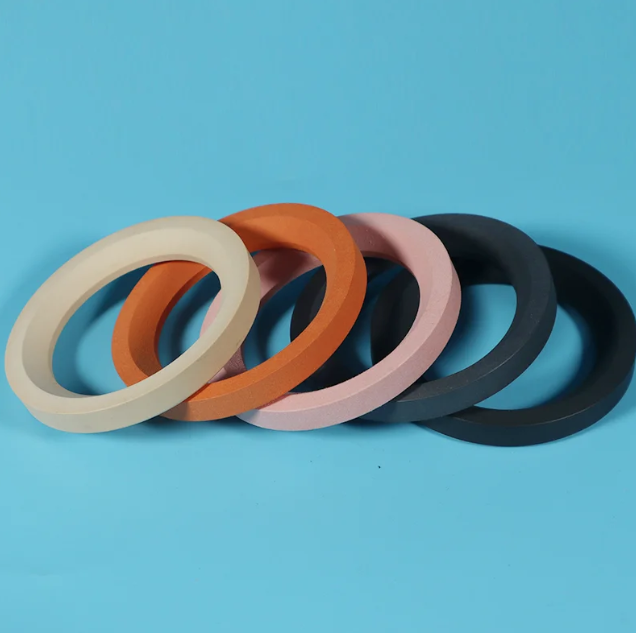
A seat can feel substantial at first glance, with tight stitching and a flawless cover, but the truth reveals itself after a few weeks of daily use. If the foam underneath lacks density or the support layer is too soft, the surface polish quickly becomes irrelevant. You notice it when the cushion compresses unevenly, when the fabric begins to sag around the edges, or when you can feel the frame pushing through after an hour.
This is why the internal construction matters more than any visible upgrade. High-resilience foam, reinforced webbing, and a well-anchored base keep a seat from turning into a bowl. A smooth finish may catch your eye in the showroom, but the part you actually live with is the core. If that core gives way, no amount of tailored upholstery will make the chair feel right.
Choosing a seat means looking past the surface. Press into the cushion, ask what the foam density is, and pay attention to how the support is layered. A seat that holds its shape over time comes from what's hidden inside, not from the fabric stretched over it.
Export Papers Usually Tell You Who Actually Made the Part
A lot of buyers assume the name on the invoice is the name of the factory, but export paperwork often shows a different story. The exporter of record may be a trading company or a brand that never touches the production line, while the actual manufacturer appears in a less prominent field on the customs declaration or certificate of origin. Compare that manufacturer block with the supplier's marketing materials and the mismatch can be immediate.
Customs data is harder to smooth over than a catalog. Export declarations usually require the producer's legal name and address for duty, quota, and anti-dumping checks, so a reseller has little room to hide who poured the metal or assembled the circuit board. Freight documents, packing lists, and country-of-origin certificates tend to repeat that same factory name even when the commercial invoice leads with a different seller.
That paper trail becomes useful when you need warranty support, replacement tooling, or a direct line during a quality dispute. It can also expose an unauthorized subcontractor if the declared manufacturer doesn't match the facility you audited. The details are usually buried in fine print or coded fields, but once you know where to look, export records give a more honest answer than a supplier's website ever will.
Sintering Questions That Make Inexperienced Suppliers Pause
Ask a vendor how they handle oxygen levels in the furnace during the final stage of sintering, and you can often separate the ones who actually run trials from the ones who just quote a datasheet. Most newcomers will hesitate, mention “standard conditions,” or offer a vague range that stretches too wide to be useful. That pause isn't a small detail. It tells you they haven't pushed a batch to the edge, watched a part distort, and then adjusted the ramp rate with a specific material lot in mind.
Another question that surfaces real experience: what changes when the part has a thick cross-section next to a thin wall? Novice suppliers tend to answer with furnace temperature alone. Experienced teams talk about load arrangement, soak time at intermediate plateaus, and how the heating profile shifts when the green density varies more than a couple of tenths. If they can't walk you through that trade-off without leaning on generic process charts, they probably can't troubleshoot your parts when something goes sideways.
You'll also notice the difference when asking about debinding and its interaction with the sinter cycle. A supplier who pauses too long may not have mapped the outgassing window for your specific binder system. The ones worth your time can explain, for instance, how a slower debind segment prevents carbon residue before the densification phase even begins. That kind of answer isn't memorized from a textbook. It's earned from ruined batches and recovered schedules.
The Tolerance Drift That Appears After a Few Hot Cycles
A fresh assembly often fits exactly as designed, but after a handful of thermal cycles the clearances start to move in ways that are easy to overlook. The first shift is rarely dramatic; it shows up as a slightly tighter bore, a fastener that needs a bit more torque, or a mating face that no longer sits flat. Because the change accumulates quietly over repeated heating and cooling, it can be mistaken for ordinary settling.
Much of this drift comes from the way different materials expand and contract at their own rates. When parts are clamped together and heated, the softer or thinner sections may yield locally, and once they return to room temperature they do not fully spring back. Residual stresses left from machining or welding also release in small increments, gradually pulling dimensions away from the original measurements.
The practical problem is that tolerances established at room temperature may no longer describe the assembly after several hot runs. Instead of chasing the drift after it appears, it is often more reliable to run a short thermal conditioning cycle before final inspection or to build in allowance for the expected movement. Otherwise, the dimensions that pass on the first check can become the ones that cause interference, leaks, or uneven wear later.
When Cheap PTFE Seats Start Eating Into Your Maintenance Budget
The purchase price looks like a win until the first thermal cycle works the seat. Many low-cost PTFE seats are molded with looser tolerances and minimal filler control, so the material cold-flows under normal line pressure. Once the lip loses its original profile, the valve no longer holds a tight shutoff, and the usual response is to over-torque the handle or actuator. That extra force does not fix the seat; it just accelerates the deformation and scores the ball or disc.
Failure is rarely a single dramatic event. It shows up as a slow slide: a slight weep through the drain, rising leakage rates during routine testing, and the same handful of valves appearing on the work order list quarter after quarter. Each repair means isolating the line, pulling the valve, replacing the insert, reassembling, and running a closure test. The labor hours and production downtime usually erase whatever was saved on the seat itself, often several times over.
A more useful comparison is cost per valve-year, not unit price. Plants that track seat replacement intervals for identical services typically find that a quality reinforced PTFE seat, or a filled grade matched to the actual temperature and chemical exposure, can run two to three times longer before attention is needed. Cheap seats tend to hide their cost in the maintenance budget, where repeated small jobs pile up into a much larger line item than the original procurement report ever showed.
FAQ
Start with how they handle material traceability. Ask for a clear paper trail from resin lot to finished seat, including the PTFE grade and any fillers. If that information is hard to get early on, it usually points to looser process control later.
Request the exact material data sheet and compare its compressive strength, thermal expansion, and creep behavior against your pressure and temperature range. Be specific about cycling frequency, because cold flow becomes a bigger factor in seats that see frequent load changes, not just constant pressure.
Look at how they discuss failures. A useful exporter will tell you the typical failure modes of their seats in certain chemicals or temperature swings, not just claim universal compatibility. Also check whether they keep dimensional records from past batches and can share a sample inspection report without hesitation.
Lead time often depends on whether they stock raw PTFE billets in common sizes or have to procure them for each order. You can shorten this by giving forecast ranges for the next few quarters, and by asking which seat dimensions they already run regularly rather than treating every size as a custom job.
At a minimum, ask for dimensional inspection data and a certificate showing the PTFE grade and batch number. If the seat is for a severe service valve, also look for pressure or leak test results done on the actual seat geometry, not just generic material test bars.
Request that they measure critical features with the same method and at a stable room temperature, since PTFE moves noticeably with thermal changes. It also helps to agree on a reference drawing that marks which dimensions are functional and which are less critical, so the exporter knows where to apply tighter control.
A smaller specialist can be better when you need mixed sizes in low volumes or quick changes to groove geometry. They often have faster internal communication, but you should confirm they still have proper sintering capacity and inspection equipment rather than relying only on machining skill.
Conclusion
Sourcing PTFE valve seats often begins with a spec sheet, but the real work starts when you treat grade names as clues rather than guarantees. A supplier may list a familiar resin designation and still deliver material with inconsistent density, recycled content, or filler blends that behave differently under load. Surface finish gets too much attention in the early screening; a glossy machined face tells you nothing about internal porosity left by poor compression or rushed sintering. Instead of asking only about dimensions, press for details on preform pressure, heating rate, and cooling time. Export records and batch documentation can reveal the actual molder or machining shop behind the label, which is useful when the sales team is vague about manufacturing origin.
Heat cycling tends to expose what room-temperature inspection misses. PTFE has a high expansion coefficient and cold-flow tendency, so seats that measure within tolerance on arrival may shift after repeated hot and cold exposure. Ask for thermal cycling data rather than a single inspection report. If the supplier hesitates on sintering parameters or cannot explain how they control crystallinity and residual stress, that silence is a warning. The real cost of a marginal seat often shows up later as leakage, shortened seal life, or unscheduled valve repair. A dependable exporter will discuss failure modes, batch traceability, and long-term dimensional stability without being prompted.
Contact Us
Contact Person: Tommy Xiao
Email: [email protected]
Tel/WhatsApp: 8615651509888
Website: https://www.ptfe-factory.com