

ODM Gasoline Dispenser Pump: A Complete Buying Guide for Fuel Station Owners
2026-10-17
Buying a gasoline dispenser pump isn’t just a box-ticking exercise—choose wrong and you’ll live with slow flow rates, confusing interfaces, and maintenance calls for years. For fuel station owners who want equipment tailored to their layout, traffic, and fuel mix, ODM manufacturing changes the equation. BEILIN has been at the center of that shift, turning custom specs into field-ready pumps without the usual markup or lead-time headaches. Before you sign a purchase order, here’s what actually separates a smart ODM investment from an expensive mistake.
How ODM Gasoline Dispensers Differ from Standard Retail Pumps
ODM gasoline dispensers are built around a client's operational blueprint rather than a one-size-fits-all retail specification. Where standard pumps prioritize uniform compliance and quick deployment across public stations, ODM units often start with a modular chassis that allows different meter types, nozzle configurations, and even hydraulic layouts to be selected before the housing is finalized. This means a fueling network in a cold climate might request heated display windows and frost-resistant keypads, while a mining operation needs a dispenser with no card reader at all—just a rugged keypad and high-flow nozzle. Such choices simply aren't available on shelf-model retail pumps.
Software and data handling mark the second clear divide. Retail pumps ship with closed firmware geared toward EMV payment, tax reporting, and receipt printing for everyday consumers. An ODM dispenser can be delivered with open communication protocols or a private API, letting the owner integrate it into fleet management platforms, inventory reconciliation systems, or custom loyalty programs. The user interface can also be stripped down or expanded: one ODM client might want a 7-inch touchscreen with instructional videos for drivers, another might opt for a two-line LCD that only shows liters and price.
Finally, field service and part availability differ in practice. Standard retail pumps rely on a dense network of certified technicians and common spare parts, which is convenient but limits deep customization. ODM suppliers usually provide detailed maintenance documentation and remote diagnostic access tailored to the client's in-house team. This shifts the long-term cost structure—ODM units can be cheaper to operate if you have your own technicians, but they may not have the same instant third-party support as a major retail pump brand.
Matching Dispenser Flow Rates and Accuracy to Your Station's Traffic
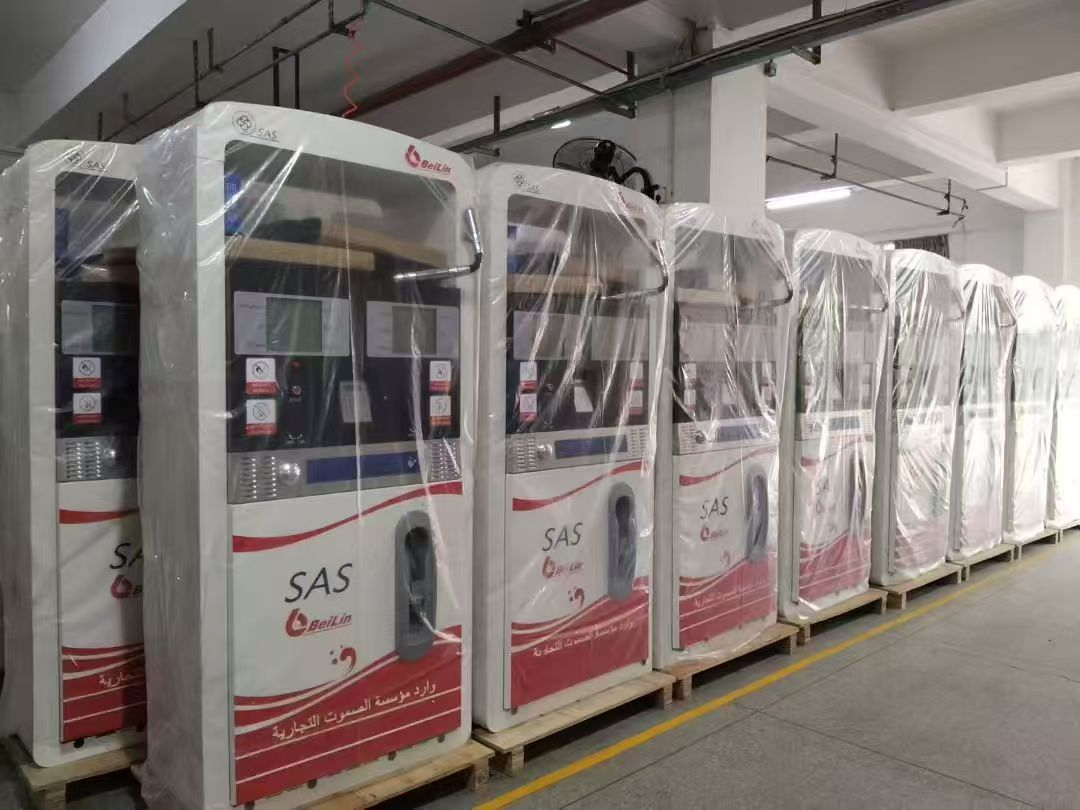
A busy highway location with constant truck traffic has very different fueling demands than a small neighborhood station that mostly serves commuter sedans. Getting the dispenser flow rate right starts with studying your hourly vehicle mix and peak windows. If you install high-flow units rated for heavy-duty fill-ups but your lot rarely sees anything larger than a pickup, you're paying for speed nobody uses. On the flip side, standard-flow dispensers on a diesel island can create bottlenecks when multiple commercial vehicles queue up. Match the nozzle and meter capacity to the actual vehicles that pull in, not just the theoretical maximum.
Accuracy becomes a bigger factor when volume is inconsistent. Dispensers that sit idle for long stretches may experience more drift in calibration than those that run steady all day. A meter that is certified accurate at 10 gallons per minute might behave differently at a trickle or when start-stop fueling is common. If your station has sporadic rushes followed by quiet hours, ask your service provider to check calibration under both low-flow and high-flow conditions. Small errors on a few thousand gallons a month are manageable, but at a high-traffic site those same percentage deviations turn into real money.
Peak-hour behavior should also influence how you configure nozzles and hoses. Long reach and swivel joints can help keep lines moving when cars are angled awkwardly, but they add minor flow restrictions. Likewise, vapor recovery systems can reduce effective flow rate if not maintained. Rather than chasing the highest advertised gallons per minute, observe your own forecourt during the busiest 60 minutes. Count how many vehicles actually complete fueling, watch where queues form, and then adjust flow rates, hose lengths, or island assignments accordingly. The goal is a dispenser setup that feels effortless for drivers while keeping measurement drift within tight tolerances for your typical traffic pattern.
Nozzle, Hose, and Display Configurations That Fit Real Forecourt Workflows
On a busy forecourt, nozzle and hose layout rarely gets the attention it deserves until a driver has to wrestle a kinked line or reposition a vehicle. Swivel joints at both ends stop the hose from curling against the pump, and retractors with enough tension keep the apron clear without yanking the nozzle out of a filler neck. For mixed fleets, separate diesel and petrol nozzles with different grip colours and flow rates cut down on mistakes. Breakaway couplings placed at the hose-to-nozzle join protect both the pump and the vehicle if someone drives off with the nozzle still seated.
Display configurations work best when they match where a customer's eyes actually land mid-transaction. High-mount screens with polarised glass remain legible in low sun, and transaction prompts should follow the order drivers expect: lift nozzle, select grade, fill, replace. On units with integrated payment, card readers positioned below the display rather than behind a flap reduce fumbling with gloves. A second, smaller status display on the nozzle boot can show flow rate or cumulative volume, so the operator does not have to turn back to the main panel while filling a container.
Regional Certification and Safety Requirements You'll Need to Clear
Bringing a product to market rarely means meeting a single global standard. Each region enforces its own certification framework, and the differences can catch you off guard if you assume one approval covers everywhere. In Europe, the CE mark is non-negotiable for many categories, but it's not a one-size-fits-all seal—specific directives like the Low Voltage Directive or the Machinery Directive apply depending on what you're selling. Meanwhile, the United States leans heavily on voluntary standards that become mandatory through buyer expectations or liability concerns, with marks like UL or ETL often required by retailers even when federal law stays silent.
The practical side of clearing regional requirements goes beyond paperwork. You'll need to plan for local testing, sometimes at accredited labs in the target country, and be ready to adapt your product if a particular safety threshold differs from what you originally designed to. For instance, electromagnetic compatibility limits can vary significantly between North America, the EU, and parts of Asia, meaning a device that passes in one market may need component changes or shielding adjustments elsewhere. Building in buffer time for re-testing and documentation review prevents last-minute shipment delays.
Don't overlook the human element in certification. Working with an experienced local representative or notified body can streamline the process, especially when language barriers or unfamiliar bureaucracy slow things down. Keep a clear record of every standard applied, test report generated, and declaration signed—many regions conduct post-market surveillance, and having your compliance trail organized saves you from scrambling later. Approaching regional requirements as an ongoing responsibility rather than a one-time hurdle keeps your product available and your customers protected as rules evolve.
Judging ODM Manufacturers Beyond the Spec Sheet
A spec sheet can tell you the output wattage, tolerance ranges, or whether a unit meets a particular ingress rating. What it won't reveal is how a factory behaves when a component goes end-of-life, or how quickly the engineering team flags a design flaw that hasn't shown up in testing yet. When you start asking those questions, you're no longer comparing numbers—you're assessing judgment, and that changes the shortlist fast.
Some of the best ODM relationships I've seen begin with a simple audit of daily engineering huddles, tooling maintenance logs, and the way rejected lots are handled. A manufacturer that tracks scrap rates by root cause, keeps fixture calibration records without being asked, and pushes back on unrealistic tolerances before prototyping is one you can trust when the spec sheet goes quiet. Those details rarely appear in a quote, but they show up later in field returns, lead-time slips, and rework costs.
Communication habits matter more than most buyers expect. A responsive sales contact means little if the engineering lead avoids written confirmations or the quality team can't explain why a corrective action was closed. Ask for a sample CAPA report, a change notification from a past project, or meeting notes from a design review. If the records are thin or contradictory, that's a stronger signal than any tolerance on a drawing.
Installation, Calibration, and Service Planning That Keeps Downtime Low
A well-executed installation sets the stage for reliable operation. Instead of treating setup as a mere formality, our teams account for site-specific variables like ambient temperature swings, power quality, and vibration sources. By aligning equipment precisely with its operating environment from day one, we eliminate many of the small misalignments that later turn into unplanned stops.
Calibration is often viewed as a periodic chore, but we approach it as a feedback loop tied to actual usage patterns. Rather than applying fixed intervals blindly, we track drift signatures and workload intensity to schedule calibration only when meaningful deviation appears. This keeps measurement integrity high without adding unnecessary service visits, which themselves can interrupt production.
Service planning works best when it anticipates failure modes instead of reacting to them. We map each asset's wear components and duty cycles, then sequence inspections so that high-risk items get attention before they degrade. Spare parts are staged locally based on real fault history, not generic recommendations. The result is a maintenance cadence that feels almost invisible to daily operations, yet consistently keeps downtime in single-digit hours per year.
FAQ
ODM stands for Original Design Manufacturer. In the context of gasoline dispensers, it means the supplier not only manufactures the unit but also owns the design and engineering. For a station owner, this often translates into more flexibility—you can request tweaks to flow rate, nozzle configuration, or even the interface without investing in a full custom build. It's a middle ground between off-the-shelf and fully bespoke equipment.
Flow rate depends on your typical customer mix. If you serve a lot of commercial trucks or high-turnover retail cars, you'll want dispensers rated for 40 to 60 liters per minute or higher to keep queues short. For smaller neighborhood stations, 30 to 40 liters per minute is often plenty. Don't forget that actual flow is affected by hose length, nozzle type, and submersible pump pressure, so ask the supplier for real-world test data rather than just catalog specs.
Look for ATEX or IECEx certification for explosive atmospheres, plus local metrology approvals like MID in Europe or NTEP in the US. These aren't just paperwork—they confirm the dispenser meets safety and accuracy standards under real operating conditions. If a manufacturer can't provide current certificates or test reports from an accredited lab, that's a red flag. Also check if the electronics are EMC-tested to avoid interference issues near other station equipment.
Yes, that's one of the main reasons to go with an ODM supplier. You can often choose screen size, button layout, language options, and even integrate contactless payment readers or QR code scanners directly into the dispenser face. Some manufacturers offer modular designs so you can swap out the payment module later without replacing the whole unit. Be specific about your region's payment standards—like MDB or specific bank protocols—so the software is preloaded correctly.
Most dispensers need a basic monthly check—hose wear, nozzle seals, filter condition—plus a more thorough annual inspection of the meter and electronics. Good ODM designs often simplify this by using quick-release panels, front-access filters, and diagnostic ports that let technicians plug in a laptop. Ask the supplier for a recommended maintenance checklist and whether they provide remote monitoring options. A well-designed unit can cut routine service time by nearly half compared to older models.
Don't just look at the sticker price. Calculate energy consumption of the motor and electronics, expected lifespan of seals and meters, spare parts availability, and whether the supplier offers local service support. A cheaper dispenser with a non-standard flow meter might cost you more in downtime and parts over five years than a pricier unit with widely available components. Ask for references from stations in similar climate conditions—dust, humidity, and temperature swings can dramatically affect longevity.
For most modern stations, especially those with multiple dispensers, a central submersible pump system is more efficient and easier to maintain. Each dispenser then just has a meter and valve, which reduces heat buildup and extends electronics life. However, if you're setting up a small or temporary site, dispensers with integrated suction pumps can save on underground piping costs. Your ODM supplier should be able to advise based on your tank layout and expected daily volume.
A frequent one is overlooking local calibration requirements—some regions require the meter to be re-verified on-site after installation, and certain ODM designs may not allow fine adjustment without proprietary tools. Another mistake is choosing a touchscreen interface without considering glare or glove use in cold weather. Also, some owners forget to confirm that the dispenser's communication protocol matches their existing POS system, leading to expensive integration work later. Always get a detailed technical specification sheet and have your installer review it before signing.
Conclusion
Buying an ODM gasoline dispenser isn't just about picking a model from a catalog. The real work starts with understanding how these units diverge from standard retail pumps—often in frame construction, electronics, and customization options. You then need to align flow rate and meter accuracy with your actual traffic patterns; a busy highway site demands different throughput than a neighborhood station. Forecourt layout matters too, so nozzle reach, hose length, and display orientation should be chosen around how attendants or customers actually move, not around a spec sheet's default settings.
Before signing anything, verify which regional certifications and safety codes apply to your location—this varies more than many owners expect. Look past the manufacturer's polished brochure and dig into their track record with similar stations, spare parts availability, and response times. Finally, plan installation and calibration carefully: a poorly commissioned dispenser will eat into profits through downtime and measurement disputes. The best buying decision balances upfront cost with the service network and local compliance path that keep your forecourt running without surprises.
Contact Us
Contact Person: Jason
Email: [email protected]
Tel/WhatsApp: 8615876017548
Website: https://www.bei-lin.com/