
NS3304 Seamless Pipe Exporter Insights for Global Procurement Teams
2026-11-16
Sourcing NS3304 seamless pipe for global projects? You’ve likely run into exporters who treat alloy chemistry as a suggestion rather than a spec. JILAIDA takes a different route—one built on melt traceability, hydrostatic testing that actually gets documented, and packaging that survives ocean freight. In the insights below, we’re pulling back the curtain on what procurement teams should verify before committing to a supplier. No fluff, just the details that keep your line running.
What Separates Reliable NS3304 Seamless Pipe Exporters From the Rest
A reliable NS3304 seamless pipe exporter is one whose material traceability doesn't stop at a certificate on paper. You can ask for the original mill test report and follow the heat number all the way through processing, cutting, and final packing. The pipe you receive should match the chemical composition and mechanical properties listed, not just come close. Reputable suppliers also keep retention samples from each lot, so if a question ever comes up months later, there's a physical piece to recheck rather than a vague email exchange.
Inspection practices separate serious exporters from those that simply move boxes. Look for suppliers that run ultrasonic or eddy current testing on every pipe before shipment, not just a random sample. Dimensional checks should cover wall thickness, ovality, and length tolerances, and the ends ought to be beveled or plain cut exactly as specified. A good exporter will also photograph the loading process and share those images without being asked, because they know the buyer cannot stand next to the container.
The final difference shows up in documentation and after-sales behavior. Reliable NS3304 pipe exporters provide a complete set of shipping documents—commercial invoice, packing list, bill of lading, and any third-party inspection certificates—before the vessel departs. If a problem appears at the destination, they arrange for a local inspector or accept a return without making the buyer fight through layers of intermediaries. Their communication stays direct, and they remember the order details six months later instead of treating every message as a new inquiry.
The Hidden Cost Drivers Behind NS3304 Seamless Pipe Quotes
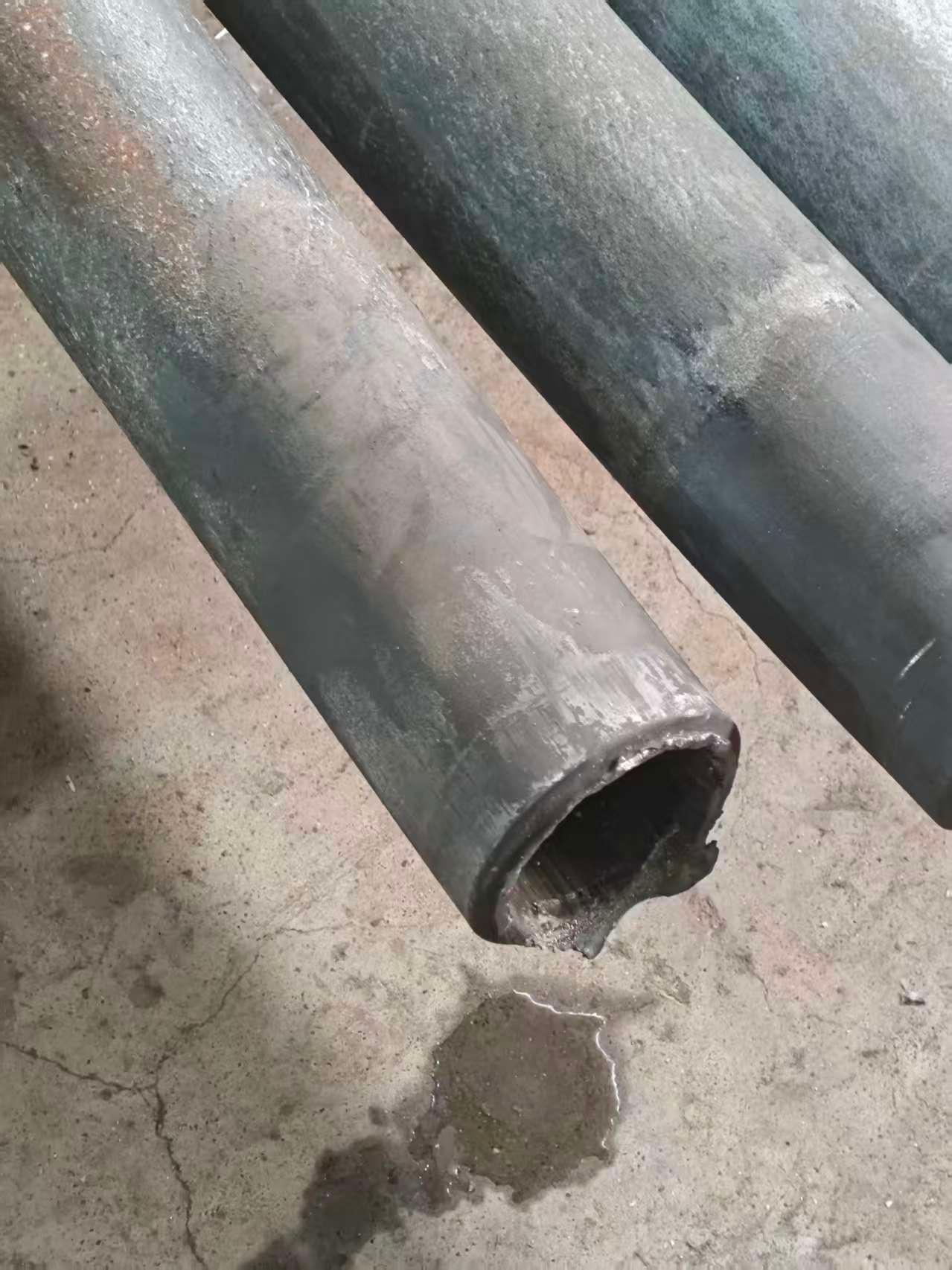
Raw material pricing for NS3304 rarely tracks the spot nickel quote you see in the news. Mills apply monthly alloy surcharges for nickel, molybdenum, and chromium, and these can swing several percentage points between quoting and order confirmation. On top of that, many suppliers hedge or use different scrap-to-virgin ratios, so two identical-looking quotes can hide very different material cost assumptions.
The conversion cost is another quiet driver. NS3304 work-hardens fast during hot working and cold drawing, which lowers tool life, slows production speeds, and pushes rejection rates up. A seamless pipe mill may start with 30-40% more billet weight than the finished product requires, and that yield loss gets baked into the per-ton price, especially for small-diameter or thin-wall sizes.
Testing and documentation add up faster than most buyers expect. Full ultrasonic and hydrostatic testing, positive material identification, intergranular corrosion tests, and third-party witness inspection are often quoted separately or only included after you ask. Short delivery windows, non-standard wall thicknesses, and small batch quantities also trigger premiums that never appear as line items on a standard quote sheet.
Reading Mill Test Reports Like a Procurement Professional
The first thing a seasoned buyer notices on a mill test report isn't the chemical composition table—it's the heat number. That unique identifier links the sheet of paper in front of you to a specific batch of steel poured at a particular time, and every subsequent value only matters if it traces back cleanly. A missing or illegible heat number makes the entire document suspect, regardless of how perfect the yield strength looks. So start there, before you get lost in decimal points.
Once the traceability checks out, compare the reported mechanical properties against the material specification you actually ordered, not the generic grade name a supplier used in their quote. Many procurement teams get burned by accepting “A36” when the application demanded A36 with a charpy impact test at -20°C. Look for the fine print on test methods too—a tensile test done on a round bar may not represent the plate thickness you're buying. And don't ignore the certifying signature: a mill test report without a qualified inspector's stamp is just a suggestion, not a guarantee.
Finally, treat each report as a snapshot of one production run, not a blanket approval. If you're receiving material in multiple lots, match each heat number to its corresponding physical bundle or coil. Discrepancies here—like a report showing a chemistry reading outside the allowed range but the material already cut—cost more in rework than the time spent cross-checking. A procurement professional's value isn't just in reading the numbers; it's in knowing which numbers will make the part fail before it ever reaches the shop floor.
Why Lead Times Vary Wildly Across NS3304 Pipe Suppliers
Lead time variation for NS3304 pipe often starts before a single tube is formed. Because NS3304 is a high-nickel, corrosion-resistant alloy, not every supplier keeps semifinished hollows or billet on hand. Some work directly with specialty melt shops and reserve heats months ahead; others only place a mill order once they have enough tonnage to justify a production campaign. If your pipe is waiting for a vacuum melting or electroslag remelting window to fill, that scheduling gap alone can add three to eight weeks—before extrusion or cold drawing has even begun.
Downstream processing queues create even more spread. After forming, NS3304 pipe typically needs solution annealing, straightening, pickling, and ultrasonic or hydrostatic testing. A supplier that owns this finishing line can slot your order into an internal queue and turn it around in days. A trader or distributor that subcontracts these steps has no direct control over a processor’s backlog, equipment breakdowns, or holiday shutdowns. Two suppliers quoting the same upstream mill can therefore show lead times that differ by four or five weeks on the identical size and schedule.
Inventory posture splits the field further. A few suppliers stock common NS3304 dimensions and can cut, bevel, and ship within a week. Most operate make-to-order and won’t release a mill order until payment terms are secured. Then comes certificate turnaround. For high-nickel alloys, material test reports sometimes need re-verification after heat treatment, and a slow in-house lab or an overloaded inspection department can tack on another five to seven working days at the very end. The result looks chaotic from the outside, but it is really a map of who controls the scarce steps: melting capacity, finishing capacity, and final documentation.
Smart Contract Terms for International NS3304 Pipe Purchases
Negotiating NS3304 pipe purchases across borders has traditionally meant wrestling with paper contracts, manual letter-of-credit reviews, and slow payment cycles. Smart contract terms replace those friction points with executable clauses written directly into code. A simple example: the buyer locks payment in a neutral escrow contract, and the supplier triggers release only after uploading a third-party inspection certificate that verifies chemical composition and wall thickness tolerances against the agreed standard. No email exchanges asking for status updates; the chain records every step.
Discrepancy handling gets a lot sharper when tolerance bands are codified. Suppose the contract states that nickel content must fall between 9.0% and 11.0%. If the mill test report shows 11.2%, the smart contract can automatically calculate a price adjustment based on pre-agreed penalty tiers or even halt disbursement pending renegotiation. That removes the common dispute over whether a small deviation should be accepted with a commercial concession or rejected outright. The terms become less about trust and more about deterministic logic.
One practical pitfall is linking off-chain inspection data to on-chain execution. Relying on a single centralized testing lab creates a single point of failure. A more robust approach lets the buyer nominate two approved inspectors, and the smart contract verifies that at least one digital signature from that allow-list is attached before funds move. For high-value NS3304 shipments, you can even split payment into milestones: 30% after melt certificate upload, 50% after dimensional verification at the port, and 20% after buyer acceptance within a fixed window. Each milestone deadline is kept short, and if evidence fails to arrive, the contract either extends automatically with a penalty or initiates a refund path, depending on which party missed the deadline.
Building a Shortlist of Exporters That Won't Disappear Mid-Order
Most buyer checklists stop at a valid license and a decent showroom, but exporters who vanish mid-order often look fine on paper. Instead of trusting a certificate or a directory listing, pull their actual shipment history from customs data or freight forwarders. Ask for the names of three buyers in your region who placed similar-sized orders over the past two years, then call them. A surprising number of so-called factories are just trading companies renting a booth at a trade show, so verify the physical address of the production site and check whether the same legal entity has been exporting for at least five years. Frequent name changes or shifting registration details are early warnings.
Communication is the cheapest stress test. During initial negotiations, ask specific questions about raw material sourcing, production bottlenecks, and what they do when a batch fails inspection. A supplier that has survived tough orders will answer with concrete examples, including past mistakes. If they dodge or give you only empty reassurances such as 'we always deliver on time', treat that as a red flag. Also propose a small trial order with strict quality and deadline terms, then watch how they handle the inevitable hiccup. Their behavior on a $3,000 order tells you more about their staying power than any audit report.
Finally, never let a shortlist become a single name. Keep at least two or three vetted exporters for each product category, and re-check them every quarter. Look for changes in ownership, sudden drops in export volume, or unresolved complaints on industry forums. Trade credit insurance or third-party inspection services can add another layer of protection, but they work best when your shortlist is built on verified operational history rather than marketing claims.
FAQ
The seamless structure removes the longitudinal weld seam, which is often the first place stress corrosion cracking and crevice attack start. For procurement teams working with aggressive chlorides or hot acids, that single difference can cut unplanned downtime significantly.
Ask for traceability from melt to final hydrotest, not just mill test certificates. Reputable exporters can supply heat numbers tied to raw material lots, confirm cold working steps, and share in-house or third-party test reports for ultrasonic and eddy current inspection.
Watch for unrealistically short lead times on non-standard sizes, vague chemical composition ranges, and refusal to provide samples for independent PMI testing. Some traders list NS3304 but deliver a lower molybdenum nickel alloy unless the contract specifies exact UNS or EN equivalents.
Depending on the destination, ASTM B622 or B829 for seamless nickel alloy pipe are common starting points. Buyers should also tie acceptance to specific NACE MR0175/ISO 15156 requirements if the pipe will see sour service, and define dimensional tolerances per ASME B36.19.
Seamless production involves billet piercing or extrusion followed by multiple cold pilgering and annealing cycles, so 8 to 16 weeks is typical for standard sizes. Non-standard wall thicknesses can add four to six weeks. If an exporter promises delivery in half that time, request detailed scheduling evidence.
NS3304 is a high-value nickel alloy, and small deviations in chromium or molybdenum content can alter corrosion resistance. Independent inspectors verify dimensions, surface quality, and perform positive material identification at the exporter's warehouse, reducing the chance of receiving mixed or substituted heats.
Pipes should be capped with plastic end protectors, bundled in seaworthy wooden crates, and shipped with rust-preventive wrapping if ocean transit exceeds three weeks. Documentation should include commercial invoice, packing list, mill test certificate, certificate of origin, and a detailed test report covering mechanical properties and corrosion tests.
Instead of asking for blanket discounts, consolidate sizes into production batches, lock the nickel and molybdenum surcharge formula in advance, and offer flexible shipment windows. Exporters are more willing to reduce margin when they can plan mill runs efficiently.
Conclusion
Global procurement teams sourcing NS3304 seamless pipe quickly learn that not all exporters operate with the same level of discipline. The reliable ones stand out through transparent mill test reporting, a willingness to explain how raw material surcharges and processing steps shape final quotes, and honest conversations about current shop floor loading. Instead of quoting a generic lead time, they map out the actual sequence from billet availability to ultrasonic testing and final inspection. That kind of granularity matters because hidden cost drivers such as nickel price volatility, heat treatment cycles, and non-destructive testing scope rarely surface in a one-line quote. Buyers who ask to see a recent MTR and compare it against the material specification catch discrepancies early, before money moves.
Lead time variation is another area where weak exporters collapse. Some promise quick delivery but quietly outsource finishing or hold inventory that does not match the required size range. Strong contract terms help lock down partial shipment windows, tolerance for third-party inspection, and remedies for late delivery without turning every clause into a negotiation battle. The goal is to build a shortlist of exporters that can survive a mid-order problem, whether that means finding alternate heat numbers, re-running a mechanical test, or absorbing freight changes without vanishing. Procurement teams that push for operational detail during the vetting stage usually end up with suppliers that treat NS3304 pipe as a specialty, not a spot-market gamble.
Contact Us
Contact Person: Chenji Li
Email: 521 Zhonghui Road, Huishan Economic Development Zone
Tel/WhatsApp: +86 83112233
Website: https://www.jldnickelalloy.com/