

New Type of Foldable Water Bottle Reinvents Everyday Hydration
2026-11-22
Most water bottles demand you choose between portability and capacity—until now. The new foldable design flips that trade-off on its head, collapsing to a fraction of its full size when empty and expanding the moment you need a real drink. Whether you are commuting, traveling, or heading to the gym, this kind of rethink changes how hydration fits into your day. At the center of that shift is Qunhao, a name quietly pushing everyday carry gear toward smarter, more flexible forms. Here is why this bottle feels less like a gadget and more like the next logical step.
Why a Bottle That Collapses Actually Gets Used
Most reusable bottles end up forgotten because they stay bulky even after the last sip. A collapsible one changes that equation. Once empty, it folds down to roughly the size of a card holder, so it slips into a jacket pocket, a small tote, or a cluttered glove box without becoming another awkward object to manage.
That difference shows up in daily routines. People tend to carry things that stop asking for attention. A bottle that disappears when it is not needed becomes a quiet background tool: fill it at a tap, drink, roll it flat, and move on. The habit sticks because the inconvenience is removed before it can become an excuse.
There is also a practical satisfaction in watching the bottle earn its place. It does not roll around an empty bag or take up a cup holder for no reason. It gets used not because it looks clever on a store shelf, but because carrying it feels like carrying nothing until the moment a drink actually matters.
The Space You Save When Water Goes Flat
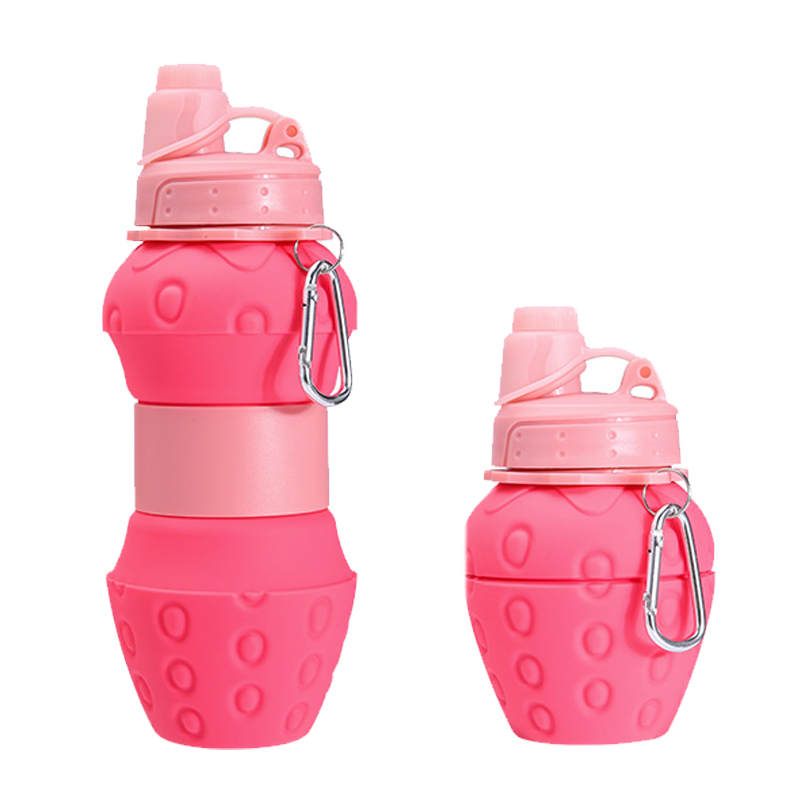
Flat water bottles collapse into themselves, but the real magic happens in your bag. A rigid cylinder forces every other item to bend around its shape, wasting pockets of air that add up fast. When the bottle goes flat, that dead space disappears, and suddenly the same backpack holds an extra jacket, a paperback, or a spare pair of shoes without the usual wrestling match.
Think about the side pocket of a commuter bag or the cramped interior of a carry-on. A full, round bottle acts like a permanent tenant that never pays rent. Once it flattens down to the size of a folded map, you stop planning your packing list around it. Laptops slide in easier, grocery hauls fit without crushing the bread, and the bag zips shut on the first try.
The space you save isn't just measured in cubic inches. It shows up as fewer repacks mid-trip, less frustration at airport security, and a quieter mind knowing you can toss the bottle anywhere once it's empty. Flat water doesn't just free up physical room—it removes the low-level stress of constantly negotiating with a shape that refuses to cooperate.
A Carry Companion for Bags That Are Already Full
There is a particular kind of frustration that comes from zipping a bag shut and then spotting your water bottle, jacket, or just-bought lunch still sitting on the counter. This carry companion solves that without asking you to reorganize anything. It clips to a handle, strap, or loop on the outside and gives those overflow items a place to hang, so the inside of your bag can stay exactly as packed as it was.
The piece itself is small enough to disappear when not in use, but the gate opens wide enough to hold a hoodie, a tote of groceries, or a pair of shoes. A light but grippy finish keeps it from sliding along webbing, and the swivel head lets whatever is attached move naturally while you walk. You are not adding another bag to carry; you are giving the one you already have a second set of hands.
It earns its place on a crowded work tote, a gym duffel, or a stroller handle. The point is not extra organization inside, but a quick, reliable spot for the things that always seem to arrive after the zipper is already closed.
Built to Fold, Not to Flop
Most hinges start out stiff and eventually loosen into a wobble. This one was built the other way around. The pivot points use paired stainless steel bushings and a friction ring that wears in rather than wears out, so the movement stays deliberate from the first day to the thousandth use. There is no vague middle zone where the frame half-opens and starts to rattle; it clicks into place only when fully open or fully closed.
The fold cycle was tested far past what normal use would demand. Open, close, open, close, long after the counting got tedious. Then the joints were checked for lateral play with a dial indicator, and the numbers stayed within a few thousandths of an inch. That small tolerance matters because it is the difference between something that folds when you want it and something that slowly folds under pressure.
We also loaded it at the worst possible angle, shifting weight off-center and dropping it onto hard surfaces from hip height. The frame flexed where it should and stayed rigid where it should not. After all that, the mechanism still moves quietly and predictably, without the creak or sag that usually gives away a tired hinge.
What Daily Hydration Looks Like Without the Bulk
A full day of hydration doesn’t require a heavy bottle parked on your desk. A lighter, refillable option works just as well when you tie it to a few existing pauses: right after your morning routine, once before lunch, and again while you unwind in the evening. The bottle becomes part of the rhythm instead of extra baggage.
What matters more than capacity is access. If a filled bottle is already where you tend to work, drive, or relax, you’ll sip without thinking about it. You can also make the water itself more appealing with a thin slice of cucumber, a wedge of lime, or a pinch of salt and lemon juice. There’s no need to carry multiple drinks or bulky additives to cover the day.
This lighter approach tends to stick because it asks less of you. No awkward refill stations, no oversized bottle knocking around in your bag, and no pressure to hit an arbitrary ounce count by noon. You simply drink at steady intervals, top up when convenient, and let the habit build around your normal routine.
Rethinking the Container, Not Just the Cap
Most packaging conversations stall at the closure. A better cap, a cleaner pour, a tamper seal that feels more secure—these are safe upgrades. But the container itself is where the real constraints live. Weight, shape, material recovery, stacking efficiency, and how the empty vessel behaves after use rarely get the same attention, even though they determine the system's practical footprint.
Shifting the focus from the cap to the body changes the questions worth asking. Could a thinner wall remove more resin than any cap redesign? Could a squared profile eliminate the need for secondary shippers? Could the container be built to collapse, nest, or return without forcing a new habit on the user? Those answers do not come from closure suppliers alone; they come from treating the vessel as the core design problem rather than a fixed shell with an improved lid.
The brands that stand out are making that shift quietly. They treat the container as a working part of the product experience, not packaging that gets thrown away after the cap is unscrewed. Some are testing refill-ready bodies with valves built into the base. Others are removing labels by molding identity into the structure itself. The cap still matters, but it stops being the headline once the container is allowed to do more of the work.
FAQ
Most collapsible bottles still feel like camping gear. This one is meant to replace your everyday bottle, so the folding mechanism is smoother and the shape actually feels good in a bag pocket or cup holder.
It folds down to roughly the height of a phone, maybe a bit thicker. Not completely flat, but compact enough to slide into a small work bag or jacket pocket without fighting for space.
The hinge areas are reinforced and tested for repeated flexing. You might notice slight crease marks over time, but it shouldn't leak or lose its shape unless it's abused.
The materials are rated for a moderate temperature range. It handles cold water and warm drinks well, but pouring boiling water straight in isn't recommended because the soft walls transfer heat quickly.
The bottle can be opened wide or turned partly inside out, so most of the interior is reachable with a regular sponge. For deeper cleaning, a diluted vinegar soak or bottle brush works without much hassle.
The liner is made from food-grade silicone or similar material that doesn't pick up strong flavors easily. If you leave a sports drink in it for days, you'll need to wash it, but plain water stays neutral.
Commuters, travelers, and people who carry small bags. It's also useful at events where rigid bottles are bulky or not allowed, because the collapsed size is easier to stash.
It stands fine on flat surfaces, though it's slightly less stable than a hard bottle because the walls have some give. Filling it most of the way helps it keep its shape.
Conclusion
A reusable bottle only helps if it is within reach when thirst actually hits. That is where most rigid bottles fall short: once empty, they demand the same space as a full one, so they get dumped on a desk, wedged in a cup holder, or forgotten at home. A foldable bottle flips that logic. After the last sip, it flattens to roughly the thickness of a phone and disappears into a pocket, a slim tote, or the gap beside a laptop. Because it stops competing for space, people tend to keep it on hand through commutes, errands, and short walks. The benefit is not just a smaller object; it is a bottle that remains present long enough to become a habit.
The design works because it treats folding as a structural feature, not an afterthought. The body collapses along stable lines without turning floppy or leaking at the seams, so it holds its shape while you drink and packs down only when you choose. Rather than piling a clever lid onto an otherwise unchanged container, the whole silhouette is reconsidered. Water goes flat, the bottle goes thin, and the usual bulk of staying hydrated simply disappears. You stop planning around a bulky bottle and start taking water the way many people already move: light, fast, and with both hands free.
Contact Us
Contact Person: Cecilia
Email: [email protected]
Tel/WhatsApp: 8619057488653
Website: https://silwatbottle.com