
Natural Gas Generator Direct Sales Manufacturer: Power Solutions You Can Trust
2026-11-16
When your operations can't afford a power blip, you need more than a generator—you need a partner. That's where DINGBO POWER comes in. As a direct-sales manufacturer of natural gas generators, we cut through the middleman noise to offer dependable energy that industrial and commercial users actually trust. In this post, we’ll unpack what makes our approach different, why natural gas is gaining ground over diesel, and how a factory-direct model can save you both money and headaches.
Cutting Out the Middleman, Not the Quality
When you strip away layers of intermediaries, you might expect something to get lost along the way—usually it’s the sheen of polish or the safety net of familiar processes. But what if skipping the middleman actually makes the final result sharper, more personal, and oddly more reliable? That’s the quiet shift happening right now, and it’s built on a simple idea: direct doesn’t mean rough around the edges. It means the craft itself has to carry all the weight, and when it does, the whole experience feels more honest.
Without a chain of handlers sanitizing every step, the people making things have to stand behind them in a way that no corporate stamp can fake. A piece of furniture arrives smelling like a workshop, not a warehouse. A jar of honey comes with a scribbled note about the hives, not a glossy brochure. These aren’t flaws; they’re signals that nothing was diluted just to please a distributor’s spreadsheet. The quality doesn’t hang on someone else’s approval—it’s baked into the thing itself, visibly and tangibly.
Of course, cutting out the middleman also slashes a lot of noise. No waiting on a retailer’s marketing calendar, no bending a design to fit a category shelf, no pretending that a product needs a middle layer of markup to feel legitimate. What remains is a tighter relationship between maker and buyer, where feedback loops are short and every detail matters because there’s nobody else to blame. The result is often lower cost without the hidden compromise, and a kind of quality that stays consistent because it’s born from direct responsibility, not from a manual.
Built for the Demands You Actually Face
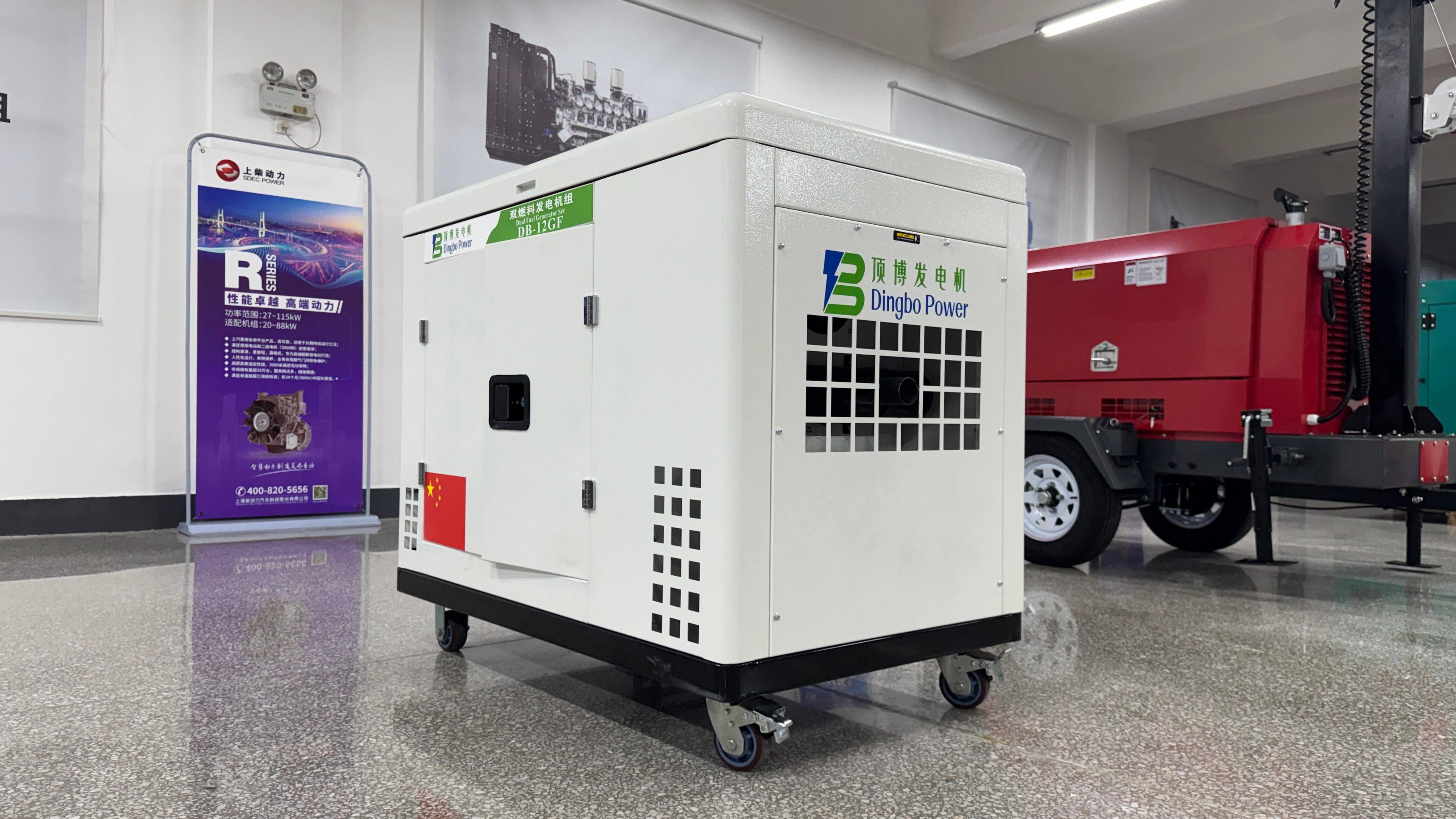
We didn’t design this around hypothetical scenarios or polished demo conditions. It grew out of late-night problem-solving sessions, pit stops that ran too long, and the kind of weather that makes you question why you left the garage. Every material choice, every tolerance we pushed, came from watching where the real stress points show up—not where a spec sheet assumes they will.
You won’t find overbuilt gimmicks here. Instead, you’ll notice the small but crucial reinforcements in places that usually get overlooked, the sealing that actually stays sealed after the tenth pressure wash, and the routing of cables that doesn’t fight you during routine inspections. It’s a product of paying attention to the gaps between “should work” and “keeps working,” and closing those gaps without adding unnecessary weight or complexity.
That’s why the people who run these systems day after day tend to stick with what we build. Not because it sounds impressive in a brochure, but because it refuses to become another variable they have to manage. When your schedule depends on equipment that doesn’t get the luxury of a controlled environment, you start valuing a very simple quality: predictability under pressure. We made sure that’s the baseline, not an upgrade.
When Backup Power Means Business Continuity
A flicker of lights isn't just an inconvenience—it's a countdown. For operations where every second offline chips away at trust and revenue, backup power transforms from a technical checkbox into the silent guardian of daily output. It keeps assembly lines humming, data flowing, and customer-facing services alive without missing a beat, ensuring that a storm outside doesn't become a crisis inside.
The real story isn't the generator tucked away in a corner; it's the deals saved, the medical procedures uninterrupted, the financial transactions cleared before the lights ever come back. This unseen layer of reliability becomes a competitive asset, quietly proving that your promise to clients doesn't falter when the grid does. It's the difference between a brief pause and a lasting reputation hit.
Modern setups go beyond diesel and transfer switches—they integrate smart load management and instant failover that feels invisible. When systems ride through an outage without a single error, nobody notices. That's the point. Business continuity is the art of making chaos look uneventful, and robust backup power writes that story in milliseconds, not minutes.
From the Factory Floor to Your Facility
Every piece of equipment begins its journey where precision meets pressure—the factory floor. This is where raw potential is shaped by seasoned hands and meticulous testing, long before it ever reaches your loading dock. The transition from production line to your operation isn't just a shipping milestone; it represents a transfer of trust. Skilled technicians don't simply bolt components together. They calibrate, they measure, and they listen to the subtle hum of a machine finding its rhythm for the first time. That same attention follows each unit through disassembly, protective crating, and finally, the careful choreography of transport logistics until it stands ready in your facility, humming with the same factory-fresh precision.
What happens between final inspection and installation is often where true reliability is either sealed or compromised. We treat the journey itself as an active phase of quality assurance. Climate-controlled transit, vibration-dampening packaging, and phased hand-offs aren't extras—they're the quiet guardians of your uptime. When the crate is opened on your floor, the machine doesn't arrive as a stranger. It arrives with a lineage: test data, run-time logs, and the fingerprints of the team that stood behind it, ready to walk your crew through every nuance of integration.
That connected thread from factory floor to your facility changes how you experience performance. It means the support team already understands your unit's character before your first call. It means spare parts inventories were populated based on your specific build, not a generic forecast. And it means that when your line starts moving, you're not a passive recipient of industrial output—you're holding the end of a chain that began with a commitment to your outcome, forged in our workshop and delivered intact to yours.
Not All Generators Are Created Equal—Here’s Our Proof
Walk into any workshop or job site and you’ll quickly notice something—generators are treated like commodities, but the people who rely on them know better. A unit that stalls under load or throws dirty power can ruin sensitive electronics, delay a project, or leave a family in the dark when it matters most. We stopped counting the times we’ve seen “identical” specs fail to deliver the same experience. So instead of making assumptions, we put some of the most popular models through real stress tests, checked voltage stability, fuel efficiency under changing loads, and how each handled a sudden surge. The results were less about brand bragging and more about raw, undeniable differences in reliability.
The truth is, internal component choices make a massive gap that a spec sheet rarely reveals. We tore down engines, examined copper winding quality in the alternators, and measured how gracefully each unit responded to a sudden 40% load drop. Some units purred and recovered within milliseconds; others choked and sent a spike through the line—the kind of spike that fries circuit boards. This isn’t about one being “bad” but about understanding what you’re actually getting. A generator built with a brushed alternator and thin-gauge wiring simply can’t keep up with a brushless, well-insulated design over hundreds of runtime hours.
The real proof showed up in the mundane moments—the extended run test at dusk when a kink in the fuel line starved the engine on one model, or the quiet way a higher-tier unit scaled back RPM to save fuel at half load without the lights flickering. Our logbooks tell the story: nearly a 30% difference in fuel burn across similar-rated units during the same 24-hour cycle, and a clear pattern of hot-restart failures in models that looked nearly identical on the outside. We’re not here to push a brand; we’re here to show that design philosophy matters. When you see our side-by-side data, you’ll understand why we say some generators are built for true resilience, and others are just built to a price point.
A Partnership That Goes Beyond the Purchase
When you choose to work with us, you’re not just clicking a checkout button—you’re gaining a team that genuinely cares about how your business performs. We stick around long after the initial handshake, learning the quirks of your operations so we can anticipate what you’ll need before you even ask.
This isn’t about pushing products and vanishing. It’s a living connection where your goals reshape our roadmap. From custom integrations that fit your workflow like a glove to candid conversations about what’s not working, we treat your success as quietly embedded in our own.
The result feels less like a vendor contract and more like a shared instinct—someone who notices the small stuff, celebrates your wins with you, and brings ideas to the table that you hadn’t even considered. That’s the kind of ally we strive to be.
FAQ
When you work with us, you skip the middleman, which means clearer communication and better pricing. You’re talking to the people who actually design and build the unit, so any custom request or technical question gets answered faster and more accurately.
We offer models from 20 kW for small businesses or large homes, right up to 2 MW containerized units for industrial sites. If your needs fall between standard sizes, we can often tune the setup to match your exact load profile.
Every genset runs through a full-load factory test before it leaves our shop. We use heavy-duty industrial engines and source alternators from established names, and because we control the entire assembly, there’s no cutting corners.
For many users, yes—it burns cleaner, you don’t have to store and rotate fuel on site, and fuel supply stays steady via the utility line. Maintenance intervals are generally longer too, since natural gas doesn’t produce the same soot and carbon buildup.
Absolutely. We adjust enclosure dimensions, add weatherproofing, integrate remote monitoring, or set up paralleling controls based on your needs. Since we do engineering in-house, even one-off requests usually don’t add much lead time.
We’re not the kind of manufacturer that disappears after the sale. You’ll have access to commissioning support, warranty service, and planned maintenance packages. Our field techs can train your crew, and we stock critical spares so you’re never waiting long.
Conclusion
When the power cuts out, you don’t just need a generator—you need a solution that keeps your operations breathing without a second thought. As a direct-sales manufacturer, we’ve removed the layers between our factory floor and your facility, but we’ve never skimped on what goes into every machine. The result is natural gas generators built for the demands you actually face: the sudden outage that demands an immediate start, the prolonged strain of days-long runtime, the dirty power conditions that lesser units can’t handle. For many businesses, backup power isn’t a convenience; it’s the thin line between business continuity and costly downtime. That understanding shapes every weld, every circuit, and every test run we perform before a unit ever leaves our hands.
Not all generators are created equal, and we prefer to let the hardware prove it. Ours come with robust components, cleaner power output, and serviceability that technicians appreciate—details that come from listening to facilities managers rather than chasing spec-sheet shortcuts. But the relationship goes beyond the purchase. We see it as a partnership that extends into installation guidance, preventive maintenance, and rapid support when you need it most. By cutting out the middleman, we’re not just offering a better price for a better machine; we’re offering direct accountability. That’s what a trusted power solution looks like: a generator that shows up, stands up, and has an entire team behind it, every day of its working life.
Contact Us
Contact Person: Rita
Email: [email protected]
Tel/WhatsApp: +8613481024441
Website: https://www.dbdieselgenerator.com/