
Lijiang Cultural Experience: Top Attractions You Need to See
2026-08-04
Lijiang’s rich tapestry of culture and nature often overwhelms first-time visitors—where to start? Beyond the famed ancient town, a quieter world awaits. Hidden in the foothills, Jade Water Village offers an intimate glimpse into Naxi traditions, where stone pathways and murmuring streams tell stories centuries old. As you plan your journey through Lijiang’s top attractions, let this village be your first step into an authentic cultural encounter that lingers long after you leave.
Stepping into Old Lijiang’s Time-Warped Alleys
Wandering into the old town feels less like arriving at a tourist destination and more like slipping through a crack in time. The cobbled lanes, worn smooth by centuries of footsteps, twist without logic, refusing to adhere to any grid. Wooden facades lean ever so slightly, their dark timber aged to a charcoal patina that seems to swallow the afternoon light. There’s no barrage of neon signs or blaring music here—just the soft rhythm of water trickling alongside the paths, channeled through a network of canals that has guided daily life since the Ming dynasty.
Every corner reveals a tableau that could have existed a hundred years ago: Naxi women in traditional blue aprons selling freshly picked walnuts from woven baskets, old men huddled over games of Chinese chess on stone benches, and the occasional horse clip-clopping past with jangling bells. The air carries layers of scent—woodsmoke from hidden courtyards, the faint sweetness of osmanthus flowers, and the earthy smell of rain-soaked stone. It’s strangely easy to forget the present here; even the modest storefronts seem to resist change, displaying handwoven textiles, silver jewelry, and local herbs in arrangements that haven’t shifted in decades.
What makes these alleys truly disorienting isn’t just the architecture—it’s the way time itself seems to stretch. The usual urgency of modern life dissolves as you navigate the maze, forced to slow down and notice small details: a carved door panel depicting a folk tale, a cat dozing on a sun-warmed windowsill, the glint of water reflections dancing under a stone bridge. There’s no “must-see” landmark screaming for attention; instead, the entire warren is the attraction. Even the locals seem to move at a different tempo, unhurried and unbothered, as if the ancient lanes have permanently reset their internal clocks.
Echoes of the Naxi: Ancient Music and Sacred Murals
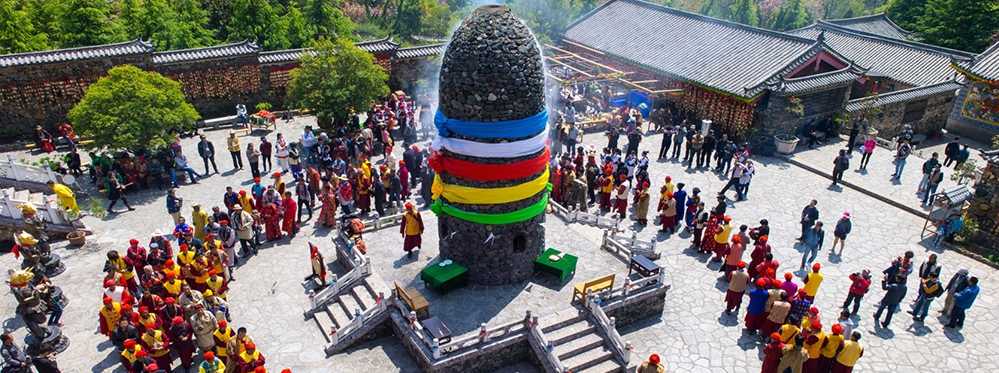
In the high-altitude town of Lijiang, sound and color converge in ways that feel untouched by time. The Naxi people have sustained a musical lineage that predates much of what the modern world recognizes as classical, with melodies that drift through cobbled lanes like incense smoke. These are not performances curated for an audience—they are living rituals, played on instruments that seem to hum with their own memories, coaxing songs from centuries-old scores that blend Han, Tibetan, and indigenous motifs.
Turn a corner, and the eye is pulled upward to the walls of temples and homes, where sacred murals whisper their own narratives. The frescoes of Baisha, crafted during the Ming and Qing dynasties, refuse to dwell in a single spiritual world—Taoist immortals share space with Buddhist bodhisattvas and local deities, all rendered in a style that marries meticulous linework with a dreamlike, almost floating use of color. They are not merely decoration; they are doctrine made visible, a testament to a syncretism that flourished when caravans brought more than silk and tea along the ancient routes.
To encounter these twin arts is to stand at the threshold where the audible and the visible blur. The same reverence that steadies the hand of a dongba priest as he chants reappears in the brushstroke of an anonymous painter who left no signature, only a visual echo. Together, they form an unbroken thread—a quiet defiance against the erasure that modernization often brings, and an invitation to listen, and to see, with a patience cultivated long ago.
Jade Dragon Snow Mountain: Beyond the Cable Car Views
Most visitors rush onto the cable car for a quick dash to the glacier, missing the mountain's quieter rhythms. Wander down to the White Water River, where chalky turquoise streams thread through a silent valley, or follow the path to Blue Moon Valley on foot. The air thins, but the landscape rewards with close-range views of limestone terraces and the occasional sight of Naxi herders guiding yaks home at dusk. It’s a pace that lets the massif reveal itself slowly, not as a postcard, but as a living place.
Higher up, the Yak Meadow pasture offers a completely different frame. Instead of battling crowds at the Glacier Park station, you board a smaller, open-air cable car that drifts over ancient spruce forests, then step out directly onto a high-alpine meadow. In late summer, the ground is a patchwork of gentians and edelweiss, and the mountain face looms so close you can hear the occasional crack of shifting ice. Trails here are rugged and often empty, leading to prayer flag-wrapped viewpoints where the only company is a grazing yak or two.
For a truly off-the-script encounter, make your way to Wenhai, a seasonal alpine lake that vanishes and reappears with the rains. Locals still ride horses along the shoreline, and if you time it right, the still water mirrors the entire snow massif in perfect symmetry. Pack a thermos of yak-butter tea, sit on the grass, and watch clouds roll over the summit. No ticket booths, no lines—just the mountain, its reflection, and the hum of highland wind.
Into the Abyss: Tiger Leaping Gorge’s Untamed Beauty
Tiger Leaping Gorge isn’t just a scar in the earth—it’s a roaring testament to nature’s wild mood swings. As the Jinsha River barrels through, it carves a dizzying path between Haba Snow Mountain and Jade Dragon Snow Mountain, creating one of the deepest gorges on the planet. Standing on a rocky ledge, you don’t just see the gorge; you feel it in your bones, the thunder of water a constant, primal drumbeat that vibrates through the cliffs. The scale is almost absurd—a sheer drop of over 3,700 meters in places, with cloud-tangled peaks disappearing into a blue that feels sharper than anywhere else.
The hike itself is a dare. The high trail, etched into the canyon wall by generations of Naxi villagers, teeters between breathtaking and terrifying. Narrow paths give way to slick stone, and a single misstep could send you tumbling into the misty roar below. But the danger is what makes it real—no guardrails, no gift shops, just you and the gorge, locked in a silent agreement of respect. Waterfalls blast onto the trail, drenching you without warning, and the sun plays hide-and-seek with shadows that swallow whole valleys. Every turn reveals a new drama: eagles circling thermal updrafts, wild goats picking their way across impossibly steep slopes, and the river below, a perpetual silver ribbon gnawing at the earth.
Yet, for all its ferocity, there’s a strange tenderness to the place. Dawn breaks softly over the mountains, painting the gorge in shades of rose and gold, and the quiet between gusts of wind holds a stillness that feels almost sacred. Small guesthouses cling to the hillside, offering hot tea and creaky beds, where travelers trade stories of blistered feet and close calls. Tiger Leaping Gorge doesn’t just show you untamed beauty—it strips away your pretenses and leaves you feeling small, alive, and utterly in awe of a world that still has the power to surprise us.
Baisha’s Artistic Soul: Murals and Master Craftsmen
In the quiet village of Baisha, the walls themselves narrate stories from centuries past. The Baisha murals, painted during the Ming Dynasty, fuse Han Chinese, Tibetan, and Naxi artistic traditions into a vibrant tapestry of spiritual and daily life. Unlike the faded frescoes found elsewhere, these works retain a striking luminosity, their natural mineral pigments defying time. Scenes of Buddhist deities, flowing landscapes, and common folk are rendered with a delicate touch that speaks to a deep reverence for both the divine and the mundane. Each panel invites a closer look—a hidden smile, a swirling cloud, a gesture frozen mid-prayer—revealing the meticulous hand of master craftsmen who saw these walls not as a canvas but as a portal to another realm.
Behind these enduring images stands a lineage of artisans whose names history has mostly swallowed. These master craftsmen were not mere painters; they were scholars of iconography, alchemists of color, and keepers of oral tradition. They ground azurite for skies that still gleam, mixed cinnabar for robes that still glow, and applied layer upon layer with brushes made from weasel hair. The process was as much a meditation as a craft. Working in the high altitude, under the patronage of local chieftains, they blended styles to create something uniquely Naxi—a visual language that honored multiple faiths while asserting a distinct cultural identity. Their legacy is not just in the strokes you see, but in the stories they chose to tell, securing Baisha’s place as a sanctuary of sacred art.
Today, the murals remain in open air, facing the elements with quiet resilience. The village itself, with its stone paths and weathered wood, feels like a living gallery. To walk among these paintings is to trace the very soul of the region—an unbroken thread of creativity that modern reproduction can never replicate. The true mastery here lies not only in technical skill but in the profound understanding that art is a form of devotion, meant to inspire awe across generations.
Lugu Lake: Real-Life Matriarchy on the Water
Nestled on the border of Yunnan and Sichuan, Lugu Lake shimmers like a highland gem, but its true allure lies in the Mosuo people who call its shores home. Here, the rhythm of daily life follows a lineage traced through women, where property passes from mother to daughter and families gather around the matriarch's hearth. This isn't a fading custom preserved for tourists—it's a living, breathing system that has shaped everything from architecture to romance, inviting you to rethink the very notion of family.
Perhaps most captivating is the practice of zouhun, or walking marriage, where relationships are not bound by legal contract. Men visit their partners at night and return to their own matrilineal homes by day, with children raised solely within the mother's household. There is no stigma attached to starting or ending such a union, and the focus remains firmly on emotional connection rather than economic entanglement. Wander into a traditional Mosuo home, and you'll sense the unspoken strength of this arrangement—grandmothers, sisters, and children sharing meals and memories under one roof, generation after generation.
On the lake itself, life unfolds in wooden dugout canoes, maneuvered by women whose laughter carries across the water. They tend nets, ferry travelers, and sing ancient melodies that seem to rise from the depths. To visit Lugu Lake is to step into a world where female authority isn't a novelty but a quiet, enduring fact—as serene and profound as the lake at dawn.
FAQ
Walking through Lijiang Old Town feels like stepping into a living museum of Naxi heritage. The cobblestone lanes, wooden houses with intricate carvings, and the ancient water supply system show how local traditions have been preserved. For a deeper dive, visit the Mu Mansion to see how the ruling family blended Han and Naxi architectural styles, or simply sit by a stream and watch elders practice their daily rituals.
Skip the crowded main squares and head to Baisha Village about 8km north of the old town. It's quieter and retains a more rustic Naxi atmosphere. Here, you can visit the Baisha Murals, which fuse Tibetan, Han, and Naxi artistic influences, and drop by a local embroidery workshop to see women creating traditional Naxi textiles. The village also has small family-run cafes where you can try baba bread fresh off the griddle.
For the Naxi people, Jade Dragon Snow Mountain is not just a scenic wonder—it's a sacred guardian. According to folklore, the mountain is the embodiment of a deity that shields the land. Many rituals and legends are tied to it, like the tragic 'Love Suicide' story of Kaishi Meiren, which is still performed in the Impression Lijiang show at its foothills. Even today, locals hike its trails not just for exercise but as a spiritual retreat.
The Dongba Cultural Research Institute inside Black Dragon Pool Park is a great starting point. Here you can see Dongba priests' manuscripts written in the only living pictographic script in the world. For a more hands-on experience, visit the Dongba Valley outside town, where you can watch shamans perform age-old ceremonies and even try your hand at writing pictographs on handmade paper. These practices offer a window into how animistic beliefs still influence daily life.
Absolutely. The Mu Mansion was the seat of power for the Mu clan, the hereditary ruling family of Lijiang for over 400 years. Designed to echo the Forbidden City in miniature, it cleverly blends Naxi and Ming dynasty architecture. Walking through its halls, you'll see how the Mu chiefs carefully balanced tribute to Chinese emperors with preserving local identity. The detailed carvings and strategic layout—built on a slope to avoid blocking the dragon's vein—reveal the political savvy of the old rulers.
Yuhu Village, at the base of Jade Dragon Snow Mountain, is a gem. Once home to the explorer Joseph Rock, it has stone houses that look unchanged for centuries. Most tourists miss it, so you can wander slowly, chat with farmers tending their fields, and visit the former residence of Rock, which now serves as a small museum. The quiet meadows here give a sense of how life revolved around agriculture and yak herding before mass tourism.
Lijiang was a crucial stop on the Tea Horse Road, and that legacy is still palpable. In Shuhe Ancient Town, a few kilometers north of the old town, you can see the old caravanserais where traders once rested. The stone bridges and wide-open squares here were designed to accommodate mule trains. Today, you can take a short horseback ride along a preserved section of the route or visit tea houses that serve pu'er in the style once favored by caravan leaders, keeping the cross-cultural exchange alive.
Start your morning at the Lijiang Old Town before crowds arrive to see the dawn light on Sifang Street. Then take a bus to the Lashi Lake area, where you can hike to the Zhiyun Temple on a hill—a serene Tibetan Buddhist monastery overlooking the water. The trail passes through pine forests and gives you a view of how spiritual practices merged with the landscape. Pack a picnic with local cheese and baba, and enjoy it in the temple courtyard while monks go about their daily chants.
Conclusion
Wandering through Old Lijiang’s maze of cobbled lanes feels less like sightseeing and more like stepping into a living, breathing relic of the past. The air hums with the Naxi people’s ancient music—haunting melodies played on instruments that have barely changed in centuries, echoing off wooden facades and stone bridges. Nearby, the Baisha murals fuse Tibetan, Han, and Naxi influences into a visual prayer that has survived dynasties. It’s not just art; it’s a chronicle of cultural fusion painted by hands that once belonged to master craftsmen whose descendants still carve wood and embroider silk in dusty workshops, keeping traditions stubbornly alive.
Beyond the old town, Jade Dragon Snow Mountain rises not just as a backdrop but as a force of nature you feel in your lungs and legs—there’s more magic in the high-altitude trails and glacier-fed streams than in any cable car ride. The same raw energy runs deeper at Tiger Leaping Gorge, where the Jinsha River thrashes between cliffs so sheer and shadows so deep it humbles any traveler. And then there’s Lugu Lake, a placid mirror reflecting more than clouds: here the Mosuo people live a matriarchal life on the water, where families are traced through mothers and decisions are woven into the rhythm of fishing boats and moonlit song. Lijiang isn’t simply a destination; it’s a layered, living story that refuses to be simplified.
Contact Us
Contact Person: Changhong He
Email: [email protected]
Tel/WhatsApp: 086-0888-5190152
Website: https://vip.e-baixing.com/ysh