

High Quality Food Grade Anti-caking Silica: Essential Insights for Your Manufacturing Needs
2026-05-17
In modern food manufacturing, even the smallest additive can define product quality. High-grade anti-caking silica ensures free-flowing powders, prevents clumping, and maintains texture—yet not all silica is created equal. Enter Zhonglian, a name synonymous with premium, food-safe silica engineered for demanding production lines. Whether you're optimizing seasoning blends or powdered beverages, understanding what sets superior anti-caking agents apart is the first step to elevating your output.
What Makes Silica Truly Food Grade? Unpacking Purity and Safety
When we talk about food-grade silica, the conversation starts with an almost obsessive focus on purity. This isn’t the same amorphous silica you’d find in a desiccant packet tucked inside a shoe box—those often contain indicators or additives that have no business near anything you’d ingest. True food-grade silica is refined to eliminate contaminants like crystalline silica dust, heavy metals, and organic impurities. The manufacturing process typically involves precise control over particle size and surface area, ensuring that what ends up in your protein powder or spice blend is nothing more than a clean, inert anti-caking agent. It’s this meticulous stripping away of the unwanted that transforms a common mineral into something safe enough to meet strict regulatory standards.
Safety, however, isn’t just a lab result—it’s a regulatory promise. For silica to earn the “food grade” label, it must comply with monographs like those set by the FDA or EFSA, which specify not only compositional limits but also how it’s produced and tested. One key requirement is the near-total absence of respirable crystalline silica, a known hazard when inhaled. Food-grade silica is amorphous, meaning its molecular structure lacks the rigid, sharp-edged crystals that can damage lung tissue. Moreover, because it’s not absorbed by the body in any meaningful way and passes through the digestive system unchanged, its inertness becomes a safety feature. Regular batch testing for arsenic, lead, and other heavy metals ensures that each lot stays within those tight margins—turning a humble powder into a reliably safe ingredient.
What often gets overlooked is the functional purity: how silica behaves in real food systems. It’s not just about being chemically clean; it’s about how it performs without interfering. High-quality food-grade silica has a controlled porosity and surface chemistry that let it absorb moisture and coat particles to prevent clumping, while remaining flavorless and completely insoluble. This means it won’t react with acids, oils, or other ingredients, preserving the original taste and texture of the food. When you see it listed as silicon dioxide or E551, that’s a shorthand for a material that’s been engineered from the ground up—through sourcing, synthesis, and rigorous post-processing—to do its job and then disappear without a trace, both chemically and sensorially.
Particle Design Secrets: How Size and Shape Transform Your Process
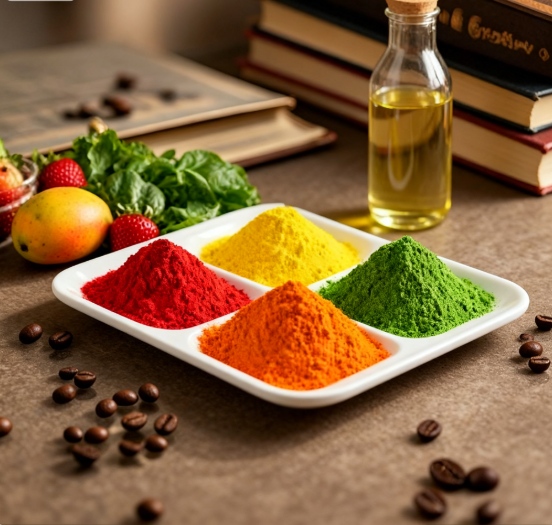
The influence of particle dimensions on industrial processes is often underestimated, yet it’s the silent driver behind consistency, efficiency, and product performance. When you tweak the size distribution of a powder, you’re essentially rewriting the flow behavior, packing density, and dissolution kinetics. Fine particles, for instance, can boost reactivity and surface area but may lead to cohesion issues that choke hoppers and create dust hazards. On the flip side, larger granules improve flowability but might compromise homogeneity. Striking the right balance requires more than a trial-and-error approach—it demands a deep understanding of how size dictates everything from tablet hardness to catalytic activity.
Shape, often overlooked, is the secret weapon in particle engineering. Spherical particles typically offer superior flow and higher bulk density, making them ideal for processes like die filling or 3D printing feedstock. But nature rarely delivers perfect spheres; milling and crystallization produce jagged edges, plates, or needles that can interlock and cause handling nightmares. Yet those irregular shapes aren’t always a drawback—they can enhance filtration rates, create mechanical bonding in composites, or increase the surface roughness needed for coating adhesion. By controlling crystallization conditions or employing techniques like spray drying, you can sculpt particle morphology to amplify desired properties while suppressing unwanted behaviors.
The real magic happens when you align particle architecture with your process goals. Imagine reducing caking in storage simply by adjusting the aspect ratio of your crystals, or improving the mouthfeel of a food product through a tailored size distribution. Advanced characterization tools now let you quantify these attributes with precision, opening doors to predictive modeling. Instead of chasing problems downstream, proactive particle design shifts the focus to building quality in from the start—a philosophy that transforms raw material from a variable into a strategic advantage.
Shelf Life, Flow, and Beyond: Overlooked Advantages in Food Production
When discussing food production, the conversation often narrows to cost and output, but the subtle advantage of extended shelf life quietly reshapes entire supply chains. A product that stays fresh longer doesn’t just reduce waste at the retail level—it allows smaller producers to reach distant markets without the frantic rush of overnight shipping. This margin of time creates breathing room for quality checks, smarter inventory rotation, and far less reliance on preservative-heavy formulations. In many cases, a thoughtfully designed shelf life becomes the unsung hero of a brand’s reliability, turning a technical specification into a genuine competitive edge.
Flow, in the context of production lines, is another underestimated force. It’s not merely about speed but about the removal of tiny, persistent interruptions that accumulate over a shift. When a facility achieves true flow—where raw materials glide into processing and finished goods emerge without pile-ups or empty conveyors—the benefits compound. Operators waste less time on troubleshooting, cleaning schedules become predictable, and the overall equipment effectiveness ticks upward without headline-grabbing capital investments. This seamlessness often gets dismissed as “just how things should work,” yet it quietly defines whether a plant operates at a profit or merely breaks even.
Beyond these operational perks, there lies a layer of advantages that rarely make the spec sheet. A stable shelf life and smooth flow contribute to a brand’s story: consistency that consumers notice, fewer recalls due to rushed batches, and the ability to introduce new products without destabilizing the entire system. When production flows effortlessly, teams have the mental bandwidth to innovate—experimenting with textures, regional ingredients, or packaging formats that would otherwise feel too risky. In a landscape where margins are thin and loyalty is fragile, these overlooked strengths don’t just support the bottom line; they quietly build the kind of resilience that no marketing campaign can fabricate.
Compliance Without Complexity: Meeting Standards Worldwide
Navigating the labyrinth of global regulations can feel like an endless puzzle, but it doesn't have to be that way. Our approach strips away the layers of red tape, replacing confusion with clarity. We've engineered a compliance framework that adapts to local nuances without sacrificing simplicity, so you can focus on what you do best—delivering value, not deciphering legal jargon.
Real-world compliance isn't about ticking boxes; it's about weaving integrity into every operation. By harmonizing disparate standards into a single, intuitive system, we help businesses operate fluidly across borders. From data protection to environmental mandates, our solutions translate complex requirements into practical, day-to-day actions that your team can adopt with confidence.
We believe that meeting worldwide standards shouldn't slow you down. That's why we've designed tools that evolve with the regulatory landscape, offering proactive alerts and tailored guidance. This way, you're always a step ahead, turning potential obstacles into opportunities for trust and growth.
Supplier Red Flags: Avoiding Common Pitfalls in Silica Sourcing
When evaluating silica suppliers, consistency in particle size distribution often separates the reliable from the risky. A supplier that can’t provide detailed, batch-specific certificates of analysis is essentially asking you to gamble with your product quality. Look for sudden shifts in their typical purity levels or unexplained changes in their processing location—these subtle shifts frequently signal deeper operational problems.
Pricing that seems too good to hold up under scrutiny rarely does. Some suppliers will quote rock-bottom figures only to reveal that the price doesn’t include essential testing, proper packaging, or logistics that protect the material from contamination. Dig into the total cost picture early, and don’t shy away from asking how they manage moisture control and prevent cross-contamination during transit.
Communication patterns can reveal more than a specification sheet ever will. A supplier who avoids questions about their mining sources, hesitates on traceability, or grows defensive when you request a site visit is sending clear warnings. The best partnerships are built on transparency—if getting straightforward answers feels like pulling teeth, it’s wise to keep looking.
Future-Ready Manufacturing: Adapting Silica Use for Next-Gen Demands
Modern manufacturing is stepping into an era where precision and adaptability aren't just advantages—they're survival traits. Silica, long taken for granted as a raw commodity, now sits at the heart of this shift. From ultra-pure quartz for wafer fabrication to engineered silica nanoparticles that tweak the properties of coatings and composites, the material's role is expanding well beyond glass and concrete. The factories that will thrive are those already rethinking how they source, refine, and integrate silica into processes that didn't exist a decade ago.
The hunger for high-performance electronics, renewable energy systems, and electric vehicle components is pushing purity requirements through the roof. Semiconductor-grade quartz must hit 99.999% purity or better, while photovoltaic cells demand silica crucibles that can endure extreme thermal cycling without contaminating the silicon melt. Downstream, battery manufacturers are starting to explore functionalized silica as an additive to stabilize silicon anodes, aiming for higher energy density without the usual cracking and capacity fade. Meeting these demands means reconfiguring traditional supply chains and investing in advanced beneficiation technologies like flotation, thermal treatment, and chemical leaching—all tuned to deliver consistency at scale.
What makes a manufacturing operation truly future-ready, though, isn't just chasing the highest purity. It's building in flexibility and sustainability from the ground up. That might involve modular purification lines that can switch between grades for different customers, or circular systems that recover silica from process waste. It also means anticipating regulatory shifts around respirable crystalline silica exposure and proactively adopting closed-loop handling. The producers who win will be those who see silica not as a low-cost filler, but as a strategic enabler of next-gen performance—and who treat their processing know-how as a core competitive edge.
FAQ
Food grade anti-caking silica is a highly purified form of silicon dioxide that prevents powdered ingredients from clumping together. It works by coating individual particles and absorbing excess moisture, which stops them from sticking during storage and handling.
High-purity silica contains minimal contaminants, which means it won't affect the taste, color, or odor of the final product. In food manufacturing, even tiny impurities can lead to off-flavors or safety issues, so purity is critical for consistency and consumer trust.
By keeping powders free-flowing, silica prevents the lumps that can make a product seem old or mishandled. It also maintains texture and mixability over time, so the product performs as expected even after months on a shelf.
Yes, regulatory bodies like the FDA and EFSA have evaluated food-grade silica and deemed it safe when used in accordance with good manufacturing practices. It passes through the digestive system without being absorbed, so it doesn't accumulate in the body.
You'll find it in dry mixes like cake blends, instant soups, milk powder, grated cheese, salt, and spice blends. Basically, any powdered or granulated food that needs to stay pourable and flowable benefits from silica.
The key is to start with the minimum effective amount—typically between 0.1% and 2% by weight—and gradually adjust based on the specific powder's characteristics and storage conditions. Overuse can make a product feel gritty, so small-scale trials are a smart way to optimize the level.
In the U.S., it falls under 21 CFR 172.480, while in Europe it's E551. These regulations set purity criteria, including limits on heavy metals and other contaminants, so manufacturers need to ensure their silica meets those exact specs.
Premium grades have much higher average purity (often over 99% SiO2), tighter particle size distribution for better performance, and they're backed by reliable technical support. Cheaper alternatives might contain residual salts or inconsistent particle sizes that can compromise flowability and introduce risks.
Conclusion
True food-grade anti-caking silica hinges on uncompromising purity—free from contaminants like heavy metals or crystalline silica that could compromise safety. Unlike industrial grades, these silicas undergo rigorous purification to meet stringent food additive standards, ensuring they remain inert and non-toxic even under processing extremes. Beyond purity, particle engineering plays a pivotal role: precisely controlled particle size and porosity determine how effectively the silica coats each powder particle, preventing clumping while preserving free flow. A narrow size distribution and high oil absorption capacity create a breathable, non-caking barrier that extends shelf life and maintains texture stability. What’s often overlooked is how this synthetic amorphous silica subtly enhances production efficiency—reducing downtime from bridging in hoppers and ensuring consistent dosing in high-speed filling lines, all while leaving no off-flavors or olfactory traces.
Navigating global regulations need not be a headache when sourcing high-quality silica. Reputable suppliers provide comprehensive documentation—from FDA 21 CFR and EU EC 1333/2008 compliance to kosher and halal certifications—cutting through complexity without convoluted jargon. Yet pitfalls abound: ambiguous “food-grade” claims without test reports, inconsistent batch purity, or undisclosed particle variability can derail your product quality. Look for suppliers who offer tailored technical support, not just a generic datasheet. As manufacturing evolves toward cleaner labels and advanced processing methods, silica solutions must adapt too—whether it’s co-processing with natural starches for organic lines or fine-tuning flow aids for high-speed 3D food printing applications. Future-ready partners invest in R&D to align with your evolving needs, ensuring your anti-caking strategy remains resilient.
Contact Us
Contact Person: Levin Wang
Email: [email protected]
Tel/WhatsApp: 8618668999988
Website: https://www.silicaplant.com/