

High-Quality Angiographic Control Syringe Manufacturer for Reliable Angiography
2026-09-08
Every angiographic procedure hinges on one unspoken truth: control is everything. When you're injecting contrast media into delicate vasculature, the syringe in your hand isn't just a tool—it's an extension of your intent. But not all syringes are created equal. A high-quality angiographic control syringe from a dedicated manufacturer can make the difference between a crystal-clear image and a frustrating retake. That's where INT comes in. With a focus on precision, durability, and ergonomic design, INT has quietly become a trusted name for reliable angiography. In this article, we'll uncover the engineering and quality-control measures behind INT's syringes—and why more clinicians are making the switch.
Engineered for Critical Precision in Every Injection
Every component in this injection system is machined to tolerances that most manufacturers consider overkill. The plunger glide, barrel concentricity, and needle seating are aligned to remove even micro-deviations that can alter dose accuracy. Whether you're working with high-viscosity formulations or low-volume pediatric doses, the mechanism responds with the same predictable resistance and release.
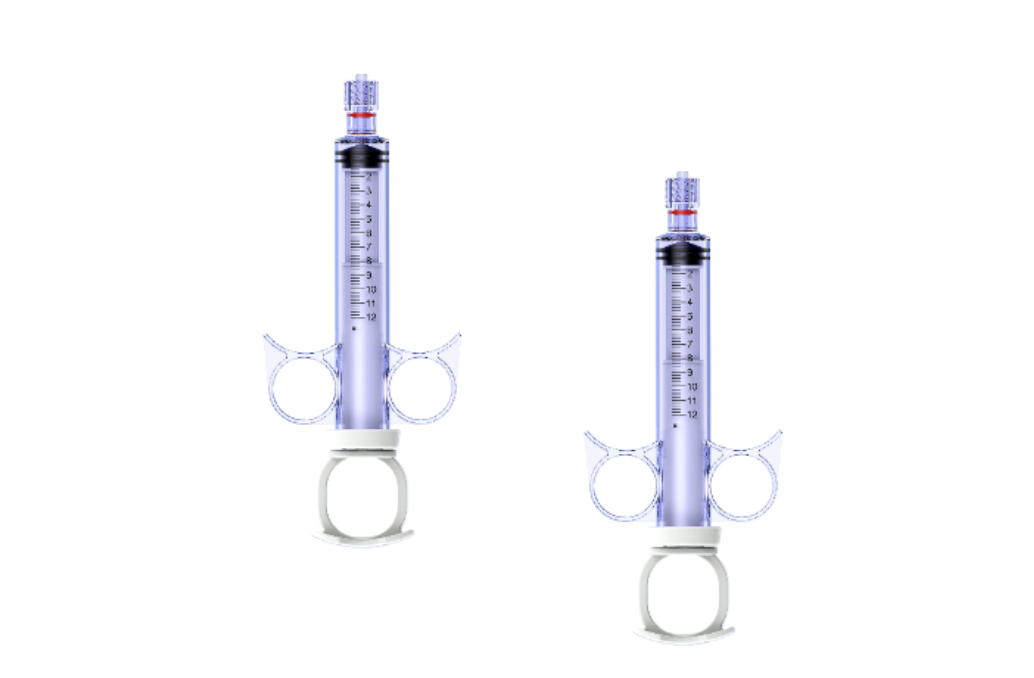
Critical precision isn't just a spec on a datasheet—it's built into the feel. The thumb rest is contoured so pressure transfers straight down without lateral drift, and the graduated markings are etched rather than printed, so they won't wear or shift after repeated autoclaving. This matters when a fraction of a unit changes the outcome.
Field feedback from anesthesiologists and ICU teams points to one recurring theme: confidence under pressure. The injection path has been validated across a range of ambient conditions, and the dead space is minimized to prevent both waste and unintended mixing. That's the kind of engineering you don't notice until it's absent.
Materials That Meet the Demands of Modern Angiography
Modern angiography depends on materials that strike a difficult balance between stiffness and flexibility. Nitinol and cobalt-chromium alloys remain common because they resist kinking while offering enough pushability to cross tight lesions. Yet material science has moved beyond metal alone—newer polymer blends and composite braids reduce vessel trauma and improve torque response without adding bulk.
Surface engineering now plays an equally important role. Hydrophilic coatings lower friction during insertion, allowing catheters to glide through tortuous anatomy with less force. Laser-cut hypotubes and reinforced hubs handle high-pressure contrast injections without leaking or deforming. These refinements matter most in neurovascular and coronary cases, where a single millimeter of unintended movement can change the outcome.
Sterilization and shelf-life stability also drive material decisions. Components must survive gamma or electron-beam irradiation without losing mechanical properties or releasing harmful byproducts. Packaging materials are chosen to maintain sterility and prevent moisture ingress over months of storage. In the end, every layer of the device—from the inner lumen to the outer jacket—is engineered to meet the demands of modern angiography.
How Our Manufacturing Process Eliminates Variability
We don't rely on downstream inspection to catch variation; the line itself is designed to make it nearly impossible. Every incoming material lot is checked against a narrow incoming spec before it touches a machine, and tooling is measured at set intervals with wear limits that trigger replacement long before drift shows up in a part. Operators follow a single, photographed sequence for each changeover, and torque values are captured digitally, not left to feel.
That data feeds a live process chart on the floor. When a reading moves even slightly from the centerline, the operator pauses and adjusts within a defined window; if it crosses a pre-set boundary, the line stops. Because these limits are derived from process capability studies, not guesswork, the same part produced in January matches one produced in July. The result is less sorting, fewer concessions, and a much shorter list of variables we have to manage.
Designed with the Interventionalist's Workflow in Mind
Every click, every hand-off, every second between prep and post-op counts in a busy cath lab. This interface was built by shadowing interventionalists through real cases—watching where they stand, when they glance at the monitor, and what forces them to turn away from the patient. The result is a control surface that places the most used functions within a single thumb-reach, not buried under menus or locked behind multi-step confirmations. Pre-procedure checklists, live imaging, and hemodynamic trends sit on one continuous timeline, so the mental model matches the physical flow of the room.
What separates this from generic clinical software is the attention to interruptions. An interventionalist rarely completes a task from start to finish without a phone call, a tech question, or an alarm. The system preserves partial work exactly as left—measurements, annotations, device selections—and surfaces them as a recoverable stack when attention returns. No lost calipers, no restarted measurements. Even the alert hierarchy respects the workflow: critical alarms push to the main display, while non-urgent notices fold into a subtle corner queue that can be reviewed during natural pauses, not mid-deployment.
Transition points, often where errors creep in, are handled with deliberate redundancy. Before sheath removal or contrast injection, the screen shows a two-second visual and haptic confirmation that mirrors the verbal call-out already in practice. Post-procedure reporting pulls structured data from the case log—device sizes, lesion locations, radiation dose—and drops it into a draft that reads like an operator's note, not a form-generated template. The goal is simple: the technology should feel like an extra pair of trained hands, not another screen to manage.
Quality Checks That Go Beyond Standard Compliance
Most suppliers can tick the boxes for basic safety and material standards. That is not where we stop. Our quality checks dig into the kind of flaws that only show up after weeks of use: seam slippage on load-bearing panels, uneven coating thickness inside folded edges, or subtle warping from inconsistent kiln temperatures. We reject batches that pass generic inspection because the product might survive a shipping container yet fail in a customer's living room.
Every inspection includes a stress simulation tied to real-world conditions, not just a visual once-over. We put drawer slides through 50,000 open-and-close cycles with off-center weight, expose upholstery to UV light equivalent to three years by a south-facing window, and test metal joints for vibration fatigue after simulated transit. These checks uncover weaknesses that typical AQL sampling never sees, so we revise tolerances with the factory before the next production run.
The difference is in the documentation. Instead of a pass/fail certificate, our team sends a detailed deviation map showing where each unit sits on the tolerance curve, plus photos of the exact stress test failures. Factories know that a snapped leg or a faded armrest will come back with measurements, not excuses. This keeps consistency high from the first container to the hundredth, long after a standard compliance audit would have signed off and moved on.
Customization Options for Specialized Procedural Needs
Not every procedure fits neatly into a standard workflow. Customization options let teams reshape step sequences, data fields, and conditional triggers so that the system mirrors how work actually happens—not the other way around. For specialized procedural needs, this means you can add unique checkpoints, require specific attachments at certain stages, or branch logic based on department, region, or case type without forcing a one-size-fits-all template.
The real advantage shows up in edge cases. A compliance review might need a mandatory legal sign-off before a task can move forward, while an engineering change order might require a technical assessment from two separate reviewers. With configurable rules, these differences become part of the procedure itself. You can set different due-date calculations, notification recipients, or escalation paths per procedure type, which eliminates manual workarounds and keeps every specialized process running cleanly.
Customization also extends to how people interact with the procedure. Some teams prefer a guided, step-by-step view; others need a compact dashboard that surfaces only pending actions. You can adjust labels, hide irrelevant fields, or reorder sections so that each group sees exactly what they need—without extra noise. Because these options are designed to be changed by administrators rather than developers, adjustments can happen quickly when a procedure evolves or a new specialized requirement emerges.
FAQ
The real difference shows up in the details. A strong manufacturer uses closed-loop molding with inline vision inspection, keeps full batch traceability from resin lot to finished device, and works directly with interventional teams to refine ergonomics. That kind of process isn't common, and it's what prevents mid-procedure surprises.
We focus on the plunger interface and barrel geometry. The plunger tip is formed with a low-friction, dimensionally stable elastomer that doesn't swell with contrast media, and the barrel keeps its roundness even after repeated pressure cycles. That means the injector doesn't fight the syringe and flow stays linear from start to finish.
Yes. The syringes come with adapters tested against the most common injector platforms, including Medrad, Guerbet, and Bracco systems. Each adapter is checked for engagement depth and retention force so there's no play or accidental release during high-flow runs.
Every unit includes a vented cap that lets air escape during priming while keeping contrast contained, and the barrel has a pressure relief channel that prevents over-pressurization if a line gets kinked. Materials are latex-free and DEHP-free, and the finished syringe is EO sterilized with a documented sterility assurance level of 10^-6.
Custom work is a regular part of what we do. You can request colored plunger tips, barcode labels, hang-hole designs, or fully private-labeled packaging. Minimum order quantities are negotiated based on the actual change, not a blanket threshold, so even mid-sized cath labs can get a tailored solution.
We supply a documentation package that includes ISO 13485 certificate, batch-specific certificate of conformance, material certifications, biocompatibility test reports per ISO 10993, and sterilization validation summaries. All records are archived for at least ten years and can be pulled within 48 hours if an auditor needs them.
We keep safety stock of finished syringes in three regional warehouses and can ship standard orders within five business days. For sudden spikes, our production lines run on a flexible schedule that lets us add a weekend shift and push out up to 40,000 extra units in a week without sacrificing inspection steps.
Conclusion
A syringe that feels vague under pressure can turn a routine angiogram into a guessing game. We build ours around feedback that stays crisp from the first contrast push to the last, starting with polycarbonate barrels and a precision-molded plunger that resists deformation even during repeated use. Rather than accepting generic tolerances, we hold critical dimensions tight enough to reduce dead space and keep contrast delivery consistent. Automated vision inspection and in-process sampling on the manufacturing line catch drift before it becomes a lot-level problem. The result is a platform where material integrity and dimensional stability mean the tenth syringe in a case performs exactly like the first.
The design also reflects the rhythm of a working catheterization lab. A low-resistance plunger seal, an angled grip that doesn’t fatigue the hand, and high-contrast volume markings all help operators move quickly without second-guessing themselves. We don’t treat quality as a checkbox; every lot goes through burst testing, leak testing, and particulate analysis before release. Because different teams have different procedural needs, we offer customization that goes beyond cosmetic changes—alternative luer fittings, extended tubing compatibility, and private labeling are all available while keeping the same core consistency. This lets a high-volume hospital or a focused interventional suite get equipment that fits the way they actually work, not the other way around.
Contact Us
Contact Person: Jeffrey
Email: [email protected]
Tel/WhatsApp: 86-0633-2230056
Website: https://www.sd-intmedical.com