

FUS Transducer Supplier for Advanced Therapeutic Devices
2026-08-24
What if the weakest link in your focused ultrasound system isn't your software—it's the transducer? For teams building advanced therapeutic devices, sourcing FUS transducers that hold their acoustic signature under repeated thermal and mechanical stress is a persistent headache. Generic suppliers often fall short exactly where precision matters most. That's where Siansonic changes the equation. As a dedicated FUS transducer supplier for advanced therapeutic devices, Siansonic engineers acoustic stacks from the ground up—tuning impedance, focusing geometry, and active cooling to your treatment protocol. No catalog compromises. No black-box performance. Just a transducer built to carry your therapy from bench to bedside. Before you spec another transducer, consider the difference a purpose-built acoustic partner can make.
Why Off-the-Shelf Transducers Fall Short in Therapeutic Ultrasound
Most diagnostic ultrasound probes are optimized for imaging, not for delivering the sustained acoustic energy required in therapy. Their piezoelectric elements are thin and designed for broadband response, which limits their ability to generate the high-pressure, continuous-wave fields needed to ablate tissue or disrupt the blood-brain barrier. Pushing these transducers beyond their rated intensity often leads to rapid heating, element debonding, and eventual failure—problems that rarely surface during short imaging pulses but become critical during minutes-long therapeutic exposures.
Another overlooked limitation is acoustic matching. Off-the-shelf transducers typically have a narrow bandwidth and a fixed focal geometry tuned for a specific depth and resolution. In therapeutic applications, however, the target region can be deep, irregularly shaped, or moving with respiration. A transducer that cannot dynamically adjust its focal point or maintain a uniform field will create hot spots or miss the target altogether. Custom therapeutic arrays address this with phased focusing and impedance matching layers that withstand high acoustic pressures, but such designs are rarely found in commercial diagnostic hardware.
Thermal management is perhaps the most underestimated constraint. Imaging probes rely on low duty cycles to dissipate heat, whereas therapeutic ultrasound often operates at duty cycles above 50%. Off-the-shelf transducers lack integrated cooling channels or heat sinks, so their temperature rises quickly, shifting the resonant frequency and degrading performance. In practice, this means clinicians must either reduce treatment duration or accept inconsistent energy delivery—neither of which is acceptable for precision therapy.
The Piezoelectric Material Choices That Decide Treatment Depth
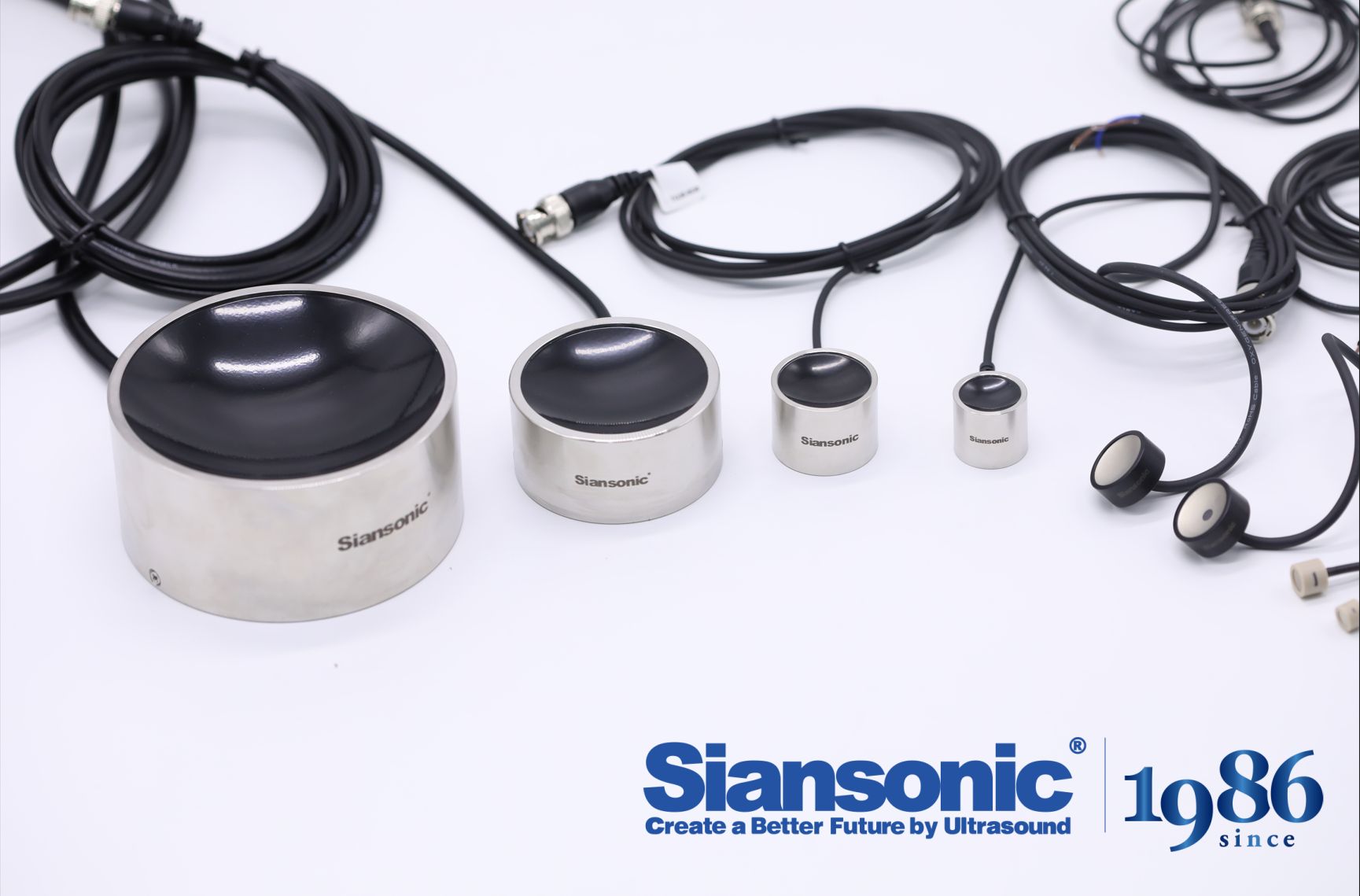
The depth at which a piezoelectric device delivers therapeutic energy rarely comes down to the power dial alone. It starts with the crystal or ceramic inside the transducer. Hard PZT grades like PZT-4 and PZT-8 tend to favor lower center frequencies and longer acoustic wavelengths, which lets the pressure wave travel farther before it fades into heat. Softer compositions such as PZT-5H, along with certain piezo-composites, naturally shift toward higher frequencies and shorter wavelengths, making them better suited for superficial layers where precision matters more than penetration.
Material selection also changes how sharply the transducer can focus its output. A single-crystal relaxor such as PMN-PT offers a higher electromechanical coupling factor than conventional PZT, meaning more of the electrical input turns into acoustic output and less is lost as internal heat. This efficiency can be used to either drive energy deeper at the same voltage or maintain a target depth with less strain on the driver. In multi-element arrays, composites with diced ceramic pillars suspended in epoxy lower the acoustic impedance, which improves matching to skin or gel and reduces reflection at the surface. That often translates into a more predictable depth profile than a solid ceramic block with the same nominal frequency.
What matters in practice is not choosing the "strongest" material but matching the piezoelectric response to the intended tissue target. A physiotherapy unit aimed at deep muscle may work well with a hard PZT disc tuned to 1 MHz with a thick backing layer that narrows bandwidth and boosts peak pressure. A dermatological device for the upper dermis might instead use a 5–10 MHz composite with enough bandwidth to run multiple frequency modes, letting the operator trade depth for resolution without changing handpieces. In both cases, the piezoelectric material sets the ceiling for how deep the treatment can reach, while electronics and lensing only refine what the material already allows.
Custom Acoustic Stack Design for Predictable FUS Output
A custom acoustic stack does more than arrange a piezoelectric ceramic between a backing block and a matching layer. It forces every interface to cooperate, so the transducer's electrical input becomes a tightly controlled acoustic beam. Small mismatches in impedance often turn into reflected energy, unpredictable hot spots, or weak focal gains. By specifying layer thickness, density, and attenuation from the start, the stack removes those variables.
The real benefit shows up when repeated sonications deliver the same focal pattern. Off-the-shelf stacks leave too much to chance because their frequency response and damping were never matched to a particular FUS geometry. A custom build instead ties the piezoelectric resonance, front matching, and rear damping to the planned frequency, focal depth, and expected tissue boundary. That alignment keeps the beam profile stable across sessions and devices.
Thermal drift and mechanical wear also matter. A stack with the right backing and matching layers dissipates heat evenly and keeps the element's efficiency from dropping mid-treatment. When the acoustic stack stays predictable under load, treatment planning becomes less about compensating for the transducer and more about delivering the intended dose to the target.
Building Transducers That Survive Repeated High-Power Cycles
Designing transducers for repeated high-power operation demands a careful balance between material limits and thermal management. Every cycle introduces rapid temperature swings and mechanical stress, so we focus on geometries that distribute strain evenly rather than letting it concentrate at joints or interfaces. Small adjustments, like tapering electrodes or introducing micro-gaps for expansion, often make the difference between a unit that degrades within hours and one that holds its calibration for months.
Active cooling alone rarely solves the problem. Instead, we treat the transducer as a system where the piezoelectric core, backing layer, and matching network must share the thermal load. In practice, this means selecting composites with low hysteresis and pairing them with heat-spreading substrates that wick energy away from the active region. Accelerated testing under pulsed conditions reveals failure modes that steady-state tests miss, so prototype validation always includes rapid on-off sequences far beyond normal duty cycles.
Finally, repeatability comes from manufacturing discipline. Tiny variations in bond line thickness or electrode deposition create hotspots that only appear after thousands of cycles. By monitoring impedance drift during burn-in and rejecting units that shift beyond a narrow band, we ensure each transducer leaves with a predictable lifetime under high-power stress. This approach trades modest increases in production time for dramatic improvements in field reliability.
Partnering Early to Avoid Costly Redesigns in Therapy Devices
When development teams bring a contract manufacturer into the conversation only after the design is locked, they often inherit a stack of unpleasant surprises. Molding issues, material incompatibilities, and assembly bottlenecks surface late, forcing rushed changes that eat into both budget and launch timelines. Early collaboration turns this dynamic on its head. By involving manufacturing experts during the concept phase, therapy device makers can flag potential pitfalls before they become embedded in the design. This isn't about adding another layer of review; it's about letting hands-on production knowledge shape the very bones of the product.
The stakes are particularly high in therapeutic devices, where regulatory constraints and patient safety leave little room for improvisation. A housing that works beautifully in CAD may crack under repeated disinfection cycles or fail drop tests once the wall thickness is adjusted for real-world tolerances. Contract manufacturers who have built similar devices understand these failure modes intimately. They can recommend alternative geometries, suggest more robust joining methods, or point out that a particular snap-fit will wear out after a few hundred cycles. Catching these details early means the difference between a smooth validation run and a painful redesign that ripples through the supply chain.
Beyond the technical fixes, early partnering builds a shared sense of ownership. Design engineers stop throwing drawings over the wall and instead work side by side with process engineers who will actually mold, machine, and assemble the parts. This collaboration shortens the feedback loop from weeks to days. It also surfaces cost-saving opportunities that never appear in a CAD model—simplifying a tooling insert, consolidating two brackets into one, or choosing a resin that flows better without sacrificing strength. When both teams treat the design as a living document rather than a finished blueprint, the result is a therapy device that reaches patients sooner, with fewer compromises and a much healthier margin.
What a Supplier Should Handle From Lab Bench to Regulatory Submission
A capable supplier does more than synthesize a molecule or fill a vial. The real workload often starts after the lab results look promising, when characterization data, forced degradation studies, and reference standard qualification must be pulled together into a coherent story. That means owning the technical narrative from early development batches through process performance qualification, and keeping raw data, metadata, and change controls aligned so the sponsor's CMC package doesn't fall apart under scrutiny.
Between the bench and the electronic common technical document, a supplier should also manage the unglamorous but critical pieces: batch genealogy, impurity fate and purge data, container closure integrity results, and method validation reports that match the actual manufacturing process. If a supplier quietly replaces an analytical method or tweaks a lyophilization cycle without documenting the comparability work, the regulatory reviewer will find it, and the sponsor will lose time explaining a gap that should never have existed.
Finally, the supplier's role extends into question-and-answer phases and post-submission commitments. A well-prepared supplier can provide rapid, data-backed responses to agency queries, pull historical development reports to justify specifications, and supply updated stability data without forcing the sponsor to re-negotiate timelines. The best suppliers treat regulatory readiness not as a final step but as a continuous thread running from the first lab notebook entry to the final approved label.
FAQ
We build single-element focused bowls, annular arrays, and phased arrays in-house. Center frequencies typically range from 200 kHz to 5 MHz, chosen around the treatment depth and target volume rather than a generic catalog approach.
That's where most of our work happens. We take your acoustic simulation or clinical requirements and adjust focal length, aperture, lens geometry, and acoustic matching to the specific tissue interface. Custom cable exits and housings are standard options, not special requests.
PZT-5H and PZT-8 are our go-to ceramics, but we also use PMN-PT single crystal when a system needs higher sensitivity or wider bandwidth. The final choice comes down to drive level, duty cycle, and how much heat the element has to tolerate.
We run impedance scans, acoustic power calibration, and a full 24-hour burn-in on every transducer. For therapeutic applications we add accelerated life testing under pulsed HIFU conditions, specifically watching for delamination and element drift before anything leaves the floor.
Prototypes usually go out in three to five weeks after the drawing is approved. Production orders land around six to ten weeks, and we can pull that in if a development timeline is at risk.
Yes, we provide impedance matching guidance, application notes, and remote or on-site help during integration. If the system runs high duty cycles, we can also supply matching network boards and water-cooling jackets so you're not left to improvise.
We use semi-automated assembly for the piezoelectric stack and laser alignment for the acoustic lens, which keeps resonant frequency variation under 2% unit to unit. Current capacity sits around several hundred transducers a month.
Conclusion
For advanced therapeutic ultrasound, off-the-shelf transducers are rarely a good fit. They force compromises in focal geometry, bandwidth, and thermal stability that quietly erode dose accuracy. Choosing the right piezoelectric material—hard PZT, single crystal, or piezocomposite—is not a trivial step; it sets the ceiling for treatment depth and electroacoustic efficiency at high drive levels. A custom acoustic stack, with matching layers tuned to the specific tissue impedance, a lossy backing that kills ring-down, and a precisely figured lens or bowl, produces a predictable FUS field from the first pulse to the last. Without that control, subtle impedance mismatches or spurious edge modes can distort the focal spot and reduce penetration, forcing higher power settings that increase patient risk.
The harshest test is repeated high-power cycling. Transducers in therapy devices must endure intense thermal and mechanical stress over thousands of sonications without cracking, delaminating, or drifting out of resonance. Early supplier involvement helps catch acoustic and reliability problems while the design is still in CAD, preventing costly late-stage redesigns. A capable partner handles not just fabrication but the entire path from lab bench to regulatory submission: bench validation, small-batch production with lot-level material traceability, accelerated life testing, and assembly of the technical file. That lets the therapy developer focus on clinical evidence instead of solving supply-chain puzzles.
Contact Us
Contact Person: Ivy Zhang
Email: [email protected]
Tel/WhatsApp: +86 1081502288
Website: https://www.siansonic.com/