

Custom All-in-One BESS Solutions for Modern Energy Needs
2026-11-03
Energy demands are shifting faster than most infrastructure can handle. But what if your storage system could adapt just as quickly? UNC engineers all-in-one BESS solutions that don't just meet today's needs—they anticipate tomorrow's. From solar integration to grid backup, here's how custom configurations are changing the game.
Rethinking Energy Storage for Dynamic Power Demands
Conventional energy storage models assume a relatively stable discharge profile, but real-world demand rarely behaves that way. Industrial facilities, data centers, and EV charging hubs experience sharp spikes followed by near-idle periods, sometimes within minutes. Sizing a battery system for an average load misses these extremes and leads to either costly overbuilding or premature aging from repeated deep cycling.
Rethinking storage for dynamic power demands means designing around rate, duration, and response time, not just total kilowatt-hours. A hybrid approach that pairs high-power supercapacitors or flywheels with longer-duration batteries can absorb sudden surges without stressing the chemical storage. Similarly, modular packs that can be partially discharged at different rates give operators more granular control during unpredictable shifts.
The shift also calls for smarter control layers that forecast demand in seconds rather than hours. When storage inverters and software can reconfigure output within a single cycle, the system becomes an active participant in load balancing instead of a passive buffer. This reduces reliance on peaker plants and improves the financial case for renewable integration, because the storage asset adapts to the grid's rhythm rather than forcing the grid to adapt to it.
Unified Battery Systems That Adapt as You Grow
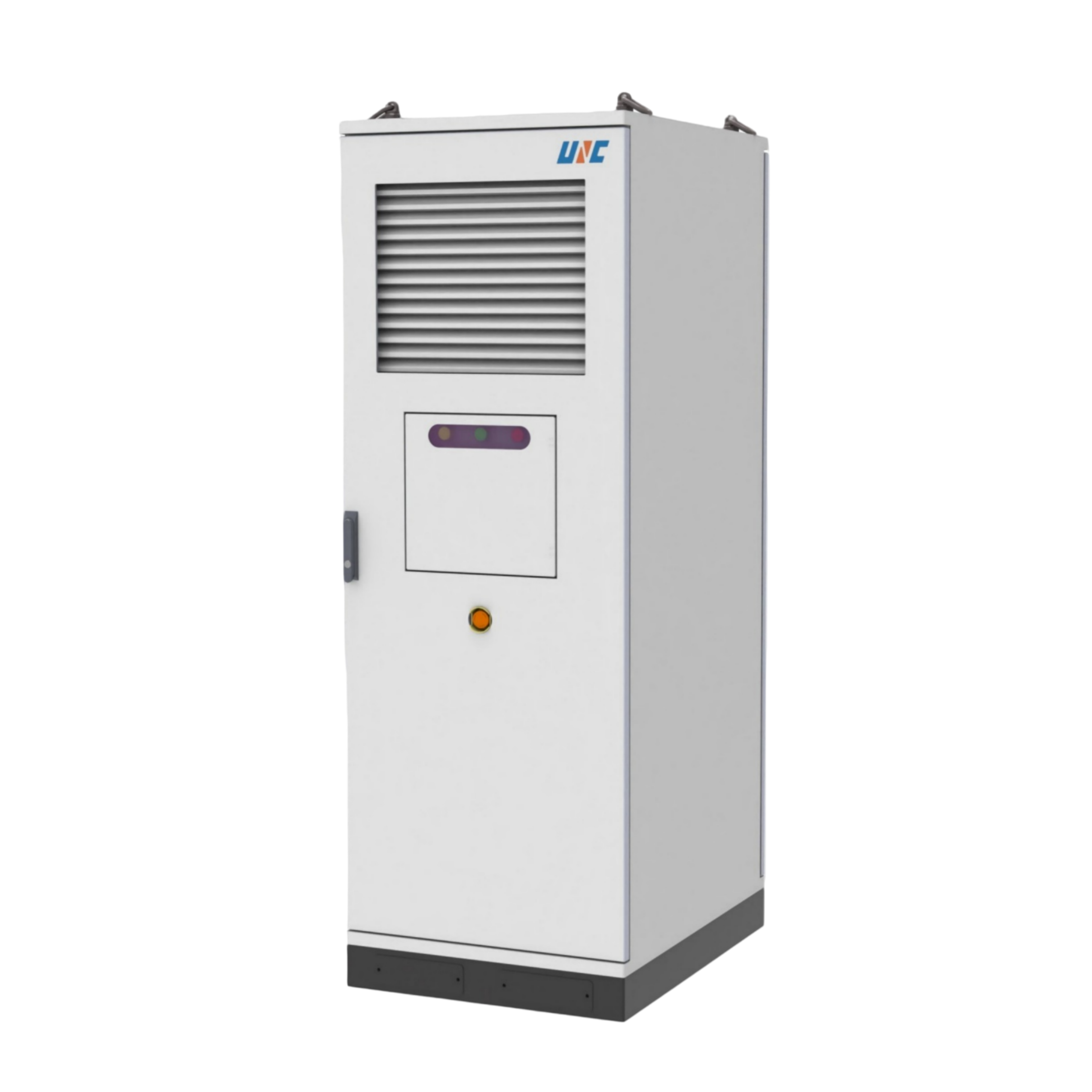
Most battery setups force you to guess your future needs before you've even unpacked the first module. That approach rarely holds up. A unified system starts with a common voltage architecture and a communication backbone that lets you add capacity in small increments—one rack, one cabinet, even one tray at a time—without reworking cables, firmware, or protection settings.
The real advantage shows up when your loads change. Maybe you start with a compact off-grid cabin and later add a workshop, or you run a small retail space that eventually needs backup for cold storage. Because the battery management system already speaks the same language across every unit, new modules are recognized and balanced automatically. You don't replace the core; you extend it.
This also changes how you plan budgets and space. Instead of buying excess capacity up front, you pay for what you use now and leave room for expansion on the same rack or wall mount. And when older cells eventually age, you can swap individual modules rather than retire the entire bank, keeping the system useful far longer than a fixed-size pack would be.
Streamlined Integration Without the Usual Complexity
Most integration tools promise fast setup but hand you a maze of wizards, environment variables, and cryptic logs. This one doesn't. You connect a source, map a handful of fields, and data starts flowing before the coffee gets cold. There's no hidden onboarding tax, no week of reading documentation just to get one sync running.
The design assumes you want to solve a real problem, not become an integration engineer. Pre-built connectors manage authentication, pagination, and retries automatically, while a straightforward mapping layer lets you reshape records without writing custom scripts. If an edge case does appear, the API is predictable enough that adding a custom step feels like a small patch, not a new development project.
Updates roll out without breaking existing flows, and version changes are explained in plain language. That keeps the system out of your way long after the first connection. Teams can hand off integrations without fear because the underlying logic stays transparent instead of hiding inside a black-box workflow.
Resilient Power Management for Critical Operations
Sustaining power delivery in critical environments demands more than redundant hardware—it calls for adaptive strategies that anticipate failure before it cascades. Modern facilities integrate real-time load forecasting with dynamic failover protocols, allowing operators to shift energy reserves within milliseconds. This approach moves beyond static backup systems by treating resilience as a continuous negotiation between supply limits and mission demands.
A key shift is the use of distributed microgrids paired with intelligent storage dispatch. Instead of relying solely on diesel generators, teams deploy battery arrays that absorb transient spikes and bridge gaps during transfer events. Scheduled cycling of these assets prevents degradation, while predictive analytics flag weakened cells before they compromise a critical load. Such layering turns power management into an active discipline rather than a reactive checklist.
Finally, human oversight remains central. Regular drills that simulate abrupt grid loss, combined with clear escalation paths for fuel logistics and thermal management, reduce decision latency under stress. Documentation that captures both successful recoveries and near-misses feeds back into system tuning, ensuring that each event strengthens the facility's ability to ride through the next disruption.
Smart Scaling for Residential, Commercial, and Industrial Needs
Scalability rarely works the same way twice. A three-bedroom house wants a simple, quiet system that fades into the background, while a downtown office tower needs load balancing across dozens of floors without a single hot zone. That is why smart scaling starts with listening to the space itself rather than forcing a pre-packaged answer. For homes, it might mean a unit that learns occupancy patterns and only pushes harder when the family is actually home. For retail and office spaces, the priority shifts to zoning and humidity control that adapts to foot traffic. Industrial sites are a different animal entirely: dust, vibration, continuous operation, and tight temperature tolerances for machinery. The right approach treats these as three distinct languages, not one loud message.
What separates a truly scalable solution from a noisy one is how gracefully it handles the in-between moments. A small restaurant that packs 80 covers on a Friday night should not be paying to cool empty tables at 3 p.m. on a Tuesday. A warehouse with a single loading dock open at 5 a.m. has different needs than the same building at noon. Smart scaling means the system can breathe in and out — reducing airflow to unused zones, ramping compressor speed only as sensors demand, and shifting from cooling to dehumidification without a manual override. In practice, this looks like modular units that can be ganged together for larger industrial demands, or variable-speed fans that whisper in a bedroom but roar safely on a factory floor. The technology is not the hard part; the hard part is resisting the urge to oversize everything on day one.
Maintenance also gets easier when scaling is thoughtful. A residential system that is easy to reach and clean encourages regular filter swaps. A commercial setup with clear diagnostics per zone means a technician can isolate a failing damper instead of hunting through a maze. In industrial settings, smart scaling often includes remote monitoring that flags pressure drops before they become downtime — not because anyone enjoys staring at dashboards, but because the cost of an unplanned shutdown dwarfs any sensor purchase. The goal for all three is the same: a system that matches the load today, without punishing the owner for what the building might become in five years. That is the difference between a box that blows air and a system that actually fits the way people live, work, and make things.
Why Modular BESS Design Outperforms Off-the-Shelf Options
Off-the-shelf battery energy storage systems promise quick deployment, but their rigid configurations often force compromises in voltage range, cabinet layout, and thermal management. A modular BESS design starts from the cell level upward, allowing engineers to match the exact DC bus requirements of a given site without oversized inverters or wasted rack space. This granularity becomes especially valuable in retrofit projects where existing switchgear and cable ratings dictate tight electrical envelopes.
Field serviceability tells the sharper story. With a modular architecture, a single faulty module can be isolated and swapped during a scheduled maintenance window while the rest of the string continues operating. Off-the-shelf units, by contrast, frequently require entire enclosure replacements or manufacturer-specific service contracts that stretch downtime from hours to weeks. The ability to stock a small set of common modules across multiple sites also slashes spare parts inventory and technician training time.
Scalability without stranded capacity is the final differentiator. Off-the-shelf systems come in fixed increments—often 250 kW or 500 kW building blocks—forcing a project to oversize or leave unused power on the table. Modular BESS designs let developers add racks one at a time, closely following actual load growth or phased renewable integration. This approach avoids the costly double spend of buying capacity now for future needs, then watching it degrade while underutilized.
FAQ
An all-in-one unit is factory-integrated and tested as a single system. That means the battery modules, power conversion, thermal management, and controls are already matched and communicating. You avoid compatibility guesswork, reduce on-site wiring and commissioning time, and have one point of contact for support instead of juggling multiple vendors.
Yes. We start with a load analysis covering your peak demand, daily consumption curves, backup duration needs, and any existing solar or generator assets. From there we configure the battery capacity, inverter power rating, enclosure type, and control logic around your actual operating patterns rather than offering a one-size-fits-all package.
The built-in energy management system can be programmed to charge during low-cost periods and discharge when utility rates spike or when your facility approaches a demand threshold. That shifts load away from expensive windows and trims peak demand automatically, without requiring manual intervention.
Because the units arrive pre-wired and factory-tested, on-site work is usually limited to placing the enclosure, making the main electrical connections, and running through a final commissioning checklist. Most installations finish in a few days rather than weeks, and we can often coordinate with your electrical contractor to minimize downtime.
Yes. Enclosures are rated for outdoor exposure where needed and include active thermal management, fire detection and suppression options, and built-in isolation features. We match the environmental rating and safety certifications to your site conditions, whether that’s a dusty yard, a basement electrical room, or a coastal location.
The BESS can be AC-coupled with existing solar inverters or DC-coupled for new PV arrays. For generator support, the controls coordinate charge and discharge so the generator runs only when truly needed, reducing fuel use and wear while keeping critical loads online during extended outages.
Very little from your side. Remote monitoring tracks state of health, temperature, and cycle counts, and alerts us before minor issues become failures. Most components are modular, so a technician can swap a single battery module or power stage without taking the entire system offline. Recommended annual inspections are straightforward and often built into the service agreement.
We look at at least 12 months of interval data if available, your critical load list, planned expansions, and any sustainability targets. Then we simulate different battery capacities and inverter sizes against your actual usage to find the smallest system that meets your backup and savings goals, so you’re not paying for unused capacity.
Conclusion
Energy storage shouldn't force you to choose between flexibility and reliability. A truly custom all-in-one BESS rethinks how power is captured, managed, and deployed for today's shifting load profiles. Rather than forcing dynamic demands into a rigid battery cabinet, these systems unify modular battery blocks, intelligent power conversion, and adaptive controls into a single, coherent platform. From the first kilowatt-hour to multi-megawatt expansions, the architecture grows with you—not against you. Residential users gain quiet, space-saving backup that blends into daily life; commercial sites add demand-charge shaving and load shifting without redesigning their electrical rooms; industrial operations tap into ride-through capability and peak shaving that keep production lines moving. The real advantage shows up during integration: pre-engineered power, thermal management, and communication layers remove the usual tangle of third-party components and commissioning headaches.
What makes a modular BESS outperform off-the-shelf options is not just the hardware stack, but how it treats resilience as a design parameter instead of an afterthought. Critical operations—hospitals, water treatment, data closets, remote telecom—need power that refuses to blink. A unified battery system with hot-swappable modules and built-in redundancy can isolate a faulty cell cluster without taking the whole string offline. Meanwhile, smart scaling means you don't have to guess your future load. Add rack-mounted modules for a retail expansion, parallel more strings for an electric fleet depot, or reconfigure the same core for a microgrid. The result is energy storage that feels less like a product and more like a tailored infrastructure service: fewer vendor points of failure, simpler service contracts, and a level of control that generic, boxed solutions can't match.
Contact Us
Contact Person: Manager Leng
Email: [email protected]
Tel/WhatsApp: 8613764878967
Website: https://www.unc-energy.com