

Chocolate Moulding Machine Makers Worth Partnering With for High-Volume Production
2026-11-16
Scaling chocolate production from artisan batches to high-volume output is where many brands stumble. The right moulding machine maker doesn’t just sell equipment—they shape your throughput, product consistency, and long-term margins. In this guide, we’ll look at manufacturers that actually deliver under pressure. Among them, GUSU stands out for its engineering depth and reliability in continuous moulding lines. If you’re tired of vague specs and missed deadlines, keep reading.
What High-Volume Chocolate Moulding Machine Makers Do Differently
Rather than treating every order as a one-off build, manufacturers focused on high-volume chocolate moulding approach each line as a system built around throughput stability. They start with the tempering unit, not the moulding head, ensuring crystal formation stays within a narrow band even when the machine runs for eighteen hours straight. Piping is oversized, chutes are angled to prevent fat bloom at transfer points, and cooling tunnels are split into zones with independent humidity control. These choices rarely appear on a spec sheet, but they are the reason a machine rated for 3,000 moulds per hour can actually hold that pace during a summer heatwave.
Another differentiator is how these makers handle changeover and sanitation. High-volume lines cannot afford a four-hour washdown between recipes, so the frame is split into cassette modules that slide out without tools, and product-contact surfaces are electropolished to a roughness below 0.4 micrometres. PLC recipes store pump speeds, vibration profiles, and demoulding dwell times, but the real trick is mechanical: the same depositor plate works with nut inclusions, dark chocolate, and high-butterfat fillings without swapping pistons. Buyers notice this when a 2,000-kg batch is switched to a sugar-free formulation in under twenty minutes instead of half a shift.
Finally, high-volume moulding machine builders differ in how they share risk. Instead of quoting a price and walking away, they run a pilot batch on a scaled-down line at their own facility using the customer's actual chocolate and moulds. Vibration frequency is tuned to bubble release for that specific mould geometry, and demoulding twist angles are set with a torque limit that protects thin-walled cavities. Service contracts then include thermal imaging of the cooling circuit and ultrasonic checks of chain tension, because downtime for a line producing 20 tonnes a day costs far more than any spare part. That level of process ownership is what separates a vendor from a partner.
The Hidden Risks of Settling for Standard Moulding Equipment at Scale
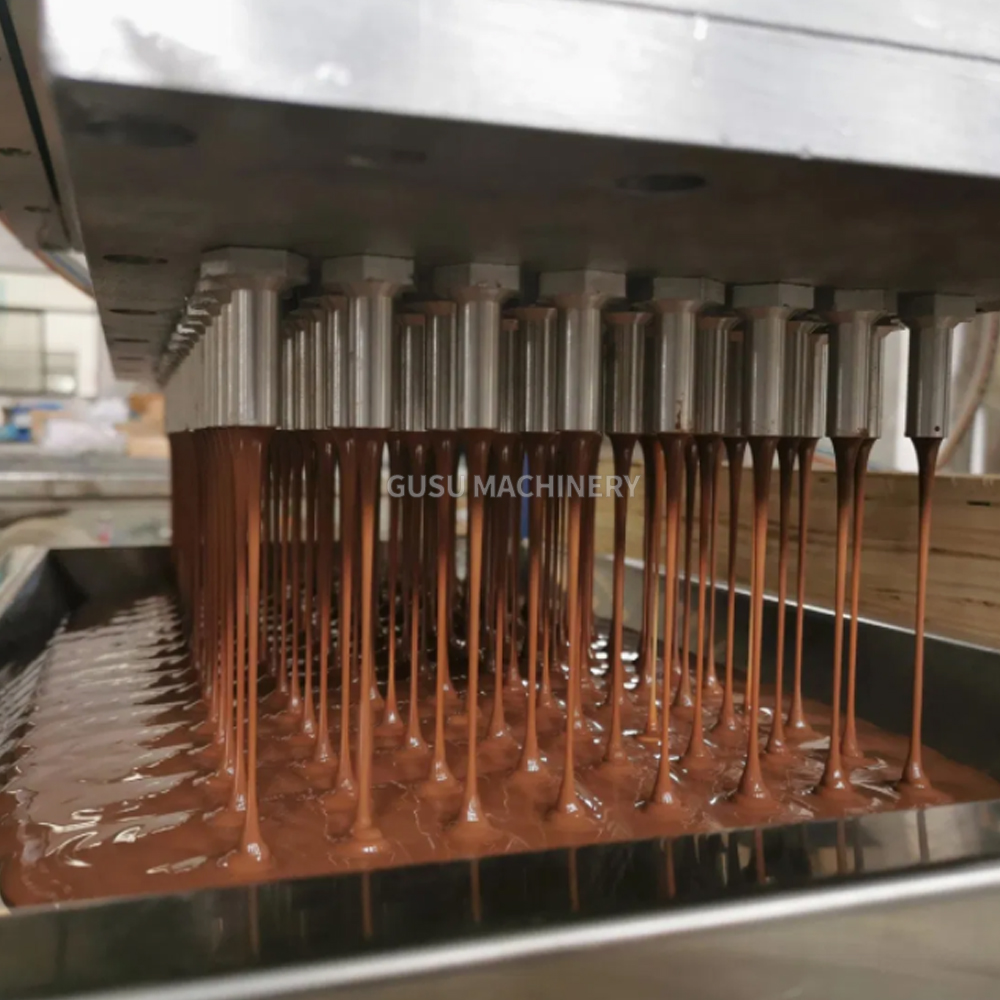
Standard moulding lines are often sold as a safe choice, but that safety dissolves once you push past a few million cycles. The steel grades and surface treatments chosen for broad compatibility rarely hold their flatness or venting behaviour under sustained thermal cycling. What starts as a 0.02 mm drift in cavity alignment becomes a daily battle with flash, short shots, and toolroom rework that no amount of process tweaking can permanently fix.
The bigger problem is that standard equipment hides its costs in places the purchase order never shows. Energy per kilogram climbs as heaters compensate for uneven clamping, ejector guides wear at different rates, and auxiliary equipment gets added just to keep scrap within an acceptable band. By the time you have retrofitted sensors, upgraded the cooling manifold, and doubled your preventive maintenance hours, the lower upfront price has turned into a steady drain on margin, and your line still cannot handle a high-value material switch without a full teardown.
Why Continuous Production Demands More Than Just Faster Cycle Times
Chasing shorter cycle times in a continuous line often just moves the bottleneck somewhere else. A press or reactor can run faster, but if the feeding, cooling, inspection, or packaging steps can't keep up, work-in-process piles up before the slowest operation. The real gain comes from matching the cadence of every stage, not from pushing one machine to its limit.
Continuous lines also punish instability far more than batch setups. Running equipment faster amplifies small vibrations, thermal drift, and tool wear, which leads to dimensional drift and unplanned stops. That's why predictive maintenance and live process monitoring matter more than shaving seconds off a cycle. A single minute of downtime halts the entire line, wiping out whatever gains the faster cycle produced.
Material flow and changeover strategy get overlooked as well. Continuous production needs consistent raw material properties, precise feeding control, and shorter transitions between products. Otherwise, higher speeds simply generate more scrap and longer adjustment windows. The better question is not 'how fast can it run?' but 'under what conditions can it keep running at that speed?'
How to Identify a Moulding Machine Partner That Prioritizes Uptime
Real uptime isn't promised in brochures—it shows up in how a supplier handles a 2 a.m. breakdown. Ask direct questions: What's your median time to dispatch a service engineer? Can you show me data from existing customers, not just a polished reference list? A partner serious about uptime talks in hours, not "as soon as possible."
Dig into their spare parts strategy. A moulding machine partner who truly prioritizes uptime keeps critical components either on your shelf or within a same-day radius—and puts that in writing. Ask for a committed inventory list, not a vague assurance. Also check if they offer remote monitoring and predictive diagnostics, because the best fix is the one you never need to schedule.
Before signing anything, ask to speak with a plant manager who has run their machines for at least three years. Specifically ask about unplanned downtime trends and how the supplier responded to the last major failure. If they hesitate or only hand over a curated case study, that's your answer. A genuine uptime partner will connect you with someone who can speak candidly about the hard nights.
Equipment Design Choices That Make or Break High-Speed Chocolate Lines
The difference between a line that hums at full capacity and one that stutters every fifteen minutes often comes down to a handful of equipment design decisions that seem minor on paper but carry outsized consequences in practice. Temperature control zones that are too short or poorly insulated force operators to slow the entire belt just to keep the chocolate in temper, while a depositor with a single fixed nozzle pattern ignores the simple reality that not every mold or cookie sheet behaves the same way. Smart manufacturers look past the glossy spec sheets and ask how a machine handles the awkward moments—start-up, product changeover, or a sudden spike in ambient humidity.
One underrated factor is the physical path the chocolate takes from holding tank to cooling tunnel. Sharp bends, long vertical drops, or undersized transfer pipes can introduce shear stress that breaks the crystal structure you worked so hard to build. Likewise, a cooling tunnel with only two independently controlled zones will struggle with thick-centered products, forcing a compromise between surface gloss and internal snap. The best designs treat every transition—pumping, depositing, shaking, cooling—as a place where chocolate can either improve or degrade, and they engineer each one to protect the product instead of just move it.
Another make-or-break choice is how easily the equipment can be cleaned and reconfigured without a full teardown. High-speed lines live or die by their changeover time, and any design that requires three technicians and a full shift to switch from a thin bar to a filled praline will quietly eat into your margin. Quick-release manifolds, tool-free belt tensioning, and sensor layouts that survive washdown without recalibration may not appear in a marketing brochure, but they are the difference between a line that runs 20 hours a day and one that spends half its life in maintenance mode.
Where Established Confectionery Brands Turn for Reliable Moulding Builders
When a beloved chocolate shape starts wobbling on the line or a new seasonal design refuses to release cleanly from the cavity, long-standing confectionery houses don't gamble on untested workshops. They reach for the same handful of moulding specialists who have quietly serviced the industry for decades—firms that still keep a machinist's notebook next to the CNC console and understand that a tenth of a millimetre can mean the difference between a perfect shell and a costly batch of cracked centres.
These builders tend to operate without much fanfare. Their reputations are built on repeat orders for iconic hollow figures, thin-walled praline shells, and multi-insert moulds that outlast several generations of production staff. What separates them is less about flashy equipment and more about an almost stubborn attention to thermal expansion, venting placement, and alloy selection—details that only matter when you are running twenty-four hours a day through a heat-and-cool cycle that punishes mediocre tooling.
Established brands also value continuity. The same engineer who tuned a forty-year-old spinning mould for a hard candy line often still answers the phone when a replacement insert is needed. That kind of institutional memory is rare, and it is why many confectionery makers treat their moulding builder not as a vendor but as an extension of their own engineering bench—someone who can reverse-engineer a worn cavity from a paper drawing, match a proprietary chocolate release coating, or advise on polycarbonate versus aluminium for a new vegan formulation without blinking.
FAQ
Bühler, Aasted, and Sollich come up often when large plants need consistent output. FBM and Gami from Italy also build sturdy lines that handle thousands of moulds per hour without frequent stops. Royal Duyvis Wiener is another solid choice if you want a single partner for roasting, grinding, and moulding.
Focus on how quickly the line can switch between mould shapes, the accuracy of depositing heads, and whether the maker has local service technicians. High-volume production punishes small design flaws, so ask for references running similar product mixes and check how fast they can ship critical spare parts.
Many top-tier machines use servo-driven depositors with heated hoppers and vibration stations that adjust automatically. Instead of waiting for one batch to settle, the line can change stroke length, nozzle temperature, and shaking frequency on the fly. That keeps dark, milk, and white chocolate moving at nearly the same pace.
Yes, several makers design lines in sections, so you can start with a smaller depositing and cooling module and later add extra rows or a second cooling tunnel. Aasted and Bühler both offer this kind of expansion path, and it saves floor space compared to buying a fully oversized line from day one.
Look for remote diagnostics, a regional parts warehouse, and technicians who can arrive within 24 hours. Since a down line can idle an entire packaging department, the best partners offer annual maintenance contracts that include vibration analysis, belt alignment checks, and training for your in-house crew.
Precision depositing heads use recirculation loops so excess chocolate returns to the tempering unit instead of spilling onto the belt. Some lines also have vision systems that reject underfilled moulds before cooling, allowing the chocolate to be re-melted and reused. That cuts scrap to well under one percent.
Bühler from Switzerland, Aasted from Denmark, and Sollich from Germany are the heavy hitters. Italy adds FBM, Gami, and Selmi for mid-to-large lines. The Netherlands contributes Royal Duyvis Wiener, which is often picked for complete turnkey plants.
A mid-sized line typically runs 2,000 to 6,000 moulds per hour, depending on mould cavity count and cooling time. For solid bars with standard dimensions, you might see 800 to 1,500 kilograms per hour. Hollow figures or filled chocolates run slower because they need extra depositing and shell-forming steps.
Conclusion
In high-volume chocolate production, the gap between a machine that runs and a partner that keeps your line alive is measured in minutes of unplanned downtime, not just cycle speed. The strongest moulding machine makers build for thermal stability across long shifts, design quick-change tooling that doesn’t require a full teardown, and treat deposit accuracy at 40 strokes per minute as a baseline, not a selling point. Standard equipment often looks identical on a spec sheet, but hidden risks surface when vibratory settling weakens, water jackets lose uniformity, or air ejection drifts out of sync on multi-cavity plates. At scale, those small deviations become scrap rates and shortened mould life.
Continuous production demands more than simply pushing faster cycles; it requires servo-driven depositors that hold shot-weight consistency, mould circuits with controlled cooling dwell, and frame rigidity that prevents micro-flexing during high-speed indexing. The right partner proves uptime by sharing real performance data from existing installations and by engineering fail-safe sensors that stop a cycle before chocolate bridges or misaligned plaques cascade. Established confectionery brands rarely chase the lowest bid; they gravitate toward builders known for modular upgrades, accessible spare parts, and field teams who understand how a 24-hour line actually behaves. Those design choices, from hopper agitation to demoulding cam profiles, are what separate a machine you buy from one you can build a production schedule around.
Contact Us
Contact Person: Zhang Wei
Email: [email protected]
Tel/WhatsApp: 8618662577837
Website: https://www.chocomachinery.com