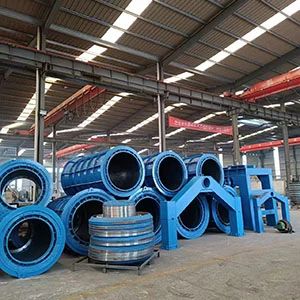

China Precast Concrete House Mold Factory Delivers Precision Molds for Modern Homes
2026-08-26
Modern housing demands speed without sacrificing character — and that’s exactly where precision precast concrete molds come in. Few factories understand this balance better than Qianfeng Electromechanical Equipment, a China-based manufacturer quietly redefining what’s possible for residential construction. From wall panels to structural components, their mold systems promise tighter tolerances and faster assembly. Yet the real story isn’t just about machinery; it’s about how a single factory’s obsession with accuracy is helping builders turn ambitious home designs into reality. Here’s why that matters now more than ever.
What Separates Precision Molds from Ordinary Concrete Formwork?
Ordinary concrete formwork is usually assembled on-site from plywood, dimensional lumber, and basic fasteners. Those materials flex, absorb moisture, and shift as the concrete is placed, which leads to visible seams, irregular corners, and a rough surface that often needs further patching or grinding before it can be painted or sealed.
Precision molds, by contrast, are fabricated from machined steel or aluminum and engineered for tight dimensional control. The surfaces are ground or polished, the joints are designed to close precisely, and features such as chamfers, reveals, and embedded anchors are built directly into the mold. This means every cast part comes out with the same crisp edges and smooth face, reducing the need for manual finishing and allowing a single mold to handle hundreds or even thousands of pours without drifting out of tolerance.
Inside the Steel Cutting Process That Keeps Panel Edges Sharp
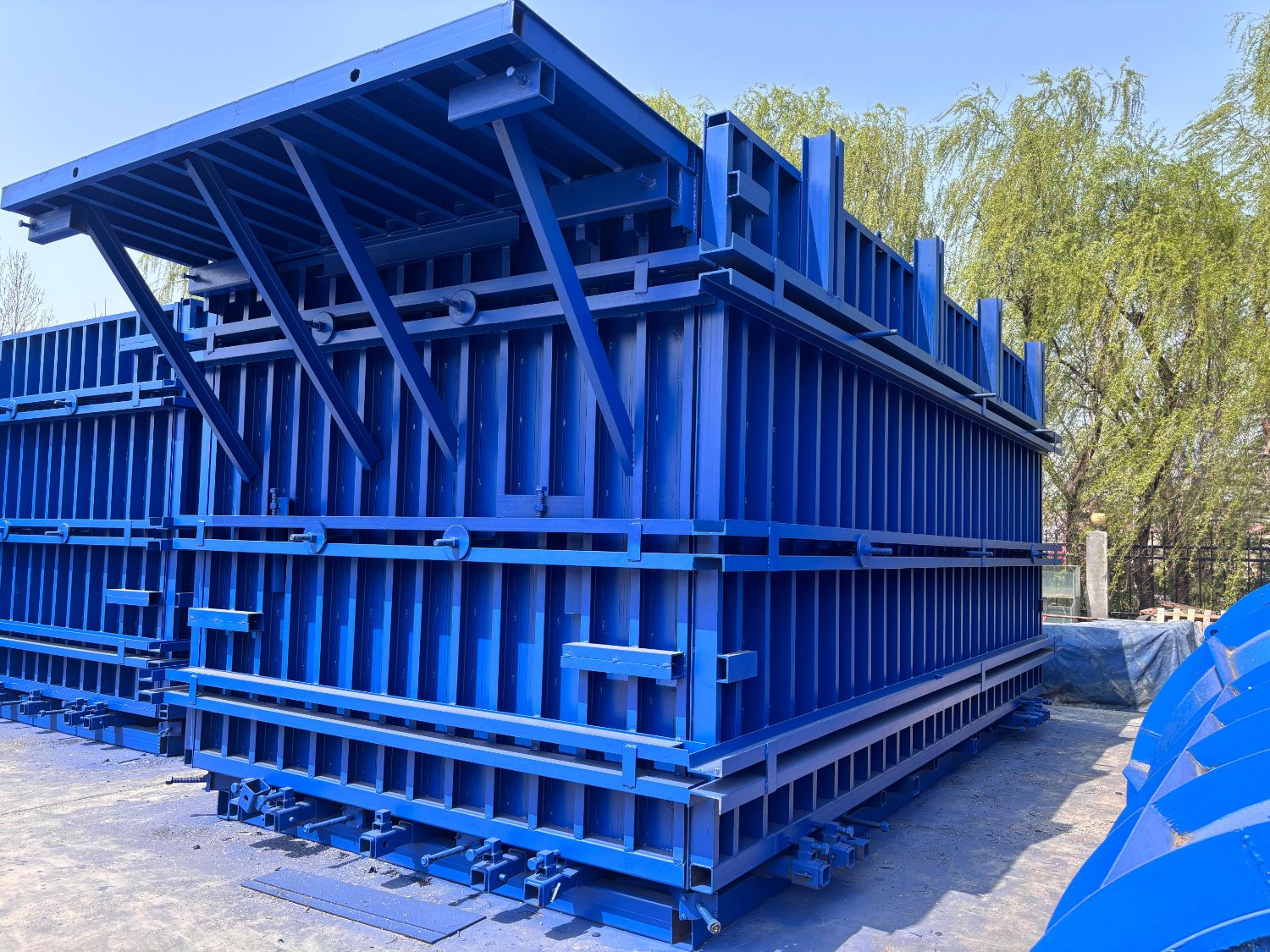
Sharp panel edges start long before the final trim. The steel cutting process typically begins with slitting or shearing, where large coils are run through high-precision rotary knives or guillotine-style blades. Operators set the clearance between the upper and lower blades to a fraction of the material thickness—often just 8-12% of the steel gauge. Too wide a gap and the edge tears rather than cuts, leaving a ragged, dull finish. Too tight and the tooling wears out fast, causing burrs that later have to be ground away. The goal is a clean fracture line that separates the steel with minimal deformation, preserving the crisp geometry that gives a panel its sharp look and feel.
After the primary cut, many fabricators add a secondary edge-conditioning step. This might involve a light pass through a deburring machine, a vibratory finisher, or even a quick draw-filing operation on critical edges. The trick is to remove microscopic stress risers without rounding over the edge itself. A properly conditioned edge feels almost dangerously sharp to the touch, yet it resists chipping because the cut surface is free of tiny cracks. Some shops also use a slight back-bevel on the underside of the edge, which strengthens the corner and prevents the panel from snagging on assembly fixtures.
The final sharpness depends as much on tool maintenance as on cutting technique. Dull shear blades or worn slitter arbors can crush the steel instead of slicing it, producing a mushroomed edge that no amount of deburring can fully restore. Regular checks with a profile projector or a simple edge-radius gauge help operators keep the cutting line within a few thousandths of an inch. When the process is dialed in, the result is a panel edge that catches the light with a thin, bright line—sharp enough to define the product's silhouette, strong enough to survive years of handling.
Why Modern Home Builders Are Moving Away from Wood Formwork
Any crew that has set timber forms in wet weather knows why the switch is happening. The boards soak up water, swell overnight, and by morning your corners are no longer where you left them. You can brace them back, but that eats time and often leaves a wall with a slight belly that has to be float-finished or skimmed later. After four or five pours, the plywood faces are chipped enough that the next job starts with sorting through what is still usable.
Aluminum and plastic forms remove most of that guesswork. They resist moisture, strip off with a cleaner edge, and stack flat in the truck instead of turning into a scrap pile. Because panels are machined to repeat the same dimensions, a crew can train on one set and carry that rhythm to every foundation or retaining wall. The initial purchase stings, but builders who track labor and material waste find the reusable systems pay for themselves faster than the old plywood route.
How Custom Mold Design Reduces On-Site Labor for Precast Walls
Custom molds shift critical preparation work off the construction site. When a precast wall panel is cast, the mold can form window openings, electrical conduit knockouts, and connection pockets directly into the concrete. Crews no longer need to core drill, cut, or chip away at hardened panels after delivery. Instead, every opening arrives in the exact location specified in the shop drawings. This alone removes hours of layout and modification per panel, letting installers focus on hoisting and fastening rather than on-site fabrication.
Dimensional consistency from reusable custom molds also cuts labor by eliminating the need for field adjustments. Panels produced from the same mold have identical edge profiles and joint widths, so they fit together without grinding or shimming. Pre-formed reglets for sealant and gaskets mean workers do not apply sealant by eye or route grooves on scaffolding. Even embedded lifting anchors and bracing inserts are cast in precise positions, allowing rigging crews to attach hardware immediately without drilling post-installed anchors.
The combined effect is a narrower scope of on-site work. Instead of cutting, drilling, patching, and waterproofing, the field team mainly handles panel placement, temporary bracing, and final joint sealing. On multi-story projects, this can reduce the number of skilled laborers needed per floor cycle and shorten the time that crews spend in lifts or on swing stages. The labor savings are not abstract; they show up in shorter crane cycles and fewer touch-ups before the structure is enclosed.
The Quality Checks That Catch Deformation Before It Reaches Your Site
Deformation rarely happens all at once. It starts as a subtle shift in temper, a slight bow across a milled face, or a tolerance that drifts during handling. Our incoming inspection doesn't just measure a sample—it checks the entire batch against the original material certs and our own dimensional baselines. If a part shows even a 0.2 mm variance from the reference surface, it gets flagged and quarantined before it can enter the picking line.
We also audit the upstream process, not just the finished part. That means reviewing the supplier's clamping sequence, stress-relief cycle, and packaging method for anything that could introduce residual stress or transit damage. When a batch arrives, we cross-check its flatness, straightness, and hole positioning with calibrated fixtures, and we keep a record of every rejected lot. This closes the loop: a deformed part doesn't get repaired quietly and slipped back into inventory—it gets returned with the measurement data attached. So the deformation stops at the dock, not on your assembly floor.
What to Expect When a Precast Mold Shipment Arrives from China
The first thing you'll notice when the containers arrive is just how heavily everything is secured. Precast molds coming out of China are typically bolted to steel skids, wrapped in multiple layers of plastic sheeting, and then braced with wooden crates that seem almost overbuilt. That's not a sign of excessive caution—it's a reflection of how rough ocean freight can get. Before you even think about cutting straps, walk the full perimeter of each unit and photograph every inch. Dents, scratches, or shifted components need to be documented immediately, because once the truck pulls away, the claim window starts closing fast.
Once the outer packaging comes off, expect a bit of surface rust on any unpainted steel edges and some light oil residue on the form faces. This is normal, not a defect. Chinese fabricators often apply a protective coating before export, and it's meant to be cleaned off before first use. What you really want to check are the connection points—bolt holes, clamping rails, and any embedded hardware. Compare them against the approved shop drawings while the molds are still on the ground and easy to access. If something doesn't line up, it's far simpler to flag it now than after the crane has already set the mold into position.
Finally, don't underestimate the value of a proper unloading plan. These molds are bulky, unbalanced, and often heavier than they look on paper. Have spreader bars and rated slings ready, and make sure the forklift or crane operator has seen the lifting points marked by the manufacturer. A little patience during this stage pays off in the long run—most damage doesn't happen at sea, it happens in the last twenty feet between the truck and the storage bay.
FAQ
Each set is milled from Q345 structural steel on five-axis CNC machines, then stress-relieved so panels stay flat after repeated pours. You get a modular layout with interlocking side rails, which means walls, slabs, and stair cores can be cast from the same base frame without re-welding.
Face plates are ground to within ±1 mm across a 12-meter span. We check alignment with laser trackers at three stages: after welding, after heat treatment, and again after a trial assembly in the factory. That usually catches any spring-back before the crate leaves the floor.
Yes. You can send architectural drawings and the engineering team will rework the bulkhead positions, window block-outs, and corner chamfers. One recent order combined a cantilevered balcony edge and an in-slab heating channel into a single side form, so the client didn't need a second pour.
The mold face can be polished to a mirror finish, left with a light acid-etched texture, or fitted with formliner inserts for brick, board, or stone patterns. Most clients choose a semi-gloss finish with a urethane coating on the steel to prevent rust staining during outdoor storage.
The molds are broken down into modules that fit a 40-foot open-top container. Each piece is bolted to a steel cradle, wrapped in VCI film, and the container is lined with desiccant packs. We also weld temporary cross braces between side rails so the frame doesn't twist if the ship rolls.
You get a full set of assembly drawings, a 3D model in STEP format, and a half-day video call with the engineer who designed your mold. If something is unclear on site, you can send photos and we usually reply within a day with marked-up corrections or a short clip showing the adjustment.
They are. Attachment points for vibrators, magnetic side rails, and tilt-up lifting lugs come pre-drilled on a 200 mm grid. The base frame also has fork pockets and crane eyes matched to standard precast plant handling equipment, so you can move it between stations without extra rigging.
After drawing approval, most single-family mold packages leave the factory in 35 to 45 days. Complex multi-story projects with curved walls or integrated insulation channels can take up to 60 days. Shipping to Europe or North America adds another three to five weeks depending on port congestion.
Conclusion
A shift is underway in residential construction as builders move away from timber formwork and toward precast concrete systems backed by precise steel molds. What separates a precision mold from standard concrete formwork is not just dimensional accuracy but edge sharpness, repeatability, and a tight tolerance that ordinary plywood or site-built frames cannot hold. In Chinese factories, the steel cutting stage is particularly critical. Laser and plasma cutters maintain panel edges so cleanly that assembly joints stay crisp after dozens of pours, reducing patching work later. At the same time, custom mold design means wall panels arrive with window openings, conduit channels, and lifting anchors already cast into place. That cuts on-site labor dramatically—crews spend less time measuring, bracing, and correcting alignment.
Before a mold ever leaves the factory, it passes through a series of deformation checks. Technicians measure flatness, weld integrity, and frame squareness under load simulation, catching warping or stress points long before a container is packed. For overseas buyers, receiving a precast mold shipment from China involves a few predictable steps: export crating, port documentation, and often a factory inspection video or third-party report. Still, the result is a reusable, dimensionally stable mold that delivers modern homes faster and with fewer on-site surprises. The move away from wood is not just about material; it is about shifting precision from the job site to the production line, where it belongs.
Contact Us
Contact Person: Bill
Email: [email protected]
Tel/WhatsApp: 8615063653526
Website: https://www.qianfengjd.com