
China Lithium-ion Forklift Revolution: Transforming Material Handling Efficiency
2026-06-30
The material handling landscape is undergoing a quiet but profound shift. Lithium-ion forklifts, once a novelty, are now charging ahead—and China is leading the charge. At the forefront of this revolution is HANGCHA, whose advanced electric forklifts are redefining efficiency and sustainability. Discover how this transformation is reshaping warehouses worldwide.
A New Dawn in Warehousing: The Shift to Lithium-Ion Power
Warehouses have long relied on lead-acid batteries to keep forklifts and pallet jacks moving, but that familiar hum is changing. The move to lithium-ion power isn't just an upgrade—it's redefining how facilities think about energy, space, and workflow. Unlike their heavier predecessors, lithium-ion packs charge faster, require zero watering, and eliminate the acid spills that safety teams dread. More importantly, they hold their voltage steady right until the end of a shift, so equipment never loses strength halfway through a job.
What really makes this shift transformative is the opportunity charging capability. Operators can top up batteries during breaks or between tasks without damaging cell life, freeing up floor space once dedicated to dedicated battery rooms and cooling-down periods. This means fewer spare batteries to buy and store, and more room for actual operations. Managers are discovering that the quiet, low-maintenance nature of these power sources lets them reimagine shift patterns and trim downtime in ways that weren't practical before.
The initial cost might raise eyebrows, but the total cost of ownership tells a different story. With lifespans often exceeding twice that of lead-acid units and drastically reduced energy waste during charging, facilities see returns through lower electric bills and virtually no maintenance labor. As distribution centers face pressure to do more with less, ditching the old battery room for sleek, efficient lithium tech is becoming less of a choice and more of a competitive necessity.
Breaking the Charge Barrier: How Lithium-Ion Forklifts Slash Downtime
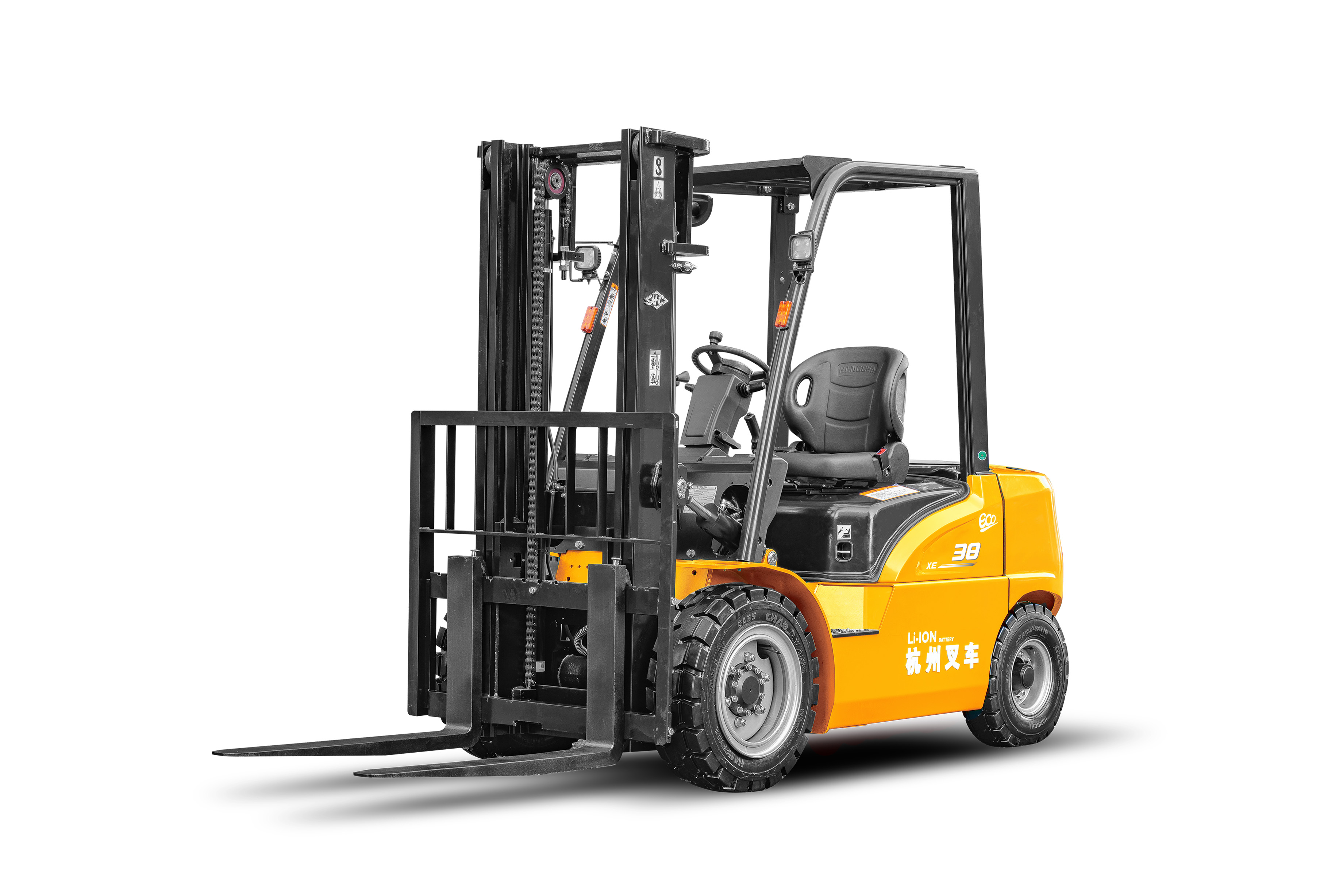
The traditional lead-acid battery model forces operations into a rigid cycle of swapping, watering, and equalizing—each step chipping away at productive hours. Lithium-ion forklifts sidestep this entirely by enabling opportunity charging during natural breaks. A 15-minute coffee pause or lunch window becomes an energy top-up, eliminating the need for dedicated battery rooms and the labor-intensive rituals that accompany them. This shift doesn’t just shave minutes off the clock; it fundamentally redefines how uptime is calculated, turning downtime from an unavoidable cost into a manageable variable.
Beyond the absence of swaps, lithium-ion packs maintain consistent voltage throughout the discharge curve. Operators no longer experience the sluggish performance that plagues lead-acid units as they drain—a subtle but critical advantage. When every pallet move counts, the ability to sustain peak speeds from the first minute to the last minute of a shift directly impacts throughput. Faster acceleration and lifting, combined with zero battery maintenance, compress hours of lost time into rare, brief intervals that have minimal effect on daily output.
The real breakthrough lies in decoupling charging from human oversight. Advanced battery management systems allow fleets to recharge at incremental rates without supervision, often during off-peak hours or automated shifts. This autonomy not only reduces the overhead of battery handling but also extends the practical working window of each truck. Managers can now plan multi-shift operations with fewer units, confident that energy availability won’t become a bottleneck. In essence, lithium-ion technology turns what was once a barrier into a seamless, almost invisible process that keeps the focus on moving goods, not swapping batteries.
Beyond Diesel: The Blueprint for Cleaner, Quieter Operations
For decades, diesel engines have powered industries from construction to logistics, but their hidden costs are becoming impossible to ignore. The constant rumble not only disrupts communities but also poses serious health risks to workers exposed to exhaust fumes day after day. As urban noise regulations tighten and emission standards evolve, the push for alternatives has shifted from a niche interest to an operational necessity.
Electrification sits at the heart of this transformation, replacing combustion with near-silent motors and zero tailpipe emissions. Advances in battery technology now allow heavy machinery and fleet vehicles to run full shifts on a single charge, while hybrid systems bridge the gap for tasks requiring extended endurance. Beyond the hardware, smarter energy management and on-site renewable generation are making clean power more reliable and cost-effective than ever before.
Adopting cleaner, quieter equipment isn’t just about compliance—it reshapes the entire work environment. Operators report less fatigue without the constant vibration and noise, leading to sharper focus and fewer accidents. Neighbors notice the difference too, opening doors to projects in noise-sensitive areas that were once off-limits. This blueprint points toward a future where productivity and sustainability run hand in hand, proving that leaving diesel behind is both a practical and profitable choice.
Smart Energy in the Aisles: Intelligent Battery Management Systems at Work
Picture a busy warehouse where forklifts glide silently through the aisles, their batteries not just holding a charge but actively communicating with the entire energy ecosystem. This is the reality of intelligent battery management systems (BMS) at work—where every cell is monitored, balanced, and optimized in real time. Instead of traditional reactive approaches, these smart systems predict energy demands, schedule charging during off-peak hours, and even redistribute excess power to other equipment, turning the facility into a seamlessly orchestrated energy hub.
The real magic happens at the individual battery level. Sensors dive deep into each cell, measuring temperature, voltage, and current with surgical precision. When one cell starts to underperform, the BMS doesn't just flag it—it automatically recalibrates the load, shuffling energy between cells to maintain peak efficiency and extend overall lifespan. This granular attention prevents the ripple effects that usually lead to unpleasant surprises, like a dead battery in the middle of a critical shift. Instead, maintenance becomes predictable, and downtime replaces panic with planned pit stops.
Beyond the warehouse floor, these intelligent systems feed data back to facility managers in ways that reshape operations. You're no longer guessing when to replace a battery or how to reduce peak demand charges; the system serves up actionable insights based on actual usage patterns. It might suggest rotating inventory charging during solar-rich hours or tapping into stored energy to ride through price fluctuations. In this landscape, batteries become dynamic assets that earn their keep around the clock, whether they're actively powering trucks or quietly supporting grid stability.
From Shifts to Seasons: Lithium-Ion’s Unmatched Performance in Extreme Conditions
Across industrial worksites and remote installations, lithium-ion power systems handle blistering midday heat and bone-chilling night shifts without flinching. Where older chemistries would slump in voltage or need active thermal management, these cells keep tools spinning, instruments online, and safety systems armed—shift after shift, no excuses.
That same steadiness stretches from a single work block to full seasonal cycles. Batteries left in unheated sheds through subzero winters or baked in desert enclosures for months still deliver near-rated capacity when called upon. Low self-discharge and robust electrode design mean you don’t return from a seasonal shutdown to a fleet of dead packs—they wake up ready.
The real differentiator isn’t just surviving extremes, but maintaining a flat discharge curve and usable power depth even when the thermometer pushes past 50°C or dips below -30°C. That reliability removes the need for oversized backup banks or climate-controlled storage, letting crews focus on the job instead of babysitting batteries.
The Next Chapter: Automation-Ready Forklifts Powering the Smart Factory
The shift toward fully connected production environments demands material handling equipment that can think and adapt on its own. Automation-ready forklifts are no longer just vehicles with bolt-on sensors; they are built from the ground up with integrated navigation, real-time data exchange, and the ability to learn from their surroundings. These machines blend seamlessly into factory workflows, responding to inventory changes and production schedules without the delays that come from human-operated alternatives.
What sets the latest generation apart is their modular intelligence. Factories can start with basic automated guided vehicle functionality and scale up to full autonomous operation as needs evolve. Onboard cameras, lidar, and machine vision algorithms allow the forklift to safely navigate around people and obstacles, while cloud connectivity feeds performance data back to a central system. This not only keeps operations running smoothly but also unlocks predictive maintenance, slashing unplanned downtime and keeping the smart factory truly smart.
The result is a quieter, safer, and more precise floor where forklifts communicate with conveyors, robots, and inventory management software in a single digital ecosystem. Rather than replacing jobs, these automation-ready platforms reshape them, letting workers focus on supervision, exception handling, and process improvement. As factories continue to evolve, the forklift becomes a connected node in a larger orchestrated system, driving efficiency from the warehouse to the production line.
FAQ
The shift has been driven by the need for faster charging, longer runtimes, and lower maintenance costs. Lithium-ion batteries can opportunity-charge during breaks, eliminating battery swap rooms and keeping operations running around the clock. This flexibility aligns with the demanding 24/7 workflows in China's booming e-commerce and logistics hubs.
They maintain consistent power output even as the battery drains, so forklifts don't slow down near the end of a shift. With no watering, equalizing, or acid spills to manage, downtime for maintenance drops dramatically. Plus, their compact batteries allow for more ergonomic truck designs, improving operator comfort and maneuverability in tight aisles.
Absolutely. While the upfront cost is higher, the total cost of ownership often tips in favor of lithium-ion over a few years. Savings come from eliminating battery room infrastructure, reducing electricity bills via higher charge efficiency, and cutting labor costs tied to battery maintenance. Many operations also see a boost in productivity that offsets the initial investment within 18 to 24 months.
Lithium-ion batteries perform reliably in cold storage environments where lead-acid batteries struggle with capacity loss and longer charging times. They don't need to be warmed up, can be charged in freezers, and deliver steady power in temperatures as low as -20°C. This makes them ideal for food processing and pharmaceutical cold chain operations that are expanding rapidly in China.
China's push for carbon neutrality and stricter emissions standards is phasing out internal combustion forklifts in many regions. While electric forklifts are not new, lithium-ion models get indirect support through subsidies for battery technology innovation and incentives for green intralogistics. Local policies promoting automation in manufacturing also favor lithium-ion for their compatibility with automated guided vehicles (AGVs).
Initial purchase price remains a barrier, and there's a knowledge gap around safe handling and disposal of lithium-ion batteries. Many smaller operations are also locked into long-term contracts with traditional equipment suppliers. Additionally, while the charging infrastructure is simpler, it still requires an upfront electrical upgrade that can be daunting for facilities with tight capital budgets.
Companies like BYD and Anhui Heli are integrating smart battery management systems that provide real-time data on battery health, charge cycles, and energy consumption. Some models feature regenerative braking that harvests energy during deceleration, further extending runtime. BYD, in particular, leverages its electric vehicle expertise to offer forklifts with integrated battery packs that are maintenance-free for up to 10 years.
It allows for more flexible facility layouts because you don't need dedicated battery rooms with ventilation and spill containment. Charging stations can be placed near rest areas or along production lines, enabling workers to plug in during natural pauses. This reduces travel time and creates a more decentralized charging model that adapts to lean and just-in-time material flow concepts.
Conclusion
China's material handling sector is undergoing a profound shift as lithium-ion forklifts take center stage, redefining what efficiency means on the warehouse floor. The move away from lead-acid batteries and diesel engines is not just a technical upgrade—it’s a strategic leap. Warehouses are shedding the constraints of long charge times and dedicated battery rooms, thanks to lithium-ion’s ability to take advantage of short breaks for opportunity charging. This slashes downtime dramatically, allowing operations to flow without interruption. Managers who once planned entire shifts around battery swaps now watch forklifts return to the aisle in minutes, not hours. The change is palpable: cooler, quieter environments are replacing the roar and fumes of combustion engines, aligning with stricter emissions goals while boosting worker comfort and safety.
Underpinning this revolution is the intelligence embedded in modern battery management systems, which monitor cell health, temperature, and usage patterns in real time, preventing issues before they arise. Such smart energy oversight ensures consistent performance even in the cold of cold storage or the heat of summer loading docks, where traditional batteries faltered. This durability extends to multi-shift operations, where the same battery can perform reliably year-round with minimal degradation. Looking ahead, Chinese manufacturers are engineering these forklifts to mesh seamlessly with automated guided vehicles and smart factory ecosystems, making them a cornerstone of industrial automation. In this landscape, lithium-ion power isn’t just an option—it’s the new baseline for material handling, delivering a blend of reliability, adaptability, and forward-thinking design that leaves legacy technologies behind.
Contact Us
Contact Person: Liuxue
Email: [email protected]
Tel/WhatsApp: +86-19084200370
Website: https://www.hf-ec.com/