

China Corrugated Box Manufacturing Standards and Quality Factors to Consider
2026-11-16
Not every corrugated box shipped from China tells the truth on its spec sheet. Some meet national standards; others quietly cut corners on liner weight, flute profile, or glue consistency. This post unpacks the manufacturing standards and quality factors that actually determine whether your packaging holds up. Because at Imagine Craft Packaging, we know the difference between a box that looks compliant and one that performs.
Reading a Chinese Corrugated Spec Sheet Without the Jargon
Most spec sheets from Chinese suppliers cram a lot into a small table, and the shorthand can stop you before you get to the numbers that actually matter. Instead of trying to translate every label, start by spotting a handful of repeat offenders: 克重 (gsm) for paper weight, 楞型 for flute profile, and 边压强度 for edge crush resistance. Once you recognize those, the sheet reads less like a code list and more like a quick snapshot of how the board will hold up in transit.
A useful trick is to read the sheet in reverse. Find the performance values first—burst strength, edge crush, puncture resistance—and only then look back at the construction details that explain them. Chinese mills often list the combination of liners and medium in a compact format, such as K/A or A=A, where the letters signal paper grades and the equals sign points to a double-wall board. Let those codes sit in the background until you have checked whether the tested numbers meet your box requirements.
Watch out for version mismatches, too. A spec sheet may quote values from an older national standard while your packaging test lab uses a newer one, so the same number can mean slightly different things. When a figure looks too high or too low, ask the supplier which test method and standard were used. That one question often clears up more confusion than trying to memorize every abbreviation on the page.
What GB/T 6544 Actually Changes on the Production Floor
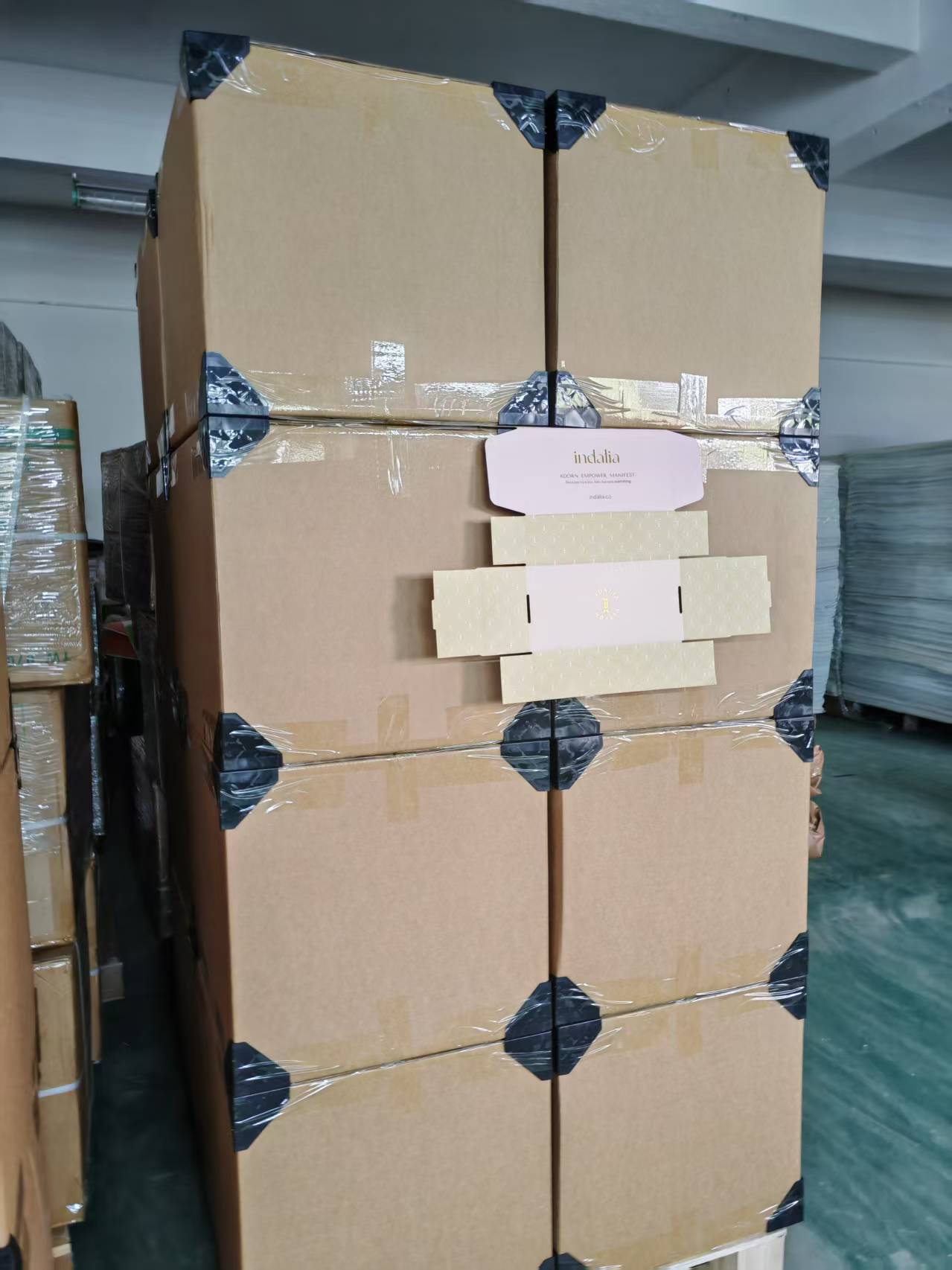
On corrugator lines, the updated GB/T 6544 changes what operators check before a run. Instead of matching liners and mediums by habit, crews now pull the grade’s edgewise crush and burst values first, then back into paper combinations. That filters out borderline recipes that used to pass internal checks but fall short of the revised minimums for single, double, and triple wall boards.
Moisture control has also tightened on the floor. The acceptable moisture band for several grades narrowed enough that preheater wrap angles, starch pickup, and hot plate settings have to be reset more often during a shift. When the plant humidity swings, supervisors no longer wait for warp complaints to arrive; they adjust at the wet end and hold stacks longer before strapping.
Quality checks moved closer to the line as well. Instead of a single daily lab pull, operators now do shorter interval checks on caliper, flatness, and adhesion on freshly slit sheets, then tag suspect pallets for rework before they reach the warehouse. That adds a few minutes to each order change, but it cuts down the number of rejected bundles coming back from converting.
Burst Strength vs. Edge Crush: Which One Matters for Your Freight
Freight rarely treats a box gently, so the real question is what kind of abuse your shipment will actually face. Burst strength measures how well the corrugated board resists a sudden puncture or rupture, which matters when a box gets jabbed by a fork tine, drops hard on a corner, or rides under heavier cargo. It is a useful number, but it doesn't tell you much about what happens when boxes are stacked for days in a warehouse or a trailer.
Edge crush, on the other hand, looks at how much load the vertical edge of the board can take before it buckles. That is the figure you lean on when pallets are double-stacked, when cartons have to hold their shape over long hauls, or when humidity starts softening the board. A box with a strong burst rating can still fold under a tall stack, and once the edges go, the whole load can shift.
For most packaged freight, edge crush tends to be the more practical spec because stacking is constant and punctures are occasional. That said, if your product is heavy, oddly shaped, or prone to being handled roughly at transfer points, don't ignore burst strength entirely. The most reliable choice is usually a board that balances both numbers without overpaying for strength you won't need.
The Humidity Factor Most Overseas Buyers Miss in Chinese Warehouses
Humidity rarely comes up in sourcing calls, but it should. In warehouse hubs across Guangdong, Fujian, and Zhejiang, summer moisture levels can sit above eighty percent for weeks. Cardboard softens, tape peels back, and unprotected steel starts showing faint rust before a single box is loaded. Buyers often blame the factory when goods arrive with mold stains or oxidized parts, but the problem usually started in a storage room with no dehumidifier and no one checking the walls for condensation.
The real gap is between what buyers see and where goods actually sit. A clean showroom or a modern assembly floor tells you little about the off-site overflow warehouse used during peak season. Many suppliers stack finished products in semi-enclosed buildings with bare concrete floors that sweat when temperatures shift. Electronics in thin poly bags, paper hang tags, leather straps, wood handles, and any item with exposed metal trim are especially vulnerable. If the purchase agreement only covers price and delivery date, the buyer quietly absorbs the cost of warped packaging, musty textiles, or corroded connectors.
Before final payment, it helps to ask for recent photos of the actual storage area and a simple humidity log. Even basic steps like moisture-barrier wrapping, silica gel packs, pallet covers, or moving stock off ground-level racks can reduce claims significantly. The goal is not climate-controlled perfection but basic awareness. Buyers who treat warehouse humidity as a regional afterthought tend to discover the damage later, in a customer complaint rather than a pre-shipment report.
Why Adhesive and Flute Profiles Decide Whether a Box Survives
The bond line inside corrugated board rarely gets attention until a carton lands on a warehouse floor with its corners split open. Adhesive does more than stick the liner to the medium; it controls how stress transfers between layers. When the glue penetrates too deeply, the board turns brittle and loses its cushioning. When penetration is too shallow, the plies peel apart under stacking pressure. Viscosity, open time, and cure speed all shape whether that hidden interface stays intact through vibration, humidity swings, and rough handling.
Flute profiles act as the structural skeleton, but their strengths are easy to misread. A-flute offers the most cushioning and stacking stiffness, yet it can dent under concentrated loads. B-flute provides a flatter surface and better puncture resistance, but less shock absorption. Smaller flutes like E and F give crisp printing and save space, though they do little to protect heavy contents. The geometry of the flute changes how loads travel across the board, so a carton that feels strong when empty can still buckle once the weight distribution shifts in transit.
What really decides survival is the interplay between the two. A rigid flute profile cannot compensate for weak tip bonds, and a strong adhesive cannot rescue a flute that is too thin for the load. In humid environments, starch-based adhesives soften and certain flute shapes hold moisture longer, accelerating collapse. Matching both choices to the actual stacking duration, temperature range, and product weight separates boxes that arrive intact from those that fail somewhere between the pallet and the doorstep.
Turning Quality Standards into a Practical Supplier Checklist
A thick standards document rarely helps anyone on a loading dock or a factory floor. The real work begins when broad requirements get broken into observable checks that a supplier can act on without guessing. That means turning phrases like “materials must be suitable” into concrete statements about finish, dimensions, tolerances, packaging, and traceability. Each line on the checklist should point to something that can be confirmed with a quick visual inspection, a measurement, or a document review.
It also helps to prioritize. Not every clause carries the same weight, and trying to enforce everything at once usually dilutes attention. Pull out the defects or failures that have actually caused problems in the past, then write those as pass-fail items near the top. Softer expectations can sit lower down, framed as notes or improvement opportunities rather than hard gates.
Finally, the checklist should be treated as a living tool. After a few shipments or production runs, vague items become obvious because they keep getting marked “yes” without evidence or trigger disagreements. Replace those with sharper language, add photos or reference samples where words fall short, and keep the format simple enough that an inspector can complete it without lengthy training.
FAQ
Most domestic cartons follow the GB/T 6543 series for box dimensions and construction, while the board itself is often made to GB/T 6544. Export orders may also reference ISO 9001 process controls, ISTA transit test procedures, or ASTM D5639 for performance. Buyers should ask which standard the factory uses because it affects everything from tolerance to compression testing.
Flute profiles change cushioning and stacking behavior quite a bit. A or C flute gives better cushioning and rigidity for larger boxes, while B and E flute offer smoother surfaces and better print quality but less bulk. The combination of liner and medium weights, single wall versus double wall, and the edge crush rating matter more than flute alone when loads are stacked in a warehouse.
It is worth confirming basis weight for liners and medium, recycled content, moisture level, and whether the mill used is stable. Some factories quote a lower price by switching to lighter paper or a higher recycled blend that performs poorly in humid conditions. Having the exact paper grade written into the purchase order prevents a quiet downgrade after the sample approval.
Check dimensions against the approved drawing first, then look at printing registration, glue or stitch placement, and board caliper. For structural confidence, run a box compression test and compare the result to the promised BCT value. A practical sampling plan like ISO 2859 or an agreed AQL level helps avoid arguments about what is acceptable.
Corrugated board absorbs moisture from the air, and as the fiber softens, edge crush and box compression values can drop noticeably. A carton that performs well in a dry northern warehouse may fail in a humid coastal environment or inside a refrigerated truck. If the supply chain includes high humidity, the board should be specified with that condition in mind rather than tested only in a controlled lab.
Burst strength tells you how well the board resists puncture or sudden impact, which is useful for rough handling and single item shipments. Edge crush reflects the board's ability to support vertical stacking loads, so it is more relevant for palletized freight. Many buyers now rely on edge crush because warehouses stack higher and longer, but a burst requirement still has value for e-commerce parcels.
Look for color drift between cartons, uneven ink coverage, blurred small text, and misaligned registration on multi-color logos. Varnish or coating can wear off during rubbing in transit, so a simple rub test with a piece of cloth can reveal weak adhesion. Die-cutting edges should be clean and fold lines should not cut too deeply into the board.
A useful setup includes an in-house testing lab with a compression tester, burst tester, and moisture meter, plus clear incoming paper inspection records. Certifications like ISO 9001 help with process consistency, FSC matters for responsible fiber sourcing, and compliance with packaging material restrictions may be required for certain export markets. Seeing calibration records and real-time production data during an audit gives more confidence than a wall of certificates alone.
Conclusion
Reading a Chinese corrugated spec sheet is less about memorizing numbers and more about knowing which figures shift actual production. GB/T 6544 sets baseline grades for liner and medium, but the real floor-level impact shows up in flute selection, adhesive coverage, and how consistently the mill runs to the stated grammage. Overseas buyers often fixate on burst strength because it appears as a single bold value, yet edge crush often tells you more about stacking survival in a humid container or a rough cross-dock. The decision should follow the freight route rather than the marketing line on a quote.
Humidity in Chinese warehouses, especially in southern coastal provinces, quietly lowers box compression before loading begins, so moisture readings and storage checks deserve a place beside lab certificates. Adhesive type and flute profile then determine whether the board keeps its shape after repeated handling. A practical supplier checklist works better than a generic quality audit when it includes random carton pulls, on-site edge crush tests, flute inspection, glue line checks, and moisture control records. Tying those checks back to GB/T 6544 turns a standard into something the production floor actually has to meet.
Contact Us
Contact Person: Sunnie
Email: [email protected]
Tel/WhatsApp: +8615818596517
Website: https://www.imagine-craft.com/