

Best High Speed Paper Bag Machines for Efficient Packaging Production
2026-11-19
Speed and consistency decide whether a packaging line keeps up or falls behind. For converters running paper bag production, a machine that can hit high output without constant stops is no longer a luxury—it’s the baseline. In this guide, we look at what actually separates a true high speed paper bag machine from the rest, and where ROKIN fits into that picture.
Speed Alone Is Not the Whole Story
A quick response time can grab attention, but it rarely holds it. Think about the last tool you abandoned despite its fast load speed—chances are the interface felt clunky, the information was scattered, or the overall experience left you feeling more frustrated than productive. Raw velocity only matters when it serves a clear purpose.
What tends to stick with people is how effortlessly a system fits into their existing rhythm. A page that appears in under a second but buries the key action behind three menus will always lose to a slightly slower one that respects the user's intent. It's the difference between being technically fast and feeling genuinely responsive.
So when someone says performance is all about milliseconds, ask what those milliseconds are actually doing. A meaningful interaction—one that anticipates a need, confirms an action, or removes a pointless step—turns speed into momentum. Without that layer of thought, even the fastest experience is just noise arriving quickly.
Where High-Cycle Paper Bag Machines Earn Their Price
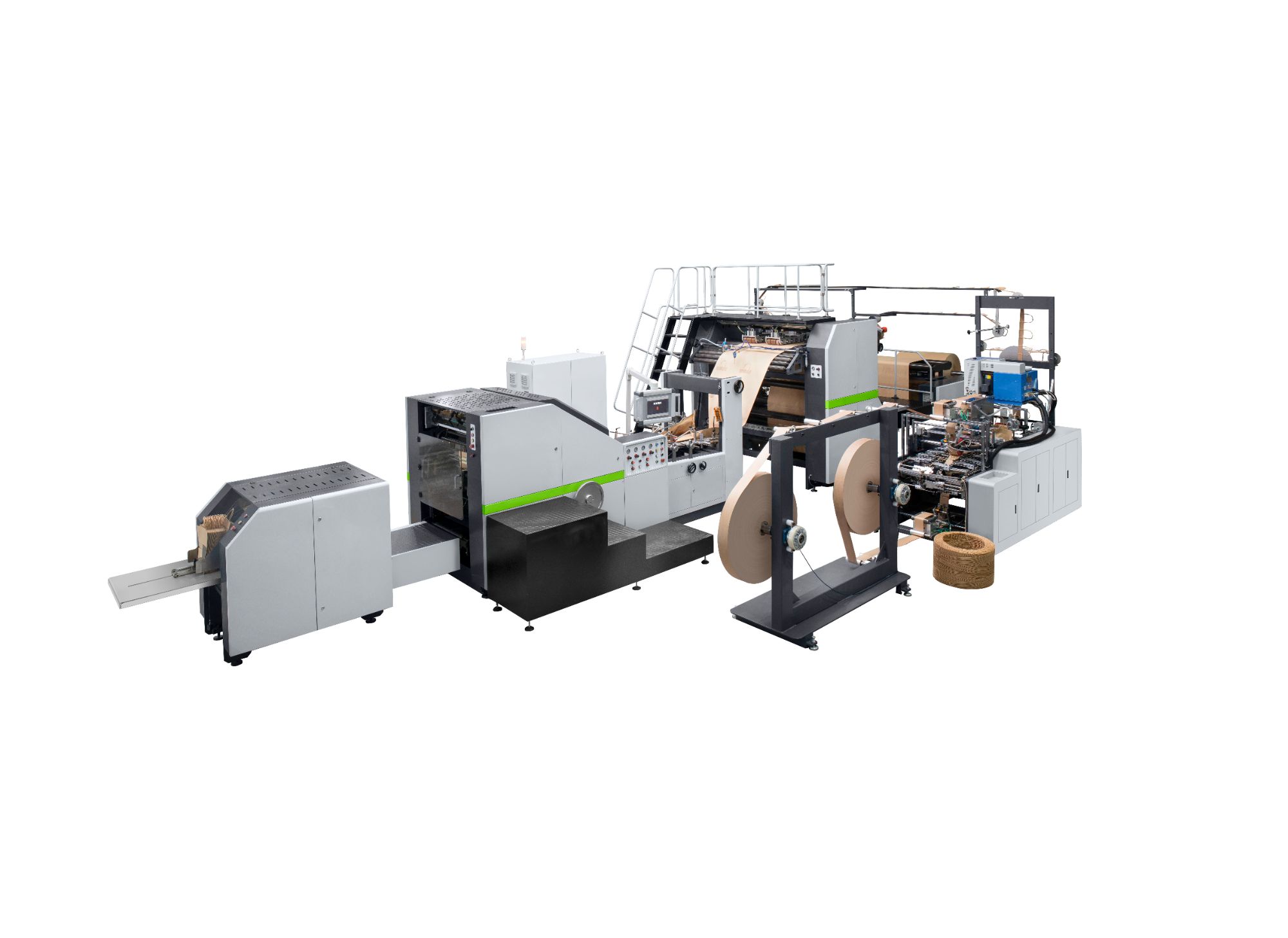
The real reason these machines hold their value rarely shows up on a spec sheet. It’s the accumulated minutes saved on every changeover, the way a well-built frame keeps tolerances tight after millions of cycles, and the fact that operators don’t have to fight the equipment to keep output steady. That operational quiet is expensive to engineer and easy to overlook until you’ve run cheaper alternatives side by side.
High-cycle doesn’t just mean faster; it means the machine’s rhythm matches the rest of the line without becoming the bottleneck or the breakdown point. When a paper bag machine runs consistently near its rated speed across a full shift, the per-bag cost drops in ways that a lower purchase price can’t duplicate. The savings accumulate in reduced overtime, fewer rejected batches, and less wear on downstream equipment that no longer has to absorb erratic stops.
There’s also a quieter return that comes from predictability. A machine that repeats the same motion accurately day after day lets a plant schedule maintenance instead of reacting to it. That shift from emergency repair to planned service is often where the premium pays for itself, because it protects delivery dates and keeps labor focused on production rather than troubleshooting.
The Hidden Bottlenecks That Slow Down Fast Lines
Most slowdowns on a fast line do not come from the machine that everyone monitors. They gather in the quieter handoffs: a part waiting for a scanner that has wandered to another station, a shift inheriting half-finished trays, a tool that must be signed out before the next movement can begin. Each pause seems too small to track, but together they stretch cycle time in ways that feel vague and hard to pin down.
A fast line often hides its real constraint by keeping upstream stations busy. Inventory builds just before the point where flow is throttled, so the floor looks active and capacity seems fine. The stronger signal is not final output speed but the gap between the moment a unit is ready and the moment it actually leaves. That gap is where the bottleneck sits, wrapped in workarounds that people have stopped questioning.
Fixing these bottlenecks rarely starts with expensive equipment. It starts with watching shift changes and counting the small delays that never make it into a log. A missing barcode scanner, an awkward reach, or a label printed at the wrong time can cost more than a slow conveyor because it repeats every few minutes. Once those interruptions are treated as part of the process instead of as exceptions, the line can finally run at the speed it was already assumed to have.
Choosing Between Rotary and Flatbed Paper Bag Systems
Rotary systems win on sheer output when you need long runs of identical sacks. The drum and forming stations keep moving without pause, so a single setup can push out tens of thousands of bags per shift. That speed comes with a tradeoff: changeovers eat time, and the tooling cost only makes sense if you are not switching sizes every few hours.
Flatbed machines take the opposite approach. They stop, punch, fold, and glue in discrete steps, which naturally limits speed but opens up flexibility. Short runs, frequent size changes, and odd paper stocks are easier to handle. If your production floor juggles five or six bag formats in a day, a flatbed line will waste far less material and labor than a rotary one.
The practical decision often comes down to batch length and floor space. Long, stable contracts with one or two bag dimensions favor rotary. A mixed catalog, seasonal sizes, or just-in-time deliveries favor flatbed. Neither is universally better; matching the machine rhythm to your order pattern is what actually keeps waste down and throughput predictable.
Why Paper Grade Affects Throughput More Than Motor Power
Most throughput bottlenecks on sheet-fed equipment don't trace back to raw motor wattage. A stronger drive can push rollers harder, but it can't change how a particular paper grade releases from the stack, flexes around a bend, or sheds dust into sensors. Lightweight, low-stiffness sheets buckle under feed pressure and stall before the motor ever approaches its rated limit. Heavier coated stocks hold static charge differently and may slip instead of separate cleanly.
Paper grade also dictates friction consistency. Recycled content with shorter fibers tends to create more paper dust, which coats rollers and reduces grip long before any lack of torque appears. By contrast, a clean, well-sized sheet with predictable curl can move through a path at full rated speed with a relatively modest motor. In practice, the motor's job is simply to maintain speed against resistance; the paper's mechanical behavior sets the ceiling on how fast that can happen.
That's why upgrading drive power often yields disappointing results when the real constraint is stock behavior. Changing the paper spec, adjusting separation air, or reworking the feed geometry usually moves throughput more than doubling horsepower. Once operators stop treating the motor as the limiting factor and start measuring curl, caliper, and surface slip, the entire throughput conversation shifts.
Smarter Changeover Design for Short-Run Efficiency
Short-run work exposes every wasted minute in a changeover. The usual response is to push people to move faster, but that only shaves seconds. A smarter design questions which tasks have to happen while the machine is down, then moves everything else outside the window. Pre-staging fixtures, setting temperatures, and verifying part programs before the last job finishes can turn a chaotic exchange into a short, deliberate sequence.
The physical layout matters just as much as the schedule. Tooling that lives on a labeled cart next to the machine beats a shared shelf across the aisle. Quick-release clamps, pinned locating points, and color-matched hoses remove guesswork and force consistency. Operators stop hunting for the right bolt or rechecking alignment because the setup only fits one way.
Measuring the gaps that remain keeps the effort honest. Record each changeover, flag anything over a set baseline, and address the same two or three repeat issues first. In short-run environments, a ten-minute reduction across twenty changeovers a week frees hours of capacity without adding staff or floor space.
FAQ
Start with the exact bag sizes, paper grades, and daily volume you actually run. Then look at the unwind, tension control, folding, and gluing sections under load. A machine that holds tolerance at 80 percent of its rated speed often beats one that only works briefly at maximum.
Real output is usually below the headline number. You need to account for roll changes, clearing minor jams, and ramp-up time. Many converters find a steady range of 150 to 250 bags per minute more realistic than the peak speed printed on the brochure.
A single line can typically run square bottom bags, sharp bottom bags, bread bags, or shopping bags, but not all of them equally well. Some machines switch between formats, yet changeover can eat more time than expected. It is usually better to dedicate a line to a few core sizes.
If you change bag length or width often, servo drives save a lot of setup time and reduce mechanical adjustment errors. If you run the same size for days, the extra cost may not pay back quickly enough to justify the upgrade.
Clean glue rollers before buildup hardens, check knife clearance every shift, and lubricate cams and chains on a fixed schedule. Track speed and reject rate by shift so a drop in performance gets caught before it becomes a full stoppage.
Plan for roughly 20 to 40 percent more floor area than a mid-speed line, partly for larger unwind stands and delivery sections. Operators need to be comfortable with roll splicing, fine tension adjustments, and clearing blockages quickly, so at least one experienced person should lead each shift.
Yes, but recycled and lighter sheets demand tighter tension control and stable moisture content. The suction feeding and folding sections need to be set more carefully, otherwise wrinkles and misfeeds increase even if the base speed is unchanged.
With steady orders, many plants recover the investment in 18 to 36 months. The return comes less from raw speed than from fewer stops, lower reject rates, and shorter changeovers, so a slightly slower but more stable machine can pay back faster.
Conclusion
High-speed paper bag machines rarely deliver their true potential when buying decisions focus on cycle rate alone. A machine can look impressive at full sprint yet fall apart during everyday running. The real story shows up in how a line handles reel splices, glue application, and the brief pauses that accumulate into lost hours. High-cycle systems earn their price in operations where consistent paper supply and trained operators allow them to stay near rated output, not just peak output for a demonstration clip. Hidden bottlenecks such as slow curing, uneven web tension, or poor stack delivery routinely cancel out what the motor gains.
Choosing between rotary and flatbed designs matters less than matching the machine to the bag style and run length, and far less than the paper grade being converted. Lightweight or uneven sheets create more speed loss than a smaller drive ever will. For short runs, changeover design often decides profitability because time spent re-setting formers, handles, or printing units is time the machine is not producing. Plants that treat speed as one part of a wider packaging system tend to get more from their investment than those chasing a higher number on the brochure. The most efficient lines are not always the fastest on paper; they are the ones that stay predictable when materials, operators, or order lengths change.
Contact Us
Contact Person: CARA
Email: [email protected]
Tel/WhatsApp: +8619519778302
Website: https://www.rokinmachinery.com