
Automated Guided Vehicle Original Manufacturer Selection Guide
2026-08-28
Choosing an AGV manufacturer isn't like picking a component off a shelf—get it wrong and you'll be paying for it in downtime, integration headaches, and retrofit costs for years. This guide strips away the sales gloss and gives you the questions to ask before signing anything. From control software to safety certifications, we'll cover what actually differentiates a genuine OEM from a reseller. Whether you're exploring established names like HANGCHA or evaluating niche specialists, you'll finish with a clear roadmap to a decision you won't regret.
Define Your AGV's Real-World Duty Cycle
Start by mapping the actual path your AGV will follow across a shift, not just the optimized route from a layout drawing. Note every stop, wait, charge, and load transfer—these interruptions often consume more time than the travel itself. If your operation runs multiple shifts with different pick rates or traffic patterns, capture a representative sample from each rather than assuming a single average day.
Next, translate those observations into a load profile that includes acceleration, braking, cornering speeds, and idle periods between tasks. Pay attention to floor conditions, ramp angles, and doorway transitions, since these affect energy draw and component wear. Once you have this profile, simulate it against battery capacity and thermal limits to see whether the AGV can finish the worst shift without forced charging or derating.
Test the Integration Claims with Your Existing Control Systems
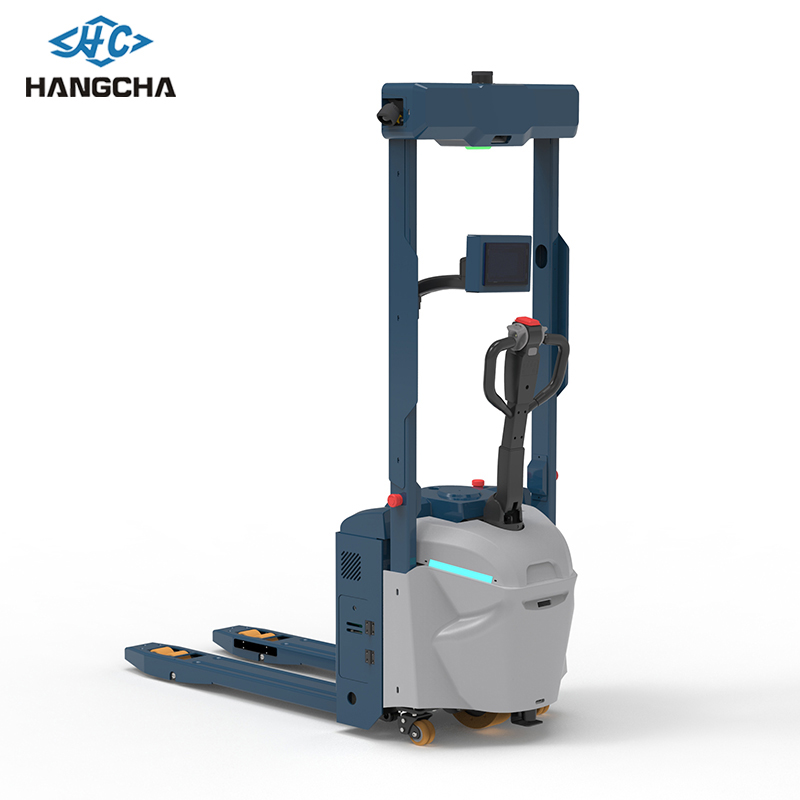
Vendors often claim their system integrates seamlessly with whatever you already run, but that promise rarely survives contact with your actual control environment. Instead of asking for a feature list, pull a test unit into your facility and connect it to the specific PLCs, historians, and HMIs you use daily. Watch how it handles tag naming mismatches, communication timeouts, and the inevitable quirks of your legacy hardware before you sign anything.
Pay close attention to how the integration behaves under load. Run a simulated batch, trigger a failover, or disconnect a network segment to see whether alarms propagate correctly and data logging stays intact. The goal isn't just proving that data moves from point A to point B—it's confirming that your operators can act on that data without switching between three different screens.
Finally, document what "integrated" means in your own terms. Ask for a written agreement that covers specific protocols, update cadence, and support response times. If the vendor hesitates to let you test against your existing controls, that hesitation is the real answer.
Verify Safety Compliance Beyond the Certificate on the Wall
A certificate on the wall might look reassuring, but it only tells you that a company met certain standards at a single point in time. To verify actual safety compliance, you need to look at how work is done every day. Ask for recent inspection logs, training records, and incident reports. Check whether equipment maintenance is up to date and whether employees are following the same procedures that were audited for the certificate. Small gaps between documented policy and daily practice often reveal where real risk lives.
Another practical step is to observe operations without a scheduled tour. Walk through the facility at different times, talk to frontline workers, and watch how they handle hazardous materials or operate machinery. Do they use the required personal protective equipment? Are emergency exits clear? Do safety data sheets match the chemicals actually in use? These details are harder to fake than a framed certificate and give you a clearer picture of the safety culture.
Finally, compare the certificate’s scope with the actual work being performed. Some certificates cover only part of a facility or a limited set of processes. If the company has expanded, changed suppliers, or introduced new equipment since the audit, the certificate may no longer reflect current conditions. Request a copy of the latest audit report and verify that any nonconformities were resolved. True compliance is a continuous practice, not a static document on the wall.
Uncover the Total Cost of Ownership Before Signing
Most purchase decisions start with a sticker price that feels reassuringly concrete, but that number rarely tells the whole story. Whether you're buying software, a vehicle, or a piece of industrial equipment, the true financial burden only reveals itself over months and years of use. Smart buyers know that the moment before signing is the last chance to dig into the less obvious expenses that will quietly drain your budget.
Look beyond the upfront cost and you'll find a cluster of recurring charges that vendors often tuck into the fine print—annual maintenance fees, mandatory subscription tiers, training hours, integration work, and consumables that wear out faster than expected. A cheap printer might demand expensive ink cartridges every few weeks; a low-cost software license could lock you into pricey support contracts. Even the cost of downtime or sluggish performance has a dollar value, yet it's rarely itemized in the proposal.
To uncover the total cost of ownership before you commit, build a simple spreadsheet that tracks every expense over a realistic lifespan—three, five, even ten years depending on the asset. Ask the vendor pointed questions: What breaks first? How often does this need servicing? Are there penalties for early termination? Compare those projections against alternatives, and don't be afraid to walk away if the math doesn't add up. A signature is easy to give but expensive to take back.
Get References from Operations That Look Like Yours
A reference only carries weight when the other business faces constraints you recognize. Ask for examples where the vendor worked with companies that share your operating model—similar order volumes, comparable compliance requirements, or the same shift patterns. Those details matter more than industry labels.
When a supplier can walk you through how they handled a problem at a facility much like yours, the conversation changes from sales talk to problem solving. You get to ask practical questions: How did they manage handoffs between shifts? What broke during rollout? Where did the promised savings actually show up?
Dig into the differences as well. A reference that mirrors your operation in most ways but differs on one key variable can teach you what to watch for. That contrast often reveals more than a perfect match.
Check the Manufacturer's Software Roadmap and Fleet Expansion Flexibility
Before committing to any equipment purchase, dig into the manufacturer's software update cadence and what is actually included. A flashy dashboard means little if the vendor has a history of abandoning features after two years or charging steep fees for basic integrations. Ask for a written roadmap with commit dates, not vague promises of “continuous improvement.” Look for evidence of field-deployed updates: bug fixes, security patches, and new functionality that arrived without requiring you to replace hardware. This tells you whether the software is treated as a living product or an afterthought.
Fleet expansion flexibility goes beyond just adding more units. You need to know whether older and newer models can operate together on the same software version without forced upgrades or compatibility gaps. Check if the licensing model allows you to scale up incrementally, or if you are locked into a fixed package that makes adding one or two machines disproportionately expensive. Also examine how the manufacturer handles telemetry and data access when you mix generations—can a mixed fleet report through a single interface, or will you end up juggling multiple portals?
The practical test is to ask for a scenario walkthrough: what happens if you start with five units, then add three more after eighteen months, and one of those is a newer model? A manufacturer worth keeping will show you exactly how license costs adjust, how software versions align, and how long you can expect updates to continue on the original hardware. If the answer involves a lot of hedging or “we can work something out,” treat that as a warning sign rather than a negotiation tactic.
FAQ
Ask for a factory tour and look for active metal fabrication, wire harness assembly, and a dedicated test track. Check whether the serial number format traces back to the manufacturer's own production records, and request a breakdown of which core components are sourced versus built. A genuine original manufacturer can usually explain design changes and offer custom frame modifications without routing every request to an unnamed partner.
Focus on drive motor and gearbox service life ratings, battery chemistry with a documented battery management system, and navigation repeatability under realistic floor conditions. Also compare safety sensor redundancy, such as dual-channel emergency stop circuits and obstacle detection fields. Vendors that publish conservative duty cycles and thermal derating data tend to be more honest than those quoting only top speed and payload.
The hardware may be solid, but daily throughput usually depends on fleet scheduling, traffic management, and how cleanly the AGV talks to your WMS or ERP. Ask whether the software is developed internally, how often it is updated, and whether remote diagnostics allow factory engineers to resolve issues without an on-site visit. A strong in-house software group can adapt charging strategies, alter route logic, and troubleshoot integration bugs that third-party code often leaves unresolved.
Common surprises include frequent route recalibration, premature battery replacement, per-vehicle software license fees, and spare parts that must be air-freighted with long lead times. You may also pay extra for integration debugging when the AGV cannot interface cleanly with existing conveyors, doors, or elevators. Inexperienced builders often underquote the initial hardware package and recover margin through service contracts, consumables, and emergency support fees.
Give them a scaled layout or CAD file of your facility and ask for a traffic simulation that includes peak-hour volumes, charging windows, and blocking scenarios. Request references from operations that handle similar load types, aisle widths, and shift patterns. A practical follow-up is to have the manufacturer run a demo with your actual pallet or cart, because grasping fixture slip, load overhang, or floor unevenness reveals whether they have dealt with your conditions before.
Depending on the region, look for ANSI/RIA 15.08 or ISO 3691-4 compliance for industrial mobile robots, plus CE marking or UL 3100 where applicable. The manufacturer should also provide a documented risk assessment for the specific vehicle model and be willing to walk through stop distance tests, speed monitoring, and emergency stop categories. Certificates alone are not enough; ask to see the test reports and the names of the notified bodies or labs that performed the evaluation.
Local support becomes decisive when your operation cannot tolerate multi-day downtime, when floor conditions require on-site tuning, or when frequent layout changes demand quick software updates. A nearby manufacturer can often visit within hours, keep common spare parts in the same time zone, and adjust documentation or safety compliance for local regulations. Overseas options may look cheaper on paper, but the savings disappear if a single production stoppage forces you to wait for parts and an engineer.
Conclusion
Selecting an automated guided vehicle original manufacturer demands more than a spec-sheet comparison. Start by mapping the exact duty cycle your operation will throw at these machines—load weights, travel distances, floor conditions, shift patterns, and charging windows all change the math. A vendor that only asks about payload and top speed is missing the point. Then, push hard on integration claims: have them demonstrate a live connection to your existing WMS, MES, or PLC architecture, not just a canned demo. Real-world handshakes fail more often than anyone admits. Safety is another trap—a certificate on the wall means little if the safety PLC logic, emergency stop zones, and sensor fusion haven't been validated against your specific aisle widths and pedestrian flows. Ask for a documented safety case, not a generic compliance badge.
Total cost of ownership is where most buyers get burned. Dig into battery replacement cycles, spare parts lead times, software license fees, and the labor required to keep the fleet running—not just the sticker price. References matter, but only from operations that resemble yours: similar building age, racking layout, throughput peaks, and even shift culture. A warehouse running 24/7 with narrow aisles tells you nothing about a low-ceiling manufacturing cell. Finally, look at the manufacturer's software roadmap. Can the fleet scale from three robots to thirty without a control system rewrite? Does the vendor's development path align with your own automation strategy, or are you buying into a dead-end platform? The right OEM is a long-term partner, not a one-time transaction.
Contact Us
Contact Person: Liuxue
Email: [email protected]
Tel/WhatsApp: +86-19084200370
Website: https://www.hf-ec.com/