

Aluminum Gravity Parts Maker: Crafting Precision Components for Modern Industries
2026-07-09
The demand for lightweight yet durable components has never been higher, and aluminum gravity casting stands at the forefront of this industrial evolution. As a premier aluminum gravity parts maker, DDR excels in crafting precision components that power modern industries, from automotive to aerospace. With a blend of advanced technology and meticulous engineering, DDR transforms molten metal into high-performance parts that meet the tightest tolerances. But what makes gravity casting the go-to process for complex geometries, and how does DDR ensure every piece outperforms expectations? Read on to discover the craft behind the components shaping tomorrow’s machinery.
Precision Casting for High-Stakes Applications
Precision casting isn't just about shaping metal—it’s about owning the outcome when failure isn’t an option. In industries like aerospace and life-saving medical devices, even a micron-scale deviation can cascade into catastrophic results. The process demands a rare blend of metallurgical insight, process control, and almost obsessive attention to detail. From turbine blades that spin at unimaginable temperatures to surgical implants that integrate with human bone, the castings must perform exactly as engineered, every single time.
What sets apart top-tier precision casting isn't the equipment alone, but the relentless refinement that happens on the foundry floor. Melt cleanliness, shell permeability, and solidification modeling converge to eliminate inclusions, porosity, and dimensional drift. Many shops claim tight tolerances, but few achieve the repeatability required for flight-critical or life-critical parts. The true differentiator is a culture that treats each heat as a mission, not just a production run—with traceability and inspection protocols that leave no anomaly unexplained.
When the application keeps people alive or flying safely, shortcuts evaporate. Advanced simulation software now predicts grain structure and residual stress before metal ever hits the mold, enabling near-flawless first-time yields. Yet the human element remains irreplaceable: experienced foundry engineers who read a fractured test bar or a radiograph like a novel, catching what algorithms might miss. This marriage of computational power and hard-won intuition defines the new standard for high-stakes precision casting.
Merging Material Science with Modern Manufacturing
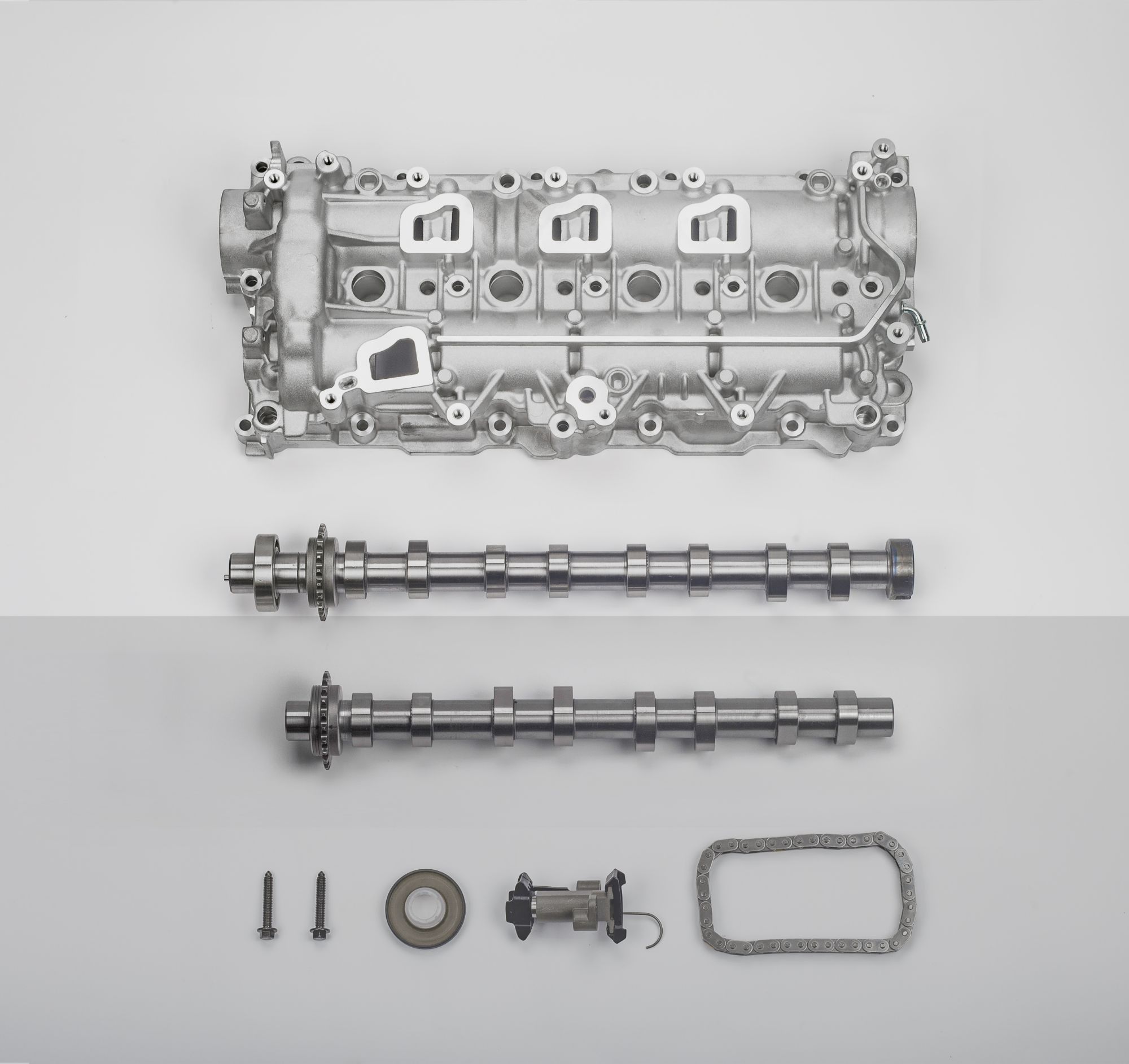
Blending material science with modern manufacturing has quietly reshaped how we design and build everything from medical implants to aircraft engines. Instead of treating material selection as an afterthought, today’s engineers use predictive models to tailor microstructures right on the factory floor. That means parts can be lighter, tougher, or more heat-resistant exactly where they need to be—without sacrificing efficiency or driving up cost.
Additive manufacturing, for instance, lets us print metal alloys with gradient compositions that were unimaginable a decade ago. A single component can transition from a wear-resistant surface to a ductile core, all in one seamless build. Meanwhile, advances in real-time process sensing allow us to catch and correct defects as they form, turning what was once an art into a reproducible, data-driven practice.
This convergence also nudges manufacturers toward smarter resource use. By understanding how materials behave under extreme conditions, we minimize trial-and-error waste and extend product lifespans. It’s a shift away from “make it and hope” toward a world where every layer of powder, every cooling rate, and every grain boundary is deliberately harnessed to deliver something both functional and lasting.
Quality Assurance Beyond Standard Checks
Real quality assurance isn't just about ticking boxes on a checklist. It's about understanding the user's journey before they even encounter a problem. Our teams dive into real-world usage scenarios, simulating edge cases that typical test scripts miss. By thinking like the end user—someone who might have flaky internet or outdated software—we catch subtle inconsistencies that degrade the experience over time.
We also integrate feedback loops directly from customer support interactions and product analytics. Instead of waiting for bug reports, we proactively investigate patterns that hint at underlying issues. This means looking at how features are actually used, not just how they were intended to be used. The result is a more resilient product, where quality is woven into every interaction, far beyond the confines of a standard test plan.
Beyond automation, we invest in exploratory testing sessions where team members intentionally try to break the system in creative ways. These sessions often uncover hidden dependencies and assumptions that code reviews miss. Pairing this with a culture that values curiosity over metric-chasing leads to a deeper, more authentic kind of quality—one that users feel but can't always articulate.
Tailored Solutions for Complex Design Needs
Every project arrives with its own set of constraints—tight spatial requirements, uncommon material combinations, or performance demands that standard options can’t meet. We start by dissecting these challenges, mapping out the underlying logic that governs how form, function, and user experience need to converge. Instead of forcing a square peg into a round hole, we build the hole around the peg, shaping solutions that respect the unique rhythm of each problem.
This approach means ditching the cookie-cutter playbook. Our process blends iterative prototyping with close client dialogue, allowing ideas to evolve naturally as we uncover hidden opportunities. Whether it means rethinking a joint to handle unusual stress patterns or developing a custom interface that streamlines a tangled workflow, the result is always something that feels inevitable—like it couldn’t have existed any other way.
Sustainability in Aluminum Gravity Casting
Aluminum gravity casting naturally supports circular economy principles due to aluminum's infinite recyclability without quality loss. The process can incorporate a high proportion of post‑consumer scrap and in‑house returns, slashing the energy footprint compared to primary aluminum production. By designing for casting integrity and ease of disassembly, manufacturers enable multiple lifecycles for the same material, effectively turning end‑of‑life components back into high‑value feedstock.
Modern foundries are re‑engineering energy flows to curb emissions. Closed‑loop cooling systems, waste heat recovery from melting furnaces, and on‑site renewable generation help reduce carbon intensity. Advanced sand reclamation systems reclaim up to 98% of molding sand, cutting both raw material consumption and landfill waste. Lightweighting of cast components also contributes downstream—every kilogram saved in a vehicle part lowers fuel or battery demand over its operating life, magnifying the environmental benefit far beyond the factory gate.
Binder systems and coatings have evolved to eliminate hazardous volatile organic compounds, improving air quality for workers and surrounding communities. Water‑based release agents, inorganic binders, and biodegradable quenchants are replacing traditional chemistries without compromising dimensional accuracy. Lifecycle assessments now routinely guide process selection, pushing the industry toward a state where the carbon payback from lightweighting exceeds the initial manufacturing footprint within the first few months of a product's use.
Partnerships That Drive Industrial Progress
Real industrial breakthroughs rarely happen in isolation. They emerge when manufacturers, technology providers, and research institutions align their expertise toward a shared objective. These partnerships go beyond mere vendor-client relationships—they become collaborative ecosystems where each party brings unique strengths, whether it's domain knowledge, cutting-edge R&D, or operational scale. The result is a fusion of ideas that accelerates innovation and turns bold concepts into practical, shop-floor realities.
Consider how a legacy automotive plant partnered with a robotics startup to reimagine its assembly line. Instead of buying off-the-shelf solutions, they co-developed adaptive automation cells that learn from human workers in real time. This wasn't just about efficiency gains; it reshaped the workforce, upskilling operators into system orchestrators. Such deep collaboration creates proprietary advantages that competitors can't easily replicate, because the value lies not in the technology alone, but in the shared learnings and trust built along the way.
Sustainable progress also demands unconventional alliances. When a chemical conglomerate joined forces with a renewable energy firm and a local university, they didn't just reduce carbon emissions—they designed a closed-loop system that turned waste heat into a resource for neighboring communities. These cross-sector partnerships tackle challenges too complex for any single entity, proving that when industries stop guarding their silos and start sharing their smarts, the entire ecosystem moves forward.
FAQ
Gravity casting pours molten aluminum into a permanent mold using only gravitational force, without high-pressure injection. This yields denser, less porous parts compared to die casting, and allows for thicker walls and better mechanical properties. Unlike sand casting, the reusable metal molds provide finer surface finish and tighter tolerances.
We serve a wide range of sectors that demand reliability and lightweight strength. Common clients include automotive manufacturers for engine brackets and suspension parts, robotics companies for structural arms, medical equipment producers needing sterile, smooth housings, and industrial machinery builders requiring heat-dissipating components.
Our precision starts with advanced mold design using CAD/CAM simulation to predict metal flow and solidification. During production, we control melt temperature, pouring rate, and cooling cycles meticulously. Every batch undergoes dimensional inspection with CMM machines and we fine-tune molds based on real-time data feedback.
Absolutely. We specialize in tailor-made solutions. Clients provide 3D models or even rough sketches, and our engineering team collaborates to optimize the geometry for castability, strength, and weight. We can incorporate complex internal cavities, threaded inserts, or specific surface finishes and then handle everything from prototyping to full-scale delivery.
Quality is embedded in every stage. Raw aluminum alloy is spectroscopically verified. During casting, samples undergo X-ray or ultrasonic testing to check for hidden defects. Post-production, we perform pressure tests if needed, and all parts pass a final visual and dimensional audit. Our ISO 9001 certification formalizes these routines.
Aluminum offers an unmatched mix of light weight, corrosion resistance, and thermal conductivity. When cast via gravity, it achieves excellent strength-to-weight ratio without brittleness. It's also fully recyclable, which helps clients meet sustainability targets while reducing overall product mass — critical in transport and handheld devices.
Our facility accommodates parts ranging from small valve bodies to large machine frames weighing over 50 kg. The gravity method excels at producing thick sections and gradual contours that are challenging for high-pressure casting. We regularly cast intricate brackets with integrated channels and thin ribs, all in one piece, eliminating assembly steps.
Conclusion
In the demanding landscape of modern manufacturing, an aluminum gravity parts maker stands as a pivotal force, delivering precision components that power everything from aerospace systems to medical devices. The process begins with precision casting, where molten aluminum is poured into meticulously engineered molds under controlled gravity, ensuring exceptional dimensional accuracy and structural integrity for high-stakes applications. This method is far from rudimentary; it merges advanced material science with state-of-the-art manufacturing, leveraging alloy innovations and real-time process controls to produce parts that withstand extreme stresses while minimizing weight. Every pour is informed by decades of metallurgical expertise, resulting in components that seamlessly integrate into complex assemblies where failure is not an option.
Beyond the casting floor, the commitment extends into rigorous quality assurance that transcends standard checks—utilizing CT scanning, spectral analysis, and destructive testing to validate internal soundness and mechanical properties. Such depth is essential when crafting tailored solutions for intricate design needs, often involving thin walls, complex geometries, or custom alloys that off-the-shelf parts cannot satisfy. Moreover, sustainability is woven into the core of the operation: closed-loop recycling of aluminum scrap, energy-efficient melting furnaces, and minimal waste production define an eco-conscious approach without compromising performance. This holistic philosophy fosters deep partnerships with clients, where collaborative engineering from prototype to production drives industrial progress, turning visionary designs into reliable, repeatable reality. In a world demanding lighter, stronger, and smarter components, the aluminum gravity parts maker remains an indispensable partner, shaping the future one casting at a time.
Contact Us
Contact Person: Shelly
Email: [email protected]
Tel/WhatsApp: 8613967667688
Website: https://www.yongyu.com/