

Abrasive Sponge Exporter Selection Tips for Global Buyers
2026-10-17
Sourcing abrasive sponges overseas can feel like a gamble—one wrong shipment and your production line stalls. Yet most buyers still rely on outdated checklists that miss the real red flags. In this guide, we’ll walk through what actually separates reliable exporters from the rest, with insights drawn from years of trade data—and why teams like SHENZHEN SUN ABRASIVES keep surfacing in buyer shortlists.
Reading Past the Polished Sales Pitch
Polished decks and confident demos can make even a shaky product feel inevitable. The trick is to treat the presentation as a proposal, not a promise. Ask which metrics were left out, why the case study is anonymized, and whether the reference customer actually resembles your team. A vendor who hesitates on those questions is often revealing more than the slide deck ever could.
Spend a few minutes digging into the language too. “Best-in-class” means nothing without a benchmark, and “seamless integration” usually translates to a custom build. Instead of nodding along, pause the pitch and ask to see the workflow in a less rehearsed setting. Get a sandbox, share your own data, and watch what breaks. That is where the real sales pitch ends and the product begins.
Why Sample Consistency Predicts Bulk Quality
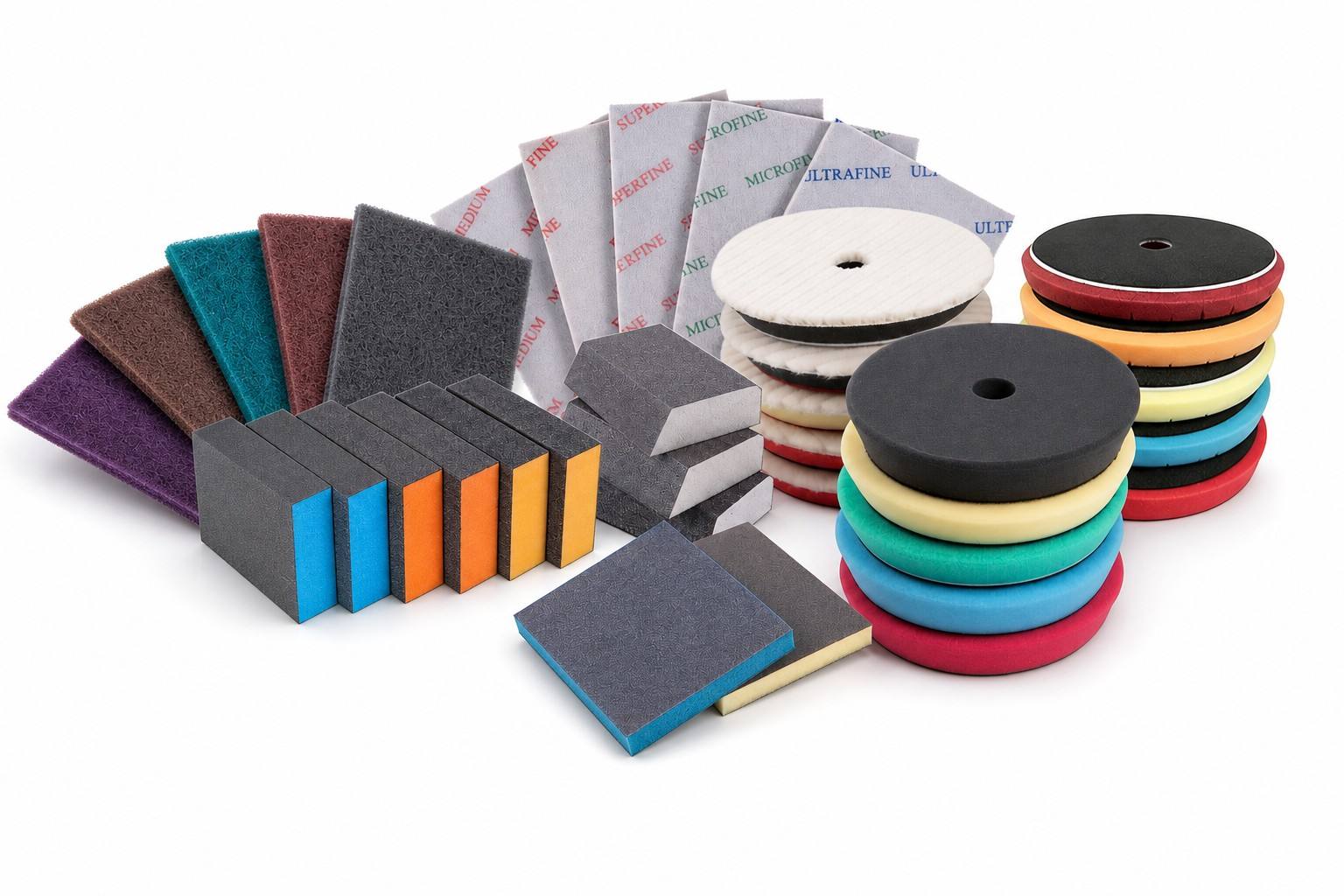
In most production environments, the samples pulled for testing are not just random grabs—they are the earliest and most honest signals of how thoroughly a batch has been mixed, milled, or blended. When those samples consistently fall within a narrow range across multiple points in the process, it strongly suggests that the entire batch is behaving as a single uniform mass. Variations at the sample level, on the other hand, tend to show up later as striations in color, density, or potency that cannot be corrected once the material has left the line.
This predictive power comes from the simple fact that bulk quality is rarely created at the end; it is preserved or lost during the steps where ingredients meet and move. If a few grams taken from the top, middle, and sides of a vessel tell the same story, the forces acting on the batch—shear, time, temperature, moisture—are probably reaching every particle in a similar way. A scattered set of sample results points to dead zones, uneven moisture uptake, or poor dispersion, all of which will scale up into larger defects rather than averaging out.
Sampling consistency also acts as a leading indicator for process control. It gives operators a chance to adjust before the batch is fully processed, because the pattern in small increments reflects the larger trajectory. In that sense, the sample is not just a miniature version of the batch—it is a forecast. The better the sample agreement, the more confidently you can release the bulk material, knowing that the properties measured at the bench will hold across every pallet or container.
Factory Audits That Uncover Red Flags
A factory that looks clean on paper can still hide serious problems behind the loading dock. One of the most telling signs comes from the production floor itself: machines with worn-out safety guards, unlabeled chemical containers, and workers who hesitate to make eye contact when asked about overtime. These details rarely show up in a pre-audit questionnaire, but they speak volumes about whether management actually enforces its own policies or just keeps a binder full of certificates near the front office.
Another red flag is the mismatch between records and reality. Payroll logs that show perfect eight-hour shifts every single day, yet the shipping schedule demands weekend loading. Inventory counts that never fluctuate by more than a fraction of a percent. When every document is too consistent, too clean, it often means the real data is being kept somewhere else. A thorough auditor learns to compare the written story with the physical evidence: the dust on the fire extinguisher, the date codes on raw materials, the number of chairs in the break room.
Finally, watch how the factory treats outsiders. If the audit is delayed for an hour because the quality manager is "unavailable," or if workers are visibly coached before answering questions, or if certain areas are suddenly locked for "renovation" — these are not logistical hiccups. They are deliberate attempts to control the narrative. The most revealing audits happen when you walk the floor unannounced, follow a random cart of goods, and ask a line worker what happened last Tuesday when the power went out. Real red flags rarely hide in the files; they hide in the pauses, the glances, and the doors that close too quickly.
Negotiating Lead Times Without Sacrificing Standards
Lead time discussions often start with a fixed number on a spreadsheet, but the real conversation is about what happens before that deadline. Buyers and suppliers can compress schedules by simplifying approval chains, pre-clearing material specs, or running parallel validation on low-risk components. The goal is not to demand the impossible; it is to remove delays that add no value to the final product.
That only works when standards are treated as design inputs rather than afterthoughts. Define which tolerances, certifications, and inspection points are non-negotiable before the clock starts. Then give the supplier room to propose alternate routings or batch sizes that meet those limits while shortening the timeline. A shorter lead time earned through smarter sequencing rarely costs quality; a shorter lead time driven by panic usually does.
Custom Grit and Bond Options Most Buyers Overlook
Most buyers stick with whatever grit comes standard because it feels safe. But mixing grits on a single tool or specifying a narrower range can change the finish dramatically. A coarser grit might tear through material while a finer one cleans up the scratches, letting you skip an entire pass. Suppliers rarely push these custom blends unless you ask, so you end up working harder than you need to.
Bond hardness matters just as much but gets even less attention. A soft bond releases dull abrasive faster, which keeps cutting sharp on dense concrete but wears out quickly on soft stone. Hard bonds last longer but can glaze over and stop cutting if the material is too soft. Matching the bond to your specific substrate and machine speed prevents most of the frustration people blame on cheap tooling.
If you have an unusual edge profile or a tight corner, off-the-shelf options rarely fit. Custom grit and bond combinations are often available at little or no extra cost for bulk orders, and many small shops are willing to work with you on lower quantities. The real cost is not asking about these options in the first place.
Documentation Habits That Simplify Cross-Border Clearance
Cross-border clearance delays often stem not from missing paperwork but from mismatched details between documents. A habit as simple as double-checking that the consignee name on the commercial invoice matches the bill of lading exactly can prevent hours of back-and-forth. Likewise, using the same unit of measure and currency on the packing list as on the purchase order reduces the chances of a customs officer requesting clarification.
Another practice that pays off is assigning commodity codes early in the process. Rather than looking up HS codes after goods have shipped, determine them during order preparation and use them consistently across all declarations. This speeds up electronic submissions and lowers the risk of holds due to vague classification. For shipments requiring certificates of origin or special licenses, keeping scanned copies of these proofs in the same folder as the invoice and packing list—under a shared naming convention—lets brokers and customs locate everything quickly.
Finally, train yourself to mark every document with the same reference number, whether it is a booking number or an internal order ID. When all paperwork shares one traceable identifier, any follow-up query can be resolved without digging through lengthy email chains. These small routines, repeated consistently, turn cross-border clearance from a reactive scramble into a predictable step in your supply chain.
FAQ
Ask for a live video tour of the production floor during a scheduled call, not a pre-recorded clip. Request batch production records from the last three months, including raw material purchase invoices that match output volumes. A trustworthy exporter will also let you speak directly with the factory manager, not just the sales rep.
Focus on ISO 9001 for quality management and REACH or RoHS if you sell in Europe. For abrasive performance, look for test reports against FEPA or JIS standards. Skip vague 'eco-friendly' badges unless they come with third-party lab results for formaldehyde or PAH content.
Simulate real-use conditions: wet sanding, dry sanding, and cleaning curved surfaces. Measure grit wear after a set number of strokes and compare against your current supplier's product. Send the same sample batch to two different end users and collect blind feedback on clogging and edge durability.
Include a pre-shipment inspection clause in the contract with AQL 2.5 or tighter, and hire a third-party inspection agency. Ask the exporter to keep a sealed reference sample from the approved batch, then compare the bulk production against it during the inspection. Randomly pull cartons from the middle of the container, not just the top layer.
Notice if they answer technical questions with specifics or just repeat sales phrases. Ask about a past order that went wrong; a good exporter will explain the root cause and corrective action honestly. If they take more than 48 hours to reply during the negotiation stage, that delay usually worsens after payment.
Break down the quote into raw material cost, bonding resin, abrasive grain type, and packaging. Ask the exporter to confirm the grit type (silicon carbide vs aluminum oxide) and sponge density in writing. If they offer a lower price, request a cost breakdown showing exactly what changed—do not accept vague 'process optimization.'
Direct factories give you tighter control over production and lower unit costs, but they often have minimum order quantities above 5,000 pieces and weaker export documentation. Trading companies provide smaller MOQs and handle logistics smoothly, but add 8-15% margin and sometimes hide the real factory. Choose based on your order volume and tolerance for paperwork.
Watch for reluctance to share factory address, inconsistent product photos across platforms, and sudden changes in recommended grit specifications without explanation. If they push for a high deposit with no performance guarantee or refuse to send samples to an independent lab, walk away.
Conclusion
Global buyers chasing abrasive sponge suppliers learn quickly that a glossy brochure rarely matches what lands in the container. Ask for third-party test data on binder type, grit anchoring, and wear rate before paying for samples. Then run your own destructive test: soak sponges in water, scrub a standard surface, and measure shed particles. If the supplier hesitates to send unmarked samples from actual production runs—not hand-picked demo pieces—walk away. Consistent sample quality across two or three separate shipments tells you more about bulk reliability than any sales deck. And when you do visit the factory, skip the conference room PowerPoint. Look at the raw stock area, the coating line speed, and whether reject bins are segregated or mixed back into production. A factory that cannot show you its internal QC rejection logs is hiding more than just dust.
Lead time talks often turn into a tug-of-war, but pushing too hard on delivery dates usually forces corner-cutting on cure time or grit adhesion. Instead, lock the process parameters first: ask for a written curing schedule, bond mixing ratios, and the exact source of abrasive grains. Then negotiate a realistic shipping window with penalty clauses tied to quality, not just dates. Many buyers also overlook custom grit blends and bond hardness options—an 80/120 mixed grit or a softer phenolic bond can double tool life for specific woods or metals, yet suppliers default to off-the-shelf formulas unless you ask. Finally, demand clean paperwork habits from day one: harmonized system codes, mill certificates, and batch-level test reports that match each carton. Suppliers with sloppy export documents will cost you days at customs and can trigger inspection holds that wipe out your margin.
Contact Us
Contact Person: Amanda Wang
Email: [email protected]
Tel/WhatsApp: +86-13602569854
Website: https://www.sunabrasives.com.cn